A wrap dress is frequently touted as flattering. Waist can be made tight or loose, thus it appears that the style can resolve fit by itself. But the tie only alters a portion of the dress. It cannot fix an opening neckline as the wearer sits, or an overlap that parts as the wearer walks or a section of a skirt opening up as the waistline changes.
When the dress is good in more than one wearing state, then you are assured of production. The overlap, tie route and neckline ought to operate to the useful margins of adjustment and not at the neatest point selected, when photographing.
Determine whether the Dress is realistically wrapped.
An actual wrap opens at the bodice and the skirt. A faux wrap forms the crossing line, but is sewn at a seamline, zipper or internal seam. The two types might appear similar on the internet, but they need different pattern control, wear directions and fitting expectations. Label the construction in the brief.
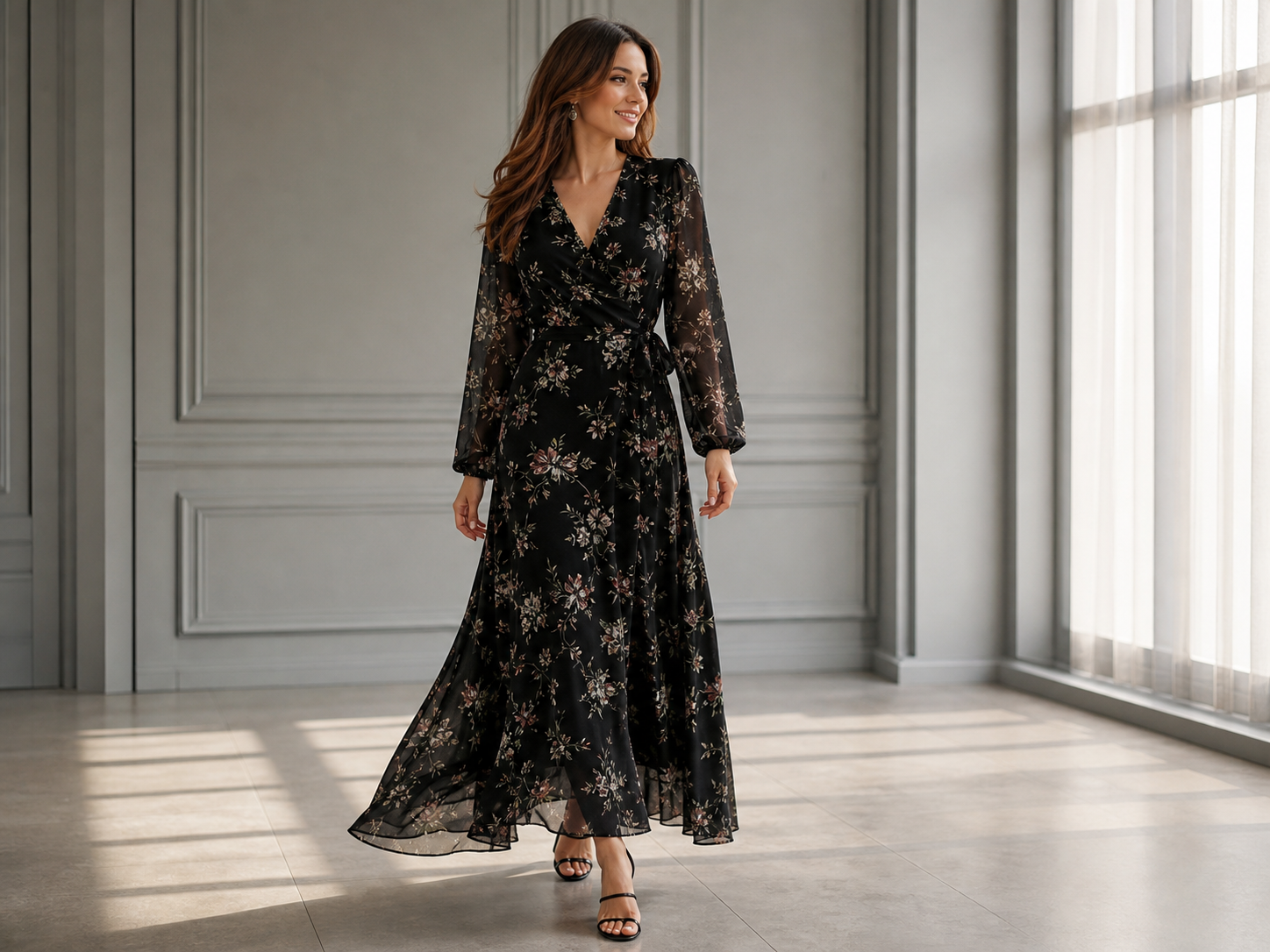
Do not promise adjustment that the pattern cannot offer.
Provided the bodice is fixed and only the waist tie is set in motion, specify the adjustable portion. Claims made by retailers should occur in accordance with the accepted construction in order to avoid customers expecting a fully adjustable range to be offered by a decorative tie.
Map the Overlap at Three Body Levels.
Measure overlap at the bust, waist and the spot where the skirt may most commonly open at the time of stride. The measurements need to be done with the dress worn, as a flat pattern does not indicate the divisions of the layers around the body.
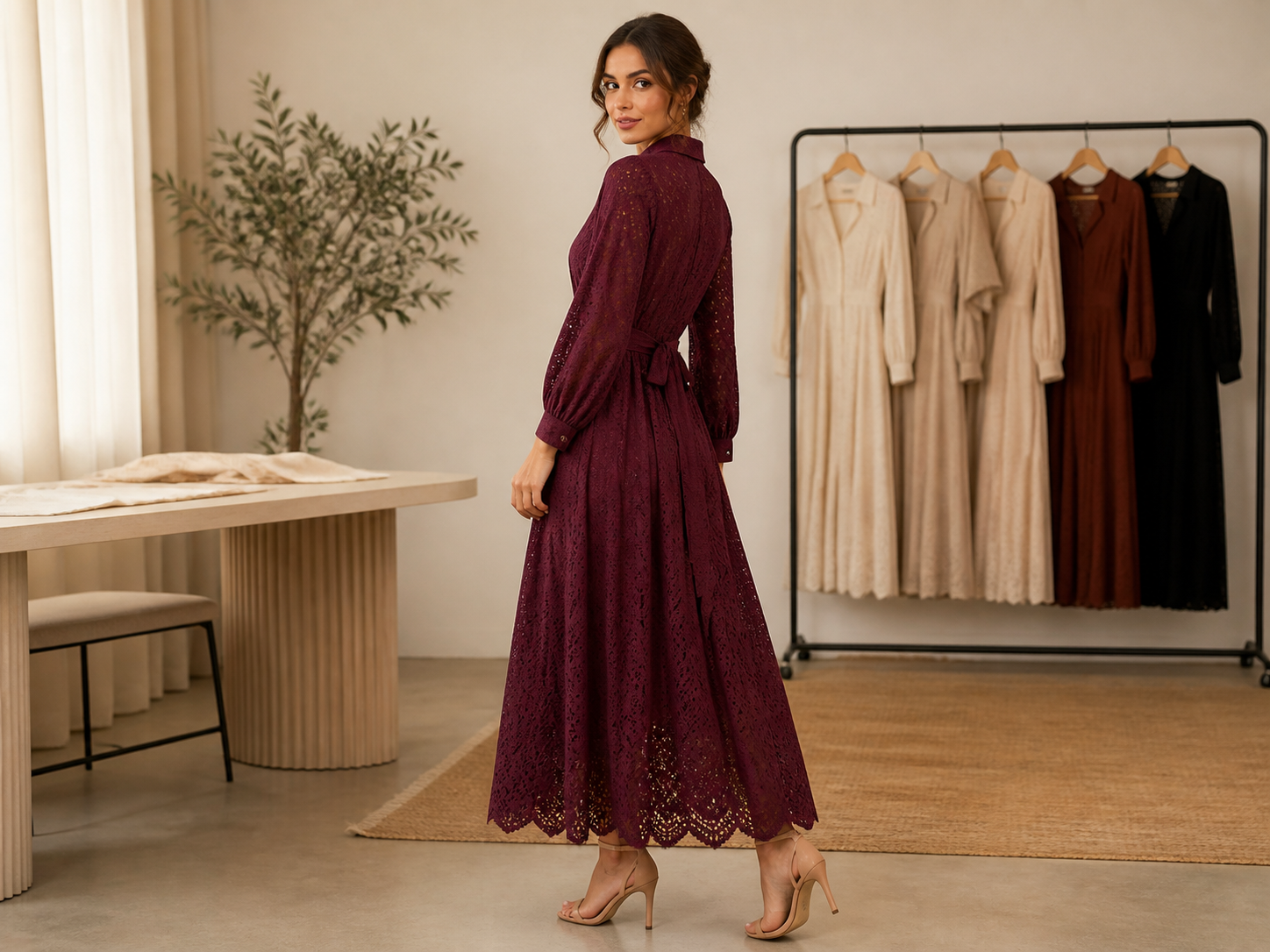
Accept a Useful Range, Not a Single Best Tie Point.
Note down the lowest and highest acceptable tie positions. Check at both ends coverage of neckline, balance of waist, and skirt. The customer must not be left between a secure bust and a secure skirt.
Have the Neckline Follow the Body.
The diagonal neckline has the ability to stretch since a portion of it is located close to the bias. Stabilizing tape, facing, lining or a discreet snap may be required, but with every solution the hand and appearance are transformed. Select the lightest option that maintains contact with the body through movement and cleaning.
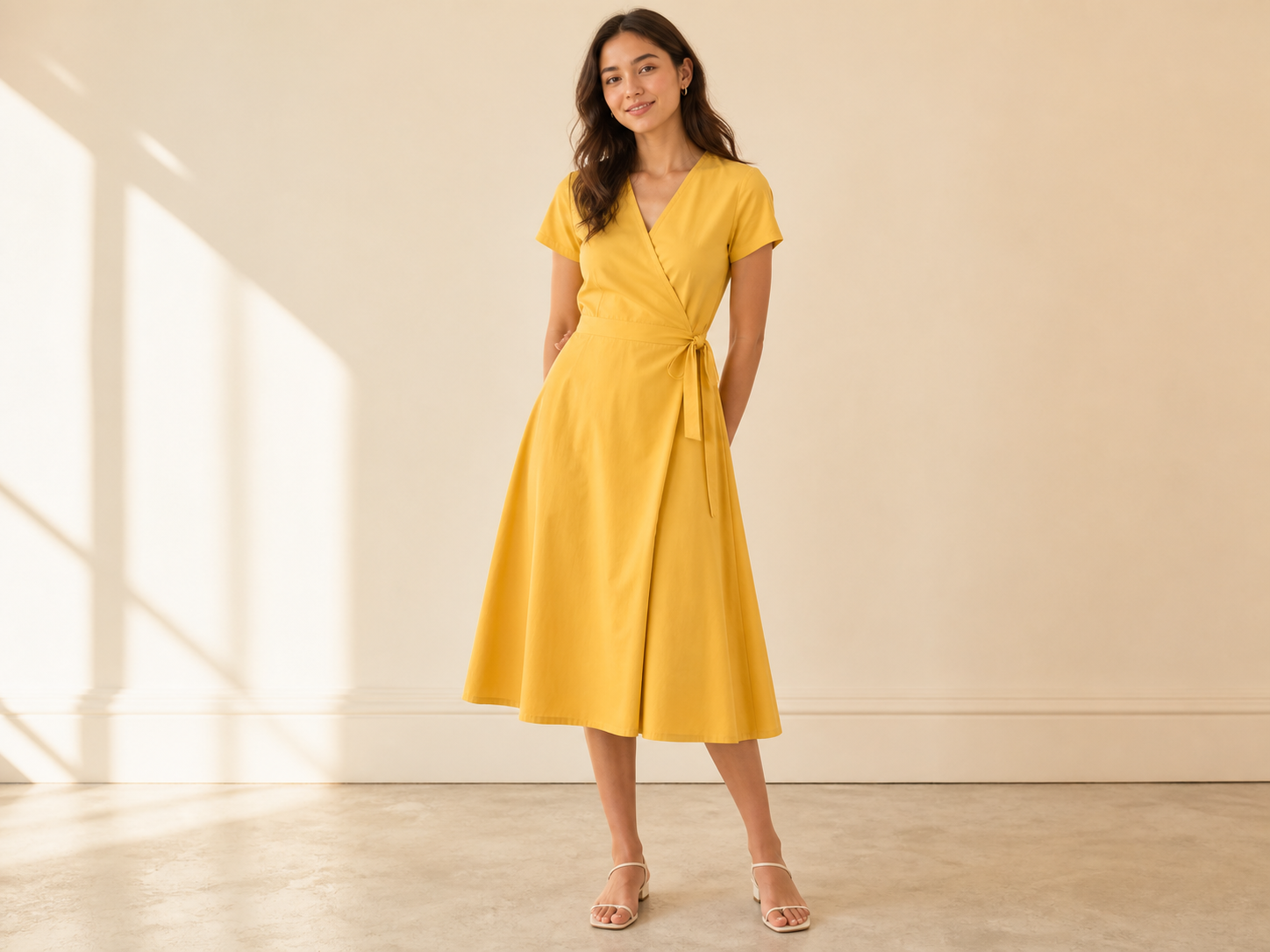
After adjusting the tie test the neckline.
By drawing up the waist, the crossing point can be drawn down; by releasing the waist can release the neckline. Always check one state at a time as opposed to adjusting the edge of one fitting.
Provide the Tie with a Specific Route.
The positioning of the tie defines the location of tension to be applied to the garment. Label the exit opening, interior anchor, finished tie length and authorized pull. The opening can rip with use, and if the anchor is too low it will pull the bodice out of shape.
Do not allow the tie to bulk up.
Indicate completed width, seam direction, turn and pressing. Assuming that the tie is long, make sure that no bend-folds appear on its surface after packaging or that the tie is wrapped around the garment in knots.
Use the Skirt Opening as a Movement Problem.
Weak approval standard is standing coverage. There are stride length, stairs, wind and sitting which modulate the angle between the pair of skirt fronts. The hidden button, internal tie or extended underlap can enhance security, but must not prevent the skirt from falling naturally.
Perform chair and step test.
Ask the wearer to sit, cross and uncross legs, stand, move about briskly and climb a few steps. Record the maximum exposure and the ability of the underlayer to restore itself to position without pulling by hand.
Place Prints Intentionally on Moving Layers.
A printed wrap skirt will change as the overlap changes. Perfect matching of the print may be impossible or undesirable, but definite broken edges or isolated motifs can make the front look accidental. Approve the location of prints at the normal tie point and specify any protected motif areas at the neckline and front line.
Grade Overlap and Tie Together.
A reduction of useful overlap in larger sizes can occur as the circumference increases, with the tie anchor remaining in position. Grade the connected system between the bust crossing point, waist exit and the area under the skirt. Compare both the relaxed and normal tie positions and fit more than one development size.
Separate Body Growth from Overlap Amount.
The amount added for body size is not the same as that needed for coverage. Record both so that the factory will not reduce the underlap when grading the garment.
Approve the Bulk Sample in Two Wearing States.
Prior to cutting, always examine the entire garment at the normal tie level and at the accepted relaxed level. The final fabric, lining, closures and care treatment should be covered by the same sample.
Short, specific approval record should be used.
The record must verify:
- Bust, waist and skirt overlap at both acceptable tie points.
- Contact of the neckline with the body after sitting and lifting the arms.
- Length of tie, exit reinforcement and internal anchor position.
- Skirt coverage during walking, stairs and sitting.
- Positioning of prints and outer to under panel.
Conclusion
An adjustable wrap dress refers to a dress where the coverage, the neckline and tie point stay attached through this adjustment. Siyinghong achieves this through the endorsement of two wearing states and measuring the overlap at real body levels, which allows it to replicate a style that is flexible to the customer without security relying on the continuous realignment.
FAQ
What is the difference between a true wrap and a faux wrap dress?
A true wrap opens at the bodice and typically at the skirt. A faux wrap will maintain the crossed look but attach part or even all the garment by stitches or a fastener.
How Much Skirt Overlap Is Enough?
There is no single number for every style. It should maintain coverage through the desired stride and sitting motion at both approved tie positions.
Will a Snap Fix a Gaping Wrap Top?
This may assist at some stage, however the neckline seam, tie placement and bust line must be surveyed as well to ensure that the snap is not under undue stress.
What Should Be Inspected before Bulk Production?
Check overlap at three body levels, neckline contact, tie construction, movement coverage, grading and the resulting fabric or print on the finished sample.
Post time: Sep-05-2026