A midi dress does leave a gap between the dress hem and the floor. A shoe is in it, and so you can read its opening as well as its straps and sole, nearly as well as the dress. The result of two equally appealing pairs of shoes may thus vary. One keeps the leg line open; the other takes the space where the dress has parted ways.
It is not just whether the heels, flats or boots work or not. It is the amount of leg that is seen, where the shoe stops and whether the weight bears out with the movement of the skirt or not.
Begin With the Space the Dress Leaves.
The midi range covers a wide span of lengths. One hem below the knee will accommodate a higher shoe, while another puts the shoe near the broadest section of the calf. Wear it, stand normally and look at the bare part of the leg instead of viewing just the shoe on its own.
Measure the open interval.
The interval varies when you sit and walk. A pair of shoes that appears crowded when standing can make sense when the skirt lifts in motion. Be sure to test the entire outfit, not just the shoe, before judging it from one still mirror view.
● Check the front while standing.
● Assess the side with an average stride.
● Sit and take note of how much more of the shoe is exposed.
● Take a photograph of the outfit at a distance.
Read the Shoe Opening Before the Heel.
Another line made by a shoe lies along its upper edge. A low vamp uncovers more of the foot and typically leaves the zone beneath the midi hem open. A high vamp covers more of the foot, making the bottom of the outfit appear heavier.
Use coverage deliberately.
Even where the heel heights of pumps, ballet flats and low-cut loafers are the same, their openings are not. With a low, full midi skirt, compare the vamp before determining that the heel is the problem. The proportion can be corrected using a cleaner opening without increasing height.
Use an Ankle Strap as a Visible Line.
An ankle strap does not necessarily look unattractive. Its effect is based on its width, color and proximity to the hem. A thin strap relating to the skin or the shoe can remain quiet. An extremely wide contrasting strap becomes an obvious boundary and might make a brief exposed interval appear shorter.
Choose whether to have the strap vanish.
When the dress already has a heavy print, tier or contrasting hem, consider keeping the fastening quiet. With a plain column dress, a deliberate strap can introduce the detail that the outfit requires. The point is to select the line, not to take it by chance.
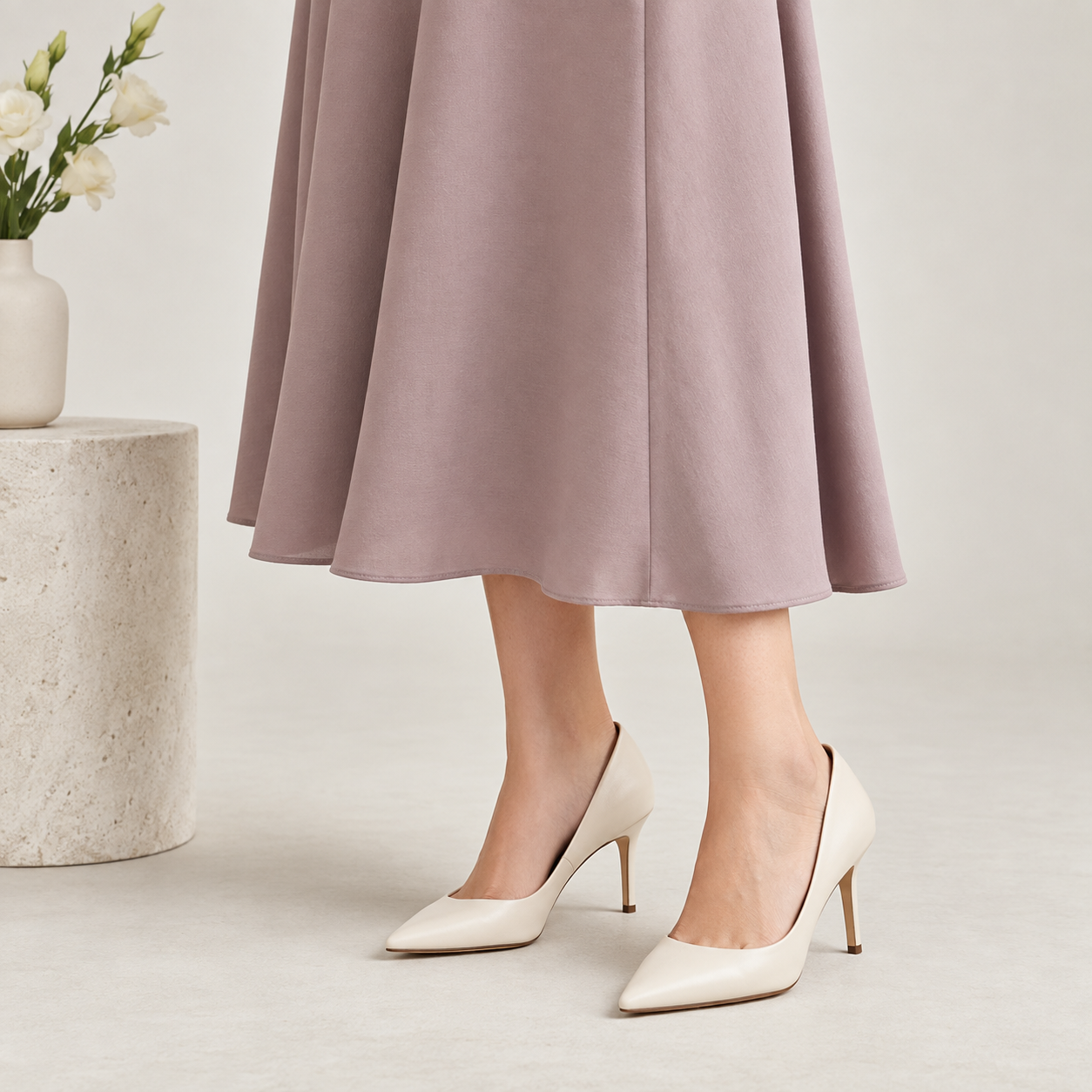
Equate Sole Weight to Skirt Movement.
A visually heavy shoe may not necessarily be physically heavy. Half-inch platforms, deep tread and broad toes are more voluminous. A thin sole and small upper appear lighter. Neither is always best; the skirt provides the reference.
See the dress move toward the shoe.
A loafer, bulky sneaker or boot can be worn with a crisp cotton or structured denim midi. Chiffon, fine satin and a soft bias cut are usually more receptive to a cleaner sole unless contrast is the desired concept. A full skirt perhaps requires sufficient shoe presence to prevent the outfit from looking top-heavy.
Select the Walking Pace of the Occasion.
The same midi dress can be worn to an office, a wedding or a day in the city. The right shoe varies as the wearer’s stride changes. A shoe that might be a good choice for a short arrival and a seated dinner can become a distraction on the way to work or during many hours of standing.
Stage a practical fitting.
Walk on a surface similar to the venue. Listen for slipping, watch for shortened steps and check whether the skirt catches at the heel. Comfort is a component of proportion: restricted motion makes even an aesthetically balanced pair look wrong.
● For long periods of standing, check pressure at the forefoot and straps.
● When climbing stairs, make sure the toe does not catch the hem.
● On polished floors, check the outsole and not just its appearance.
● Outdoors, prefer consistent contact with the ground.
Use Boots to Close the Gap or Leave It Open.
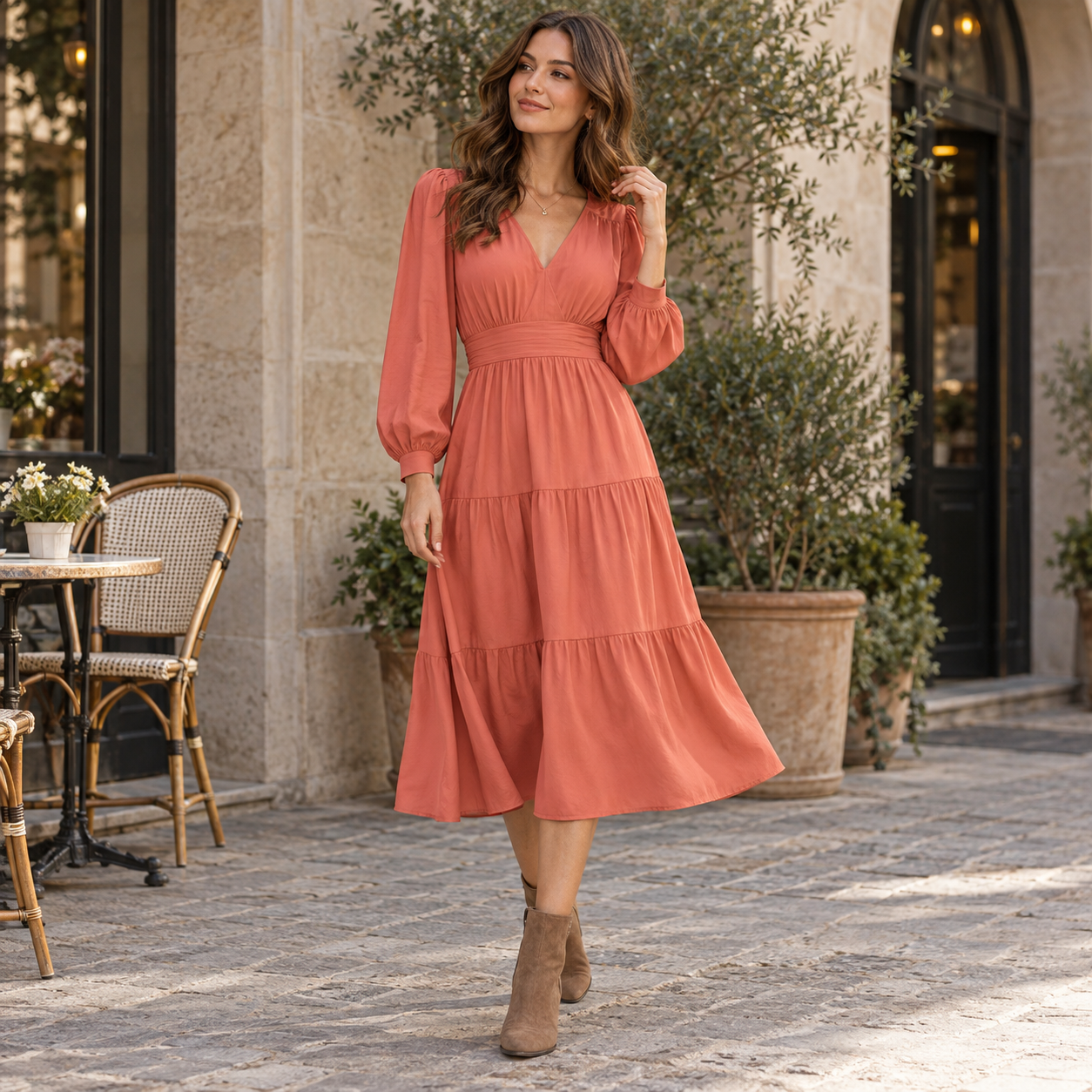
Boots create the strongest decision under a midi hem. A high boot can close the apparent gap and create one continuous lower part. An ankle boot creates a separation between the boot shaft and hem, so the width of that gap matters.
Align the shaft with the skirt.
The skirt must pass over the boot without catching or piling. With a thin strip of leg between the hem and ankle boot, try a shorter shaft, a higher boot or hosiery that lessens the contrast. This is not a prohibition against ankle boots but a spacing adjustment.
Coordinate Color Without Depending on Nude Shoes.
Shoes do not need to be the same color as the skin to make a leg look longer. They can repeat the dress, continue the hosiery or pick up a more subdued color in a print. What counts is that the color forms a deliberate relationship within the outfit.
Repeat a useful color once.
Black tights and black boots create a continuous base. A burgundy shoe can repeat a small detail in a print. A metallic sandal can correspond to jewelry without matching it exactly. Do not use a high-contrast color at the foot unless the shoe is supposed to be the focus.
Let Weather Change the Material, Not the Logic.
Sandals, flats, sneakers, loafers, pumps and boots can all be worn with midi dresses. Grip, coverage and material change with the seasons, but the relationship between the hem, shoe opening and sole remains the same.
Protect the dress as well as the foot.
A low hem can be darkened by wet pavement, and a fluid skirt can be snagged by rough boot hardware. When it is hot, check for swelling or rubbing under the straps. When dressing for cold weather, recheck the dress after adding tights because the new color changes the opening left beneath the hem.
Take the Shoe Test Into Midi Dress Development.
For a clothing brand, the hem and silhouette should be reviewed for compatibility with realistic shoes before approval. A sample that is measured with a single heel height may not be easy for customers to wear in a real-world context. Note the model height, position of the hem and footwear worn during the fitting.
Check the moving sample.
Dongguan Siyinghong Garment Co., Ltd. offers wholesale midi dress development as part of its custom dress production services. The hem placement, skirt sweep and movement can be tested using more than one realistic shoe profile during sample review.
Siyinghong wholesale midi dresses
CTA: Discuss a Custom Midi Dress Project
Choose the Final Pair From the Entire Silhouette.
The surest shoe is one that makes the space under the midi hem look purposeful and lets the wearer walk as usual. The first thing to check is the hem position, followed by the shoe opening, straps, sole and shaft. Heel height is only one part of that decision.
Keep the pair that still works in motion.
Take a final walk, sit down and look at the outfit. If the eye keeps returning to several conflicting horizontal lines, remove one of them. When the dress swings freely and the shoes have a definite relationship with the dress and its purpose, the combination is complete.
FAQ
Is it possible to wear flats with a midi dress?
Yes. Low-vamp flats, sneakers and loafers may work provided that their visual weight suits the skirt and the bare space beneath the hem looks intentional.
Which shoes make a midi dress feel lighter?
A lower vamp, clean sole or color that continues the leg or hosiery can reduce visual weight. A higher heel is not always the answer.
Do ankle boots go with a midi dress?
Yes. Measure the distance between the boot shaft and hem. A very narrow contrasting gap can appear cramped, while continuous hosiery or a planned gap can make the combination coherent.
What are the best wedding shoes to wear with a midi dress?
Pumps, slingbacks, refined sandals and stable block heels are practical options. Match the shoe to the venue, expected standing time and movement of the dress.
Post time: Sep-17-2026