There is not a single color or surface to a satin dress. It is lightened by a window, shadowed and may even flare in the direct evening light. That motion is not something that accessories have to produce. The first step to styling satin is to find out how that dress performs in the location where it will be worn.
This distinguishes satin as compared to a slip silhouette. The dress can be designed, worn, have sleeves or be strapless; the point of interest is the reflective weave. The work is to regulate the place of the light, and the objects it unveils.

See the Dress in Three kinds of Light.
Check satin during the day, indoor common light, flash of the phone. A color which is dull at home can be incredibly bright in an occasion. Pale colors can also be used to show the lining edges or seams that were not visible in a light tone.
Style using the strongest view as a foundation. When the fabric already creates a distinct highlight, matte accessories will provide a place that the eye can rest.
Take a picture of the Back Before Leaving.
One reflection is frozen in a photograph and there is constant movement of a mirror. Make flash on front, side and back photographs. This comes in handy especially during weddings, dinners and parties whereby the dress will be photographed severally.
Prior To Speaking of Care, Separate Satin and Silk.
Satin refers to a weave, as opposed to a fiber. It can be made of silk or polyester or acetate or some other material and such fibers do not react similarly to heat, moisture or cleaning. Read the label on the care rather than thinking that all satin dresses need to be treated like silk.
The difference also impacts on styling. Certain polyester satins are very shiny and rigid in their shape; a satin of silk can be softer and can shift more easily with a movement. The point is the dress and not the name of fabric that is thrown around.
Test Before the Day of the Event.
A delicate surface can be altered by steam and ironing or will have water marks. Adhere to the instructions on care and experiment with treatment in a non-conspicuous place. Attempting to remove a crease at the last moment might leave a larger exposed area.
Choose To Have Reflection Textured or Spaced.
A satin dress next to a shiny bag, patent shoe and polished jewelry creates a few reflective surfaces. It can be worn with a purposely dramatic evening outfit but it is hard to stay quiet.
To achieve a more relaxed look, add one dry texture like suede, fine wool, matte leather or crisp cotton. The satin seems to be deliberate instead of over adorned and the contrast makes it look like that.
Keep Texture at a handy Distance.
The satin may snag on a beaded bag that is rough and when it is snagged against the hip. Sequins, uncovered zippers and jagged jewelry settings can do so. It should not be covered with texture obtained by rubbing the dress again and again.
Read Every Pucker along the Seams.
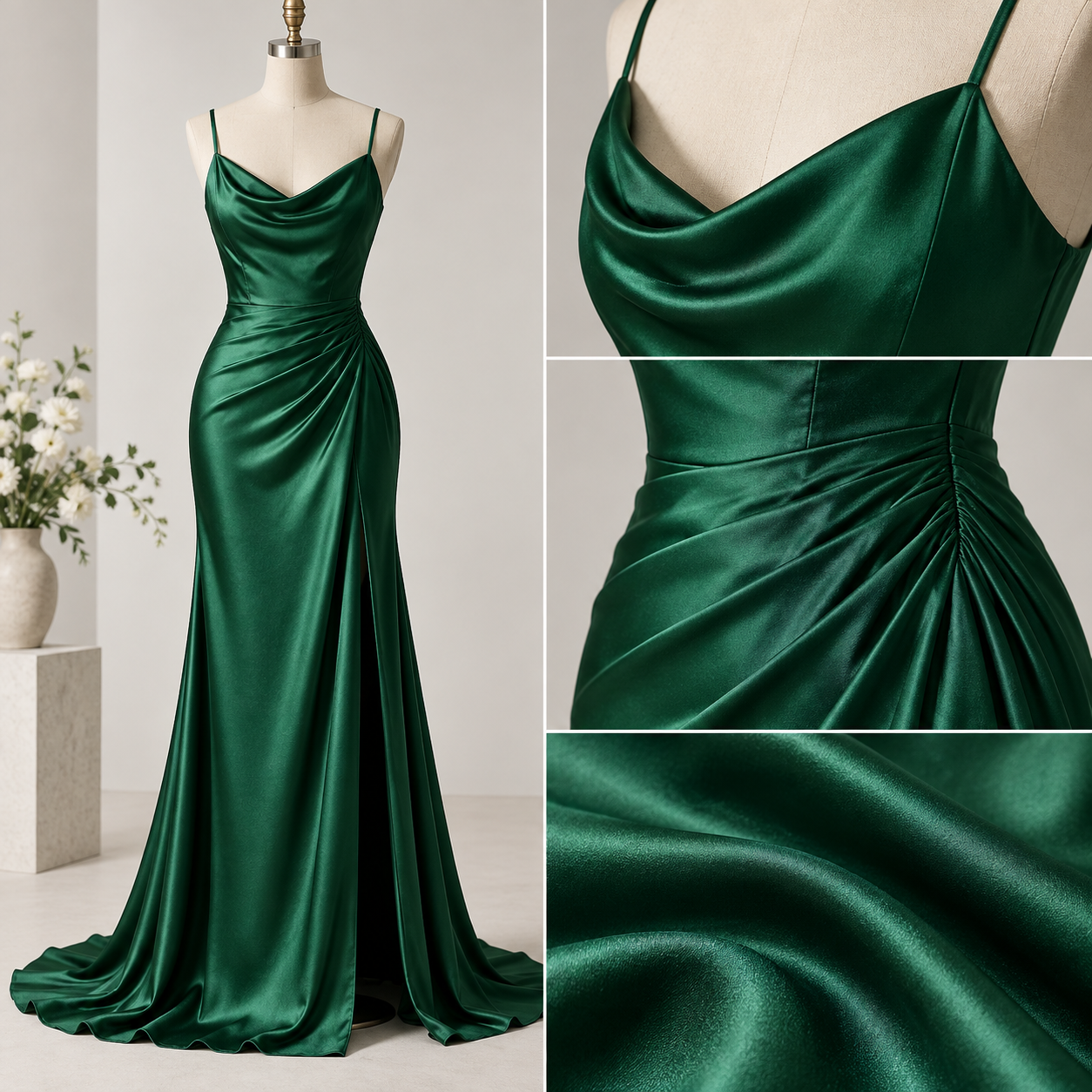
Small construction changes are reflected by satin. An uneven seam, a bumpy zipper or pulled dart can leave a shadow that is even more powerful than the distortion itself. Accessories do not signify this, fit and pressing should first be taken care of.
Stand naturally instead of smoothing the dress with both hands. When the surface varies as soon as it is discharged, the problem is a part of the garment and not of the pose.
Differentiate between Fit Lines and Normal Creasing.
Horizontal tension lines, which reoccur in the same location, are likely to show strain. Movement comprises soft, changing folds. The difference discourages a wearer attempting to conceal a typical drape or disregarding a true fit issue.
Select Underlayers to Surface Not Compression Only.
Even a satin dress that fits the correct size can reveal an undergarment. Find a seamless transition at the waist, leg opening and bra line. Additional compression would not be necessarily better provided that it forms another ridge.
The color must be tested in the backlight, particularly under pale satin. The skin-tone matching is almost always lost better than white in the background of ivory or light colors.
Allow the Lining to Move on its own.
The lining is not to be drawn up the outer dress, or twisted round the figure. Pace and take a seat prior to the event. When the two layers stick together, then explore the compatibility of the statics and fabrics and then add outerwear to keep the dress down.
Provide the Neckline One Source of Light.
An already framed neckline of satin suggests reflected light around the face. Elaborate earrings, a shiny necklace and a shiny lip can contend in the same tiny space. Choose one outstanding thing and have the others be less obtrusive.
With earrings or a cuff, a high neckline can be used. A loose neckline can be worn with a necklace, but not with a pendant that folds in and out of the draped folds.
Check Jewelry for Snagging.
Run a finger around settings and chain links. When caught on skin or fine cloth, never put it against satin. It is better to avoid an untied thread than to make a jewelry set.
Change Formality Without Pretending the Shine Is Gone.
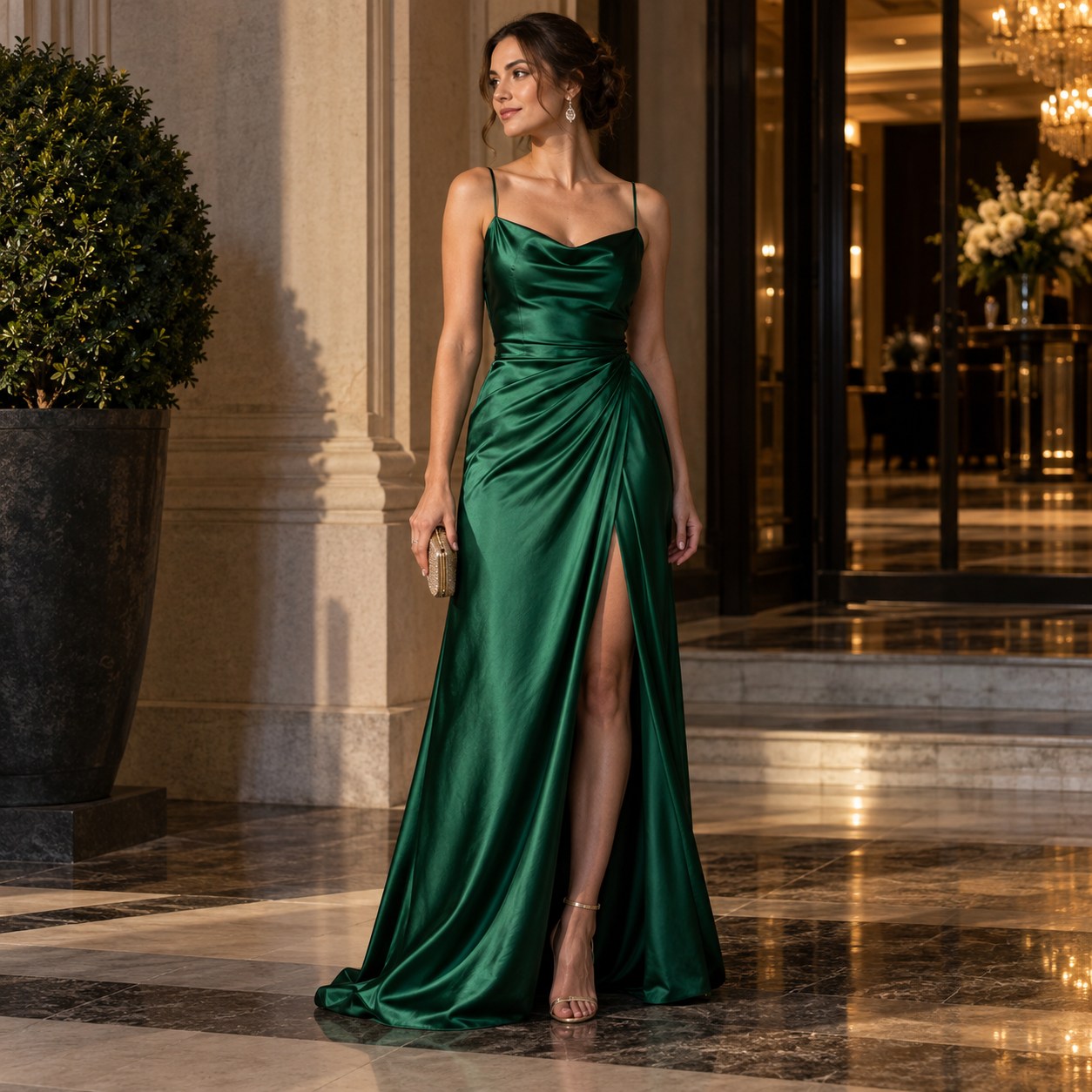
Satin will not turn into denim merely because it is worn with trainers. In the day time, it is intended to put its shine next to common, practical items: cotton shirt, plain knit, practical bag or plain flat shoe. A single ground material suffices.
In the evening, there might be fewer additions that would appear more thoughtful. The moving surface is the main detail that is left to a clean shoe and a compact bag.
Apply Color Temperature Selectively.
Bronze, rust, chocolate and champagne satin can be enriched using warm metal. Blue, charcoal and icy pastels can be sharpened with cool silver. This is not a set rule; the metal that is next to the dress under the event lighting should be compared before making a decision.
Plan Outerwear Around Friction and Removal.
Outerwear can not merely be a match with the dress. It is supposed to slide without pulling the sleeves or neckline and it is supposed to get off without making a static. Try the entire movement, but not the coat in a stationary position.
An unlined rough jacket is not as nice as a smooth seam coat on satin. When the coat check is an element of the event, be sure that the outfit is still there when the outer layer is lost.
Protect the Dress From the Bag.
The surface can have chain straps, hook closures and coarse woven bags. Wear the planned bag on the dress and check the contact point a few minutes at home and check the contact area. A crossbody bag is not as safe, possibly compared to a handheld bag.
Translate Surface Behavior into Satin Dress Development.
To a fashion brand, satin must be checked concerning various light sources and movement. The tension of the seams, the insertion of the zipper, the length of lining and the quality of the pressing is abnormally visible on the reflective surface. These checks are in sample approval, not in final styling.
Read the Sample With Flash.
A sample that is clean to the eye in the workshop light might not show the same on film. Examine front, side and back under direct flash then examine whether or not the lining, seam allowance or pressing marks are visible.
CTA: Send Siyinghong Your Satin Dress Design
FAQ
What will make a satin dress less formal?
Lay it next to one of your known matte materials, like cotton, suede, fine wool or plain leather. Have the rest of the outfit tamed instead of piling up a number of casual outfits on top of the dress.
Which shoes would be good with a satin dress?
Select shoes based on the environment, side and degree of shine. Flats, boots, sandals and heels can be used as they do not have to compete with the dress, their finish and visual weight must support it.
What can be done to cut underwear lines under satin?
Try smooth underlayers with the real dress during the day and in the back light. Examine each edge and not think that a better compression is going to give a smoother result.
Is it possible to steam a satin dress?
Wear according to the care label on the garment as satin may be woven by using various fibers. Heat and moisture: To prevent burning a visible area, test in an inconspicuous spot and then treat.
Post time: Sep-16-2026