Dress fabric names relate various types of information. Fibers are found in cotton and silk, woven and knitted describe how they are constructed, satin, chiffon and jersey refers to the structure or family of the fabric, and printed and embroidered refer to further treatments. Knowing these layers simplifies an assessment of the types of dress fabric and, importantly, helps avoid misguided decisions, such as using silk and satin as the mutually exclusive substances.
Follow this guide like a roadmap on the description of the products and the creation of a sample shortlist. Familiar name is a starting point, however, helpful description is also given on composition, weight, stretch and uses and Opacity. The information relates the cloth to the dress you wish to purchase or create.
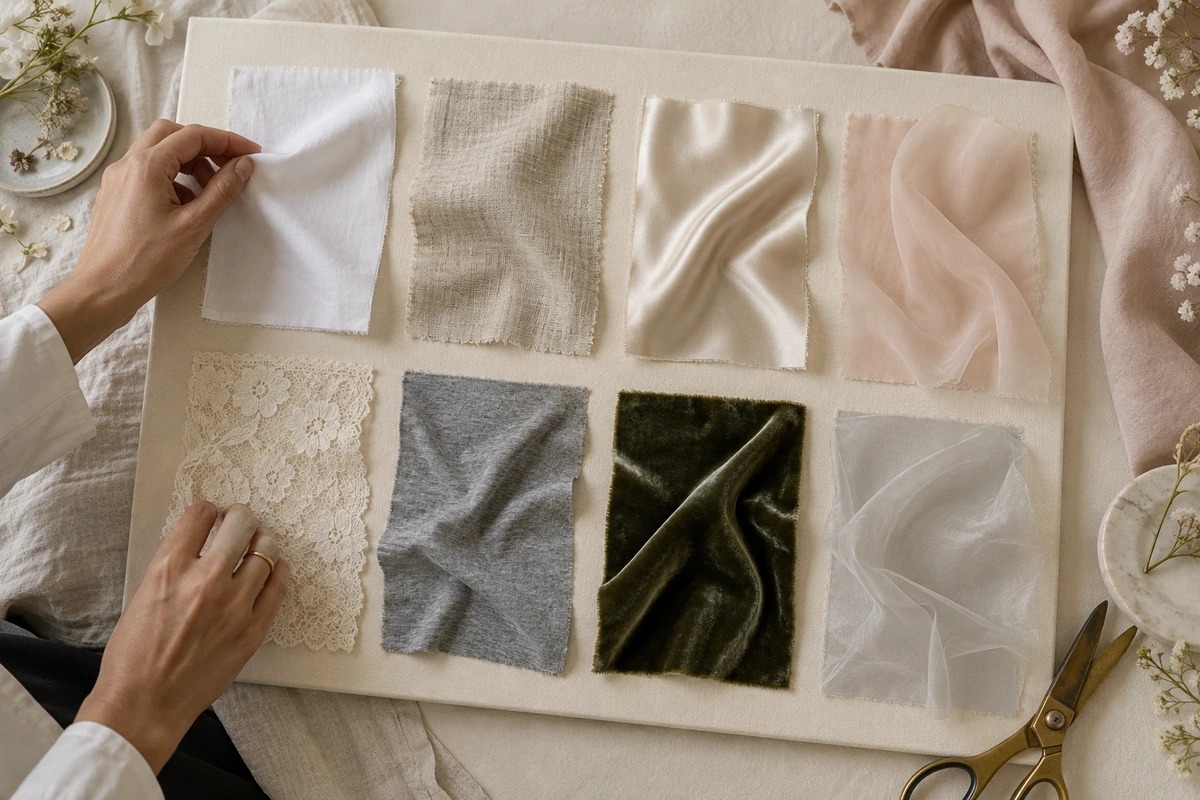
Read Fabric Names as Layers of Information
A statement like printed silk chiffon combines several pieces of information. Printed explains the added pattern, silk names the fiber and chiffon the type of fabric. The term does not yet define the weight, pattern of print on fabric, how a dress will be taken care of or whether a dress made using it will have a lining.
Similarly stretch polyester satin attributes the name a fiber and to a satin construction and a motion characteristic. It does not answer you, of how much stretch can be achieved, which way it stretches or whether the cloth rebounds. Take the words as individual fields which should constitute a complete description.
| Information layer | Examples | What it helps explain |
| Fiber | Cotton, linen, silk, polyester, viscose | Material composition |
| Construction | Woven, knitted, net | How the fabric is formed |
| Fabric family | Poplin, satin, chiffon, jersey | A recognizable structure or product category |
| Additional attributes | Printed, stretch, pleated, embroidered | Features added to the description |
The terminology of retail is not entirely homogeneous. Naming is common to some names. Instead of attempting to fit each product in one standardized box, find out what the description can affirm you of and what other details you require.
Start with Fiber Composition
Cotton and linen are plant fibers that can be found in day dresses. Silk is a fabric fibre of animals that is utilized in numerous fabric structures. Dresses with wool are also utilized in tailored dresses, and knits. These names relate to the source material, rather than a promised use or silhouette by season.
Lyocell and viscose are regenerated cellulose. Synthetic fibers are made of polyester or nylon and elastane is frequently used where elastic stretch is desired. All of them may be presented in various constructions and combinations. Do not think that a natural fiber is always better to make a garment or that a synthetic fiber always feels like that.
Read percentages to which they are provided. Cotton blend may include a variety of combinations as well as a minimal amount of elastane does not form the complete performance level of stretch on its own. also detach the outer and the inner cloth. An outer layer of silk does not imply that all areas that touch the body are made of silk.
Composition is a companion of fit and construction and care information, and should be included as a separate section with a completed dress. It is not able to substitute them. When buying fabric based on length, require the supplier to provide lacking composition information quite possibly than attempting to determine the fiber based on its shine or touch.
Differentiate Woven and Knitted Construction
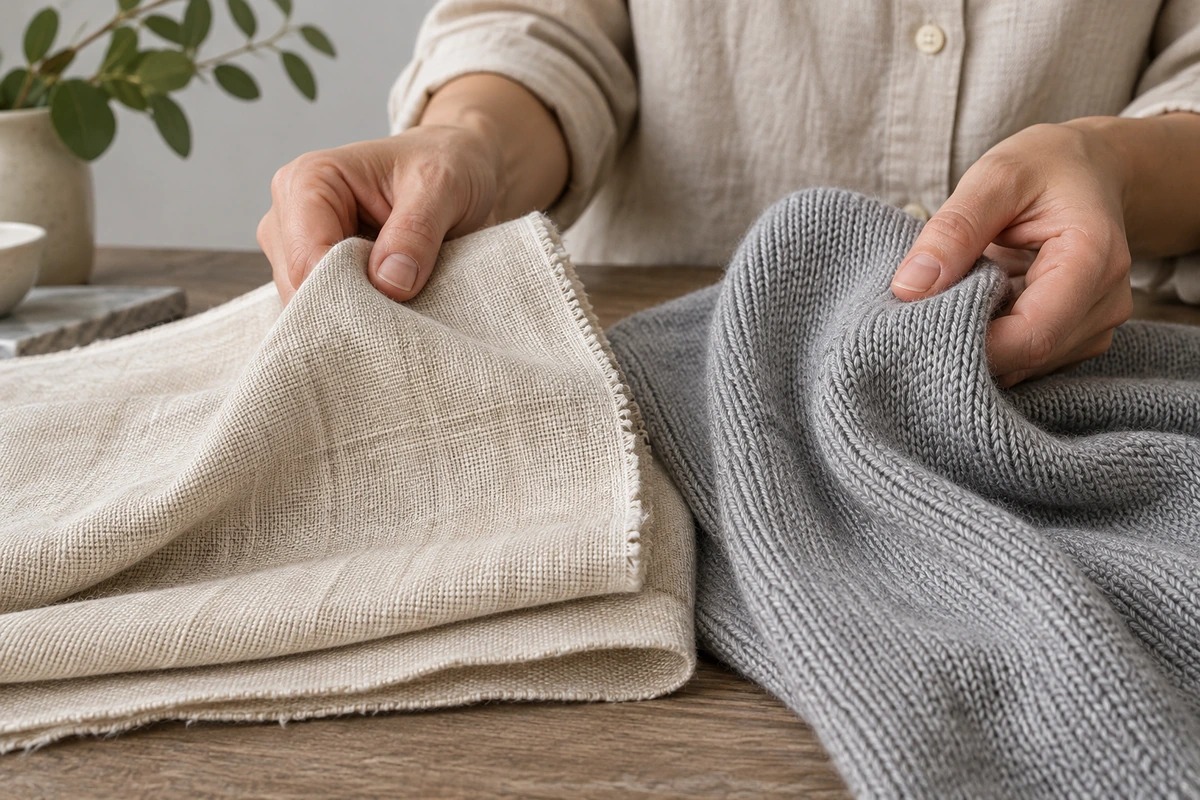
Weaving in fabrics is the interlacing of systems of yarns, popularly referred to as weft and warp. Loops form knitted fabrics. The general distinction thereof contributes to the ease of locomotion in many knits and to the certainty of shape to many wovens, though in each there are noteworthy exceptions.
Elastane can be found in a woven cloth or be given mobility in its structure. A knit may be thick and smooth. Cutting a woven fabric on the bias is a difference in the way it will fall, though, that elasticity is not the same as stretch knit. Those behaviors are considered when developing patterns.
Do not replace a knit with a woven or vice versa simply because they both wear the same when you see them in a photo. Verify the requirements of the pattern with regards to stretch, recovery and drape. A design with no closure can rely upon the stretch in the fabric large enough to be worn, and a shaped weave bodice can rest on seams and a fastener.
Other constructions and naming traditions are created by lace and net fabrics. They have to be judged on their own merits, such as openness, motif associations and elasticity, instead of having to be pushed into a basic list of the hard dress materials.
Explore the Main Dress Fabric Families
Fabrics for clearer everyday shapes
Poplin can be used to make reference to shirt dresses and outlined daily silhouettes. Linen may have a textured, loosely-fitting look, though linen is a name as in a fiber. Twill fabrics demonstrate a diagonal construction and have the possibility of more specific dresses based on their weight and hand.
These groups may be in favor of pockets, collars and plackets, but the specific cloth does count. A light poplin and heavy twill cannot be expected to behave alike. Compare the pieces of the garment requiring shape and then select a sample.
Fabrics for fluid movement and shine
Satin is linked with a smooth face that was formed by its weave, and it could be formed of various fibers. When soft draping is important, a lighter, flowy variety of satin is called charmeuse, which should be explored. Crepe is a description of a wide variety of textured fabrics, and weight and structure vary greatly.
Fluid clothing is available as gather or draped elements, though fluidity is not a sure way to create an easy sewing and fitted dress. Think of the behavior of seams, closures and the inner layers just below what can be seen on the surface.
Sheer fabrics for layers and volume
Chiffon is a transparent lightweight woven material and is made of many layers that are floated. Organza can be somewhat more crisp in its sheer. Tulle is a net fabric which is offered in varying levels of softness and body. They may look very transparent on a small picture but the way they behave in a skirt is very different.
Select the desired layer set as well as the outer fabric. The coverage and weight of a completed lined dress is not shown by a transparent sample. Multiplied layers can produce a far more complete effect, as well, than single samples are indicating.
Fabrics with loops pile or open patterns
Jersey is a knit fabric that is highly popular with easily movable dresses. The surface of velvet is piled, which affects appearance and handling. Lace features open patterns and can be used as a whole outer layer, a panel or a trim. These categories have stretch and nonstretch versions of various retail types.
Watch direction, positioning. Pile can be reversed and lace patterns can require matching at visible edges. These properties influence structure and production and the appearance of the end product.
Add Weight Stretch and Finish to the Description
The weight of fabric is commonly expressed in grams per square meter, and some types of silk fabric are quoted in momme. Materials can be compared using a number but absolute softness, opacity and quality cannot be determined using a number. Tow fabrics with the same weight may act differently as they have various yarns and structures.
Stretch must be referred to as by direction and recovery, as opposed to stretchy. The opacity is to be evaluated in the desired color scheme and layer-set up. Surface can modify the fabric, thus a washed, covered or pleated version of an old material might need a different treatment.
In the case of production, width, usable width, repeat size and direction may also play a role in determining how much cloth is required. A directional or large print can need to be laid out more attentively compared to a plain, nondirectional fabric. Request a cutting estimate on the basis of the actual pattern and range of sizes, as opposed to an abstract yardage figure.
Decode Three Product Listings
A cotton poplin shirtdress
This description identifies a fiber and a fabric family, and recommends a convenient point of departure of a specific day garment. It makes no determination whether the dress is lined or not, whether the cloth is thick or whether the buttons can be kept up out of the way when one is sitting down. Find such details in the specifications of the garment.
A polyester satin evening dress
The name does not contradict itself: satin does not necessarily have to be silk. The other questions relate to the body, lining, fit and care of the satin. Ask, does the desired look entail fluid draping or a more supported form, as both might be denoted by the same general term.
A stretch lace midi dress
The stretch, an open patterned surface is referred to here, but the content of the fiber along with the inner construction is not clear. Make sure that the lining also allows the necessary movement and is covered. The midi label explains the length, which further introduces information instead of specifying the fabric.
An apt listing also contrasts with the thread as well as styling displayed in the photograph. A petticoat can provide volume the outer clothing cannot and a clip worn to fit the display can hide the additional space. Inquire about the accompaniment of the dress, the mode of attaining the shape that is photographed prior to using that image as a piece of material specifications.

Select the Next Question to Ask
Start with the gap that is most pertinent to your project. In case the silhouette is erroneous, check on drape and body. Provided that they are not sure of coverage, check the layers. Elucidate stretch and pattern ease in case the dress has to move in a specific direction. This process helps to further narrow down the search compared to inquiring about the best fabric overall.
Have a single sample note number with the supplier reference and your notes. Apply it to future fabrics, which are compared, but should not make a rule out of a single successfully tested sample. There may be significant differences in product specifications.
In creating a line with Siyinghong, include the name of the fabric, a drawing, details to the composition and the action that you want the sample to perform. Definite words facilitate the discussion; finished details and a checked garment can convert that vocabulary into a responsible design choice.
Post time: Nov-03-2026