In the case of an ordinary summer dress, cotton poplin, linen and lightweight viscose or lyocell are handy options to begin with. Cotton poplin provides an easier contour, linen has a loose textural appearance and cellulosic fabrics can produce easier movement. There is no summer fabric winner, but you can use your favorite fabric in a summer dress based on your summer weather, the shape and maintenance style desired, and your preferred style.
The entire garment also brings a sense of comfort. The loose dress that loosely fits around the body will feel extremely different to the same cloth fitted into a body. Weight of fabric, construction, lining and how the day will be spent are some of the points that need to be taken into consideration before making a decision. This information is the reason why when the dresses have the same composition label they may not work the same.
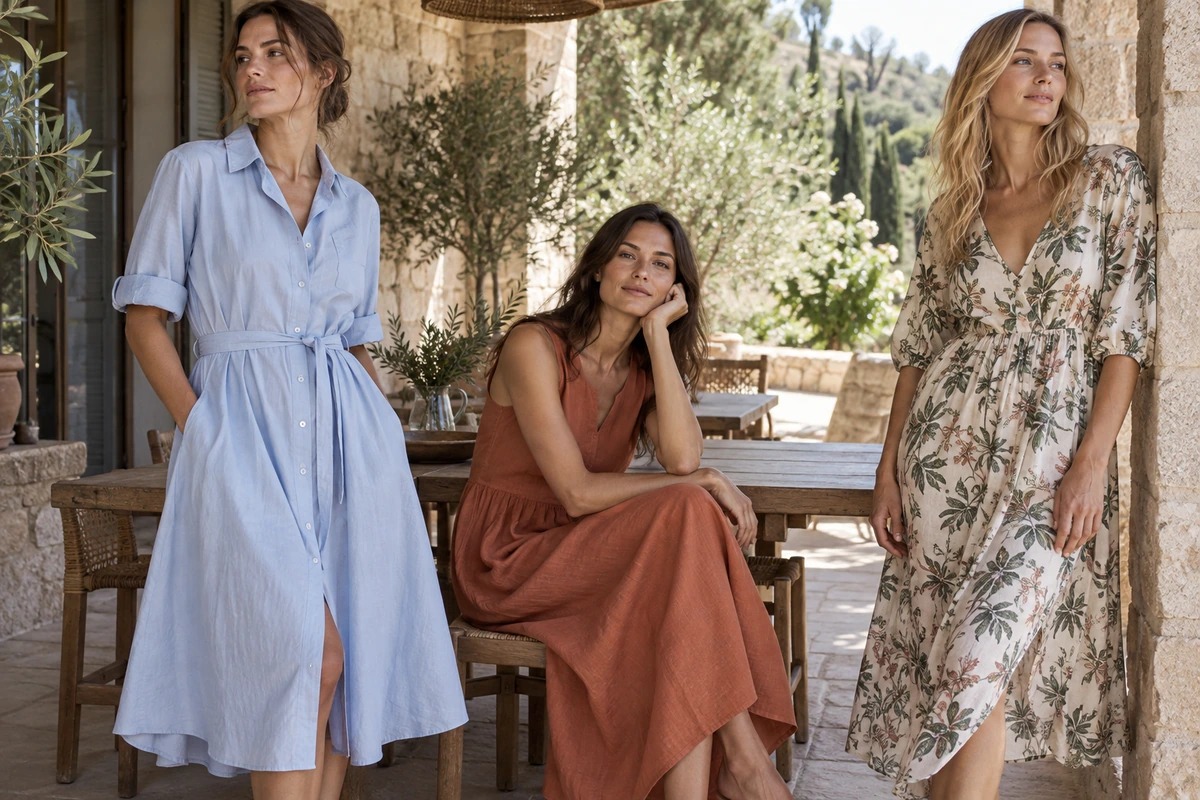
Define Your Summer Before Selecting a Fabric
Note the conditions you in fact dress. When it is raining and you walk to work, this is one thing and when it is hot and dry in the city and in the evening, you are in the air conditioning, this is another thing. The same dress that primarily interchanges between a hotel and a restaurant will not demand the same requirements as a dress that will be used in the face of a highly populated transport.
The next step is to select the coverage and room that you want. Sleeveless is not the only summer style, loose sleeves can also be helpful in case of the conditions are appropriate, and of course, the material. Similarly, a shorter dress does not necessarily make it any cooler than a longer dress. The distance between the body and the garment is important.
Lastly, make a choice of maintenance you accept. There are individuals who like the wrinkling look of linen; and those who also desire more of a smooth touch in the after sitting. There is nothing wrong with either of these preferences. When it comes to purchasing a piece of fabric, it is better to make your decisions with such expectations than to purchase one that is lauded with a feature that you do not appreciate personally.
For Humid Days Air Space is a Priority
When the weather is humid then a silhouette that enables one to move on the torso and skirt is a good place to start. Subsequently investigate the real fabric and any lining. An outer fabric so very light, yet in a high degree of density, over a tight fitting lining, might not give the same experience as implied in the airy photograph.
Fabrics, that are light cotton and linen, make good candidates, but compare their construction. Even of a similar weight, a tightly-woven fabric may have a different feel than a looser, more open one. Jersey can provide a comfortable movement though a tight knit can be left tightly around the skin. This is why it should be handled or tried garment, and not oppose or endorse a whole category of fibres.
Enquire whether the dress requires a number of layers in order to be wearable. In case you desire plain everyday or easy-going wear, a cloth that offers a reasonable range of covering on a single layer might be more convenient than a transparent cloth that would have to be covered by a separate slip. Your preferences regarding coverage should be provided in that decision, not an across-the-board principle that unlined coverage is better.
For Daily Form Start With Poplin or Linen
Cotton poplin for shape
Poplin comes in handy in those instances that you require a shirt collar, a clean button hole, or a skirt with a familiar line. It may feel crisp or softer depending on its weight and finish, after it has been used. Find space at the shoulders, waist and hips to ensure the dress does not depend on the stretch that it might lack.
Examine the button area when sitting. Gaping may be an issue with the fabric and not a defect. Check pockets, too: pocket bags can be viewed on the outer layer of a lightweight dress. This can be solved by a darker color or a variation of pocket construction or a bit more weight of a cloth without lining the whole of garment.
Linen for a loose textured dress
Linen is also a good option because you embrace a visible texture and do not assume that the garment will remain that smooth. Judge by comparisons but not the whole linen is rough or clear. Its hand can vary dramatically with the addition of yarn, weave, finishing and blends.
In the case of a work dress, sit and bend and test the dress. Choose the creases that you want in the location that you want and your preference. The appearance or care needs could vary based on a linen blend, but the name of the blend does not inform you of the result. Read the entire label and evaluate the finished dress.
In the Case of Soft Movement Viscose or Lyocell
A fluid viscose/lyocell garment may find applications in gathered skirts, loosely-fitting wraps and dresses that cling to but not go off the body. Both such names refer to regenerated cellulosic fibers, yet the appearance of a fabric is largely dictated by how it is constructed. There should be no misunderstanding between a woven and a jersey as they belong to the same fiber family.
In the case of a wrap dress, ensure the overlap when standing in a sitting posture and a regular stride. Soft fabric is capable of motion but can require an appropriate fastening or due amount of overlap to afford the coverage you desire. In a gathered design, consider that the waist seam is an unwanted addition of bulk or it will be pulled because the skirt is so heavy.
Look at care prior to sale. Do not think that all viscose or lyocell dresses bear the same type of washing and drying. Dyes, finishes, construction and other parts are also important. The dressing that you wish to wash regularly should have clean garment care instructions that are easy to follow based on your schedule.
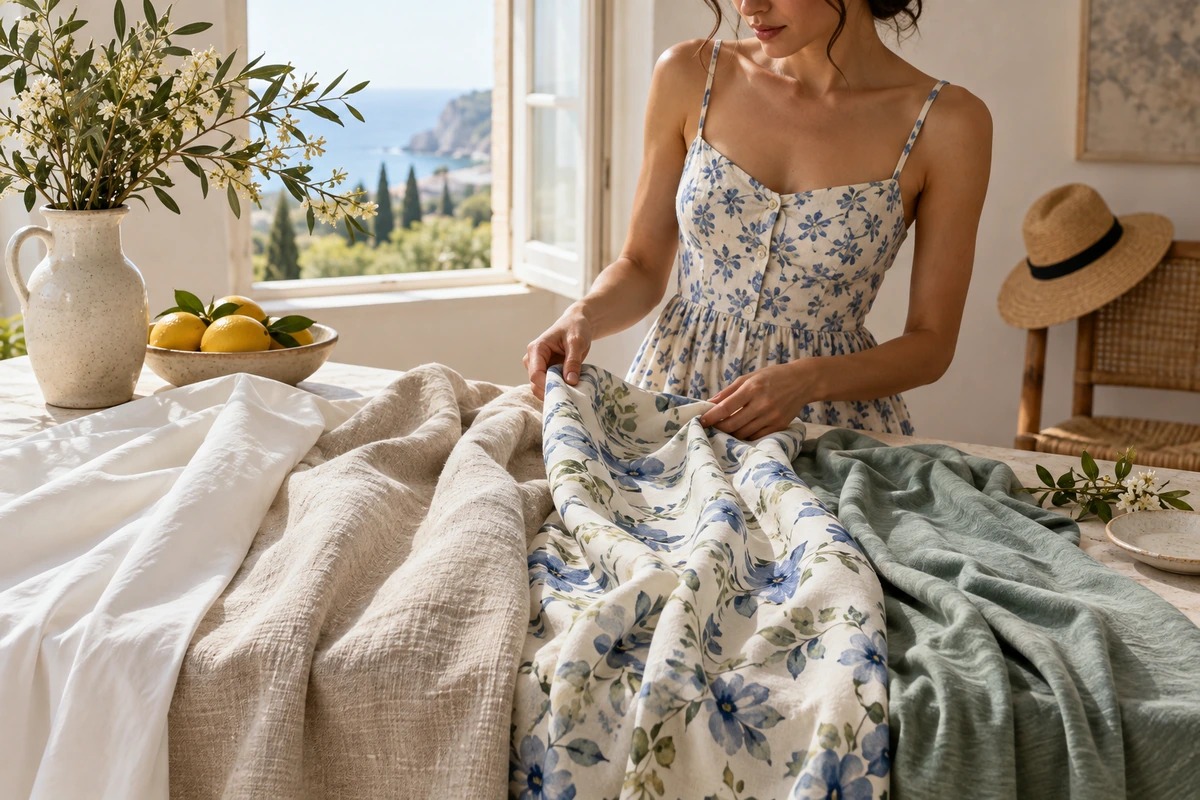
For Travel Evaluate the Whole Care Routine
Clothes used in travelling should be able to fit the journey, not the bag. It is important to think of how you are going to wear the dress, where you are going to wash the dress and whether you will have time or the facilities to press a dress. Even a packing fabric can need greater attention than you desire when it gets to you, since it packs down into a small shape.
A soft knit can also be handy when you need something comfortable and that moves around, however, it is important to ensure that after use, it does not become misshapen at the knees or the seat. A more defined silhouette may be taken well with a woven blend, aside from crease behavior. Assuming that it is possible, a sample should be folded as required when packed and checked afterwards. Use this as a comparison exercise, rather than lab test.
Add accessories and underlays that the dress needs. Not made of heavy fabric and requires only a heavy slip to wear, special support and separate cover-up might not be an easy one to pack. Select an entire outfit that is sensible in respect to the real itinerary.
Check Opacity Without Adding Another Layer
Evaluate the dress against light and evaluate it on the body with the proposed undergarments. Transparency will be seen on a backlit hanger check, though it may be overdone. The practical question is the appearance of the garment at the time of normal wear including at the time the skirt is stretched across the lap.
It can be enhanced with a lining that enhances coverage and interior finish. Nevertheless, it introduces one more fabric with its weight and feel that must be taken into account. A different outer cloth or partial lining or separate slip could be available. The right option will be based on the design and your desire to have flexible coverage.
Do not judge opaqueness, pale color or cool touch as sun protection. When having protection against the sun in place of a purchase need, seek pertinent products information and testing concerning that garment. A typical description of the fashion fabric does not give a protective rating.
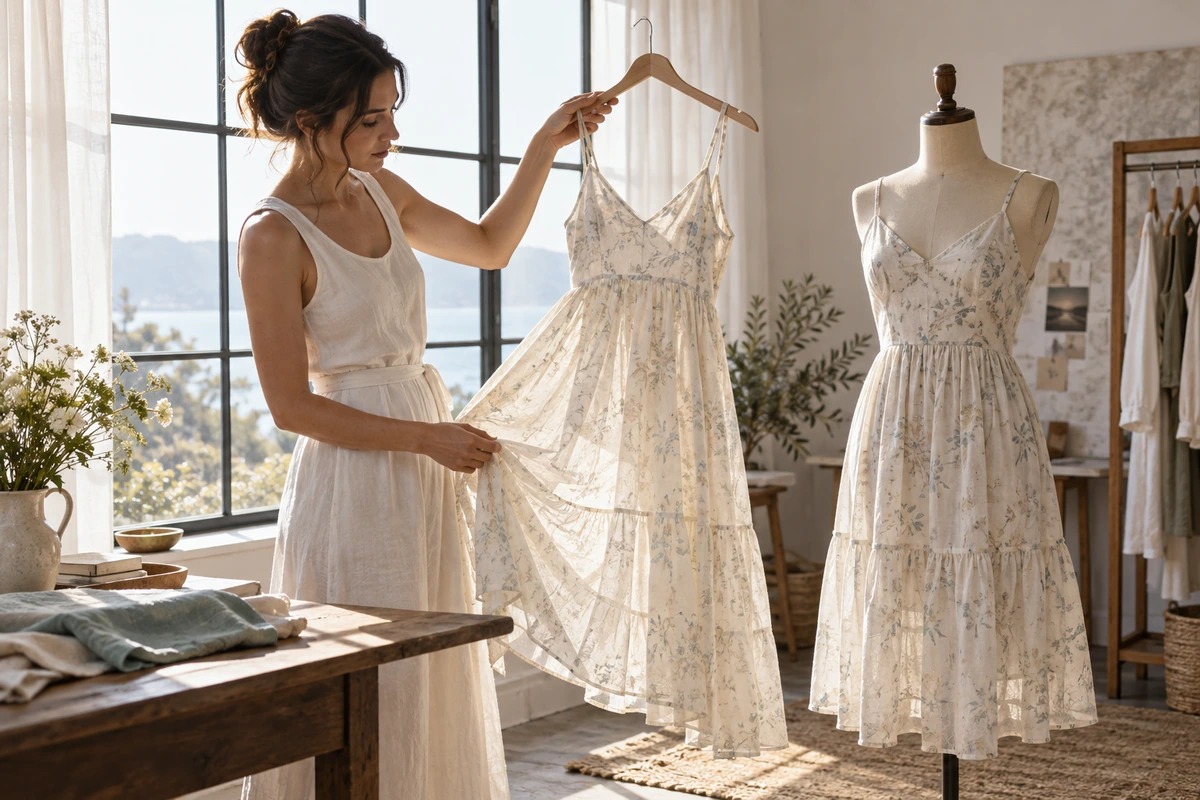
Do a Simple Swatch Comparison
Take samples of equal size and have the proposed garment shape in mind. Over either the same rounded surface place each and fold it, lifting up then peeking at both sides. Such notes help determine which cloth you want to create the volume or softness.
| Observation | What it helps you decide |
| Falls into narrow or broad folds | Whether the fabric suits fluid or defined shapes |
| Becomes transparent when spread | Whether additional coverage may be needed |
| Retains visible folds after handling | Whether its everyday appearance suits you |
| Stretches and returns | Whether movement and recovery fit the pattern |
| Feels different with a lining | Whether the complete fabric combination works |
In the case of a sewing project, sample is prepared based on how the garment is supposed to be cared and commitments to the final fabric will be based on the instructions of the supplier. Note the change of size, color or surface. When it comes to a ready-made dress, there is no need to perform any devastating experiment; instead, apply the label, seller details, and a proper fit.
Take into account the shape of the completed sample and the loose cloth. A slim waist focuses the material onto a smaller space, and there is a possibility of a two-layer garment (bodice) and a single-layer (skirt) feeling different to the hip. In the case of a design containing such details, request inspection of them instead of extrapolating with an open swatch. In the case of online shopping, close pictures of inside, pockets and seams can provide answers to questions left unanswered by a styled exterior picture. In case such information is not provided, simply query the seller regarding that particular area in which you are interested. It is better to have a definite answer regarding the lining as opposed to an unfounded statement regarding dress being breathable.
Make a Summer Dress Shortlist
Select two candidates which satisfy the same need. To illustrate, one can contrast a loose poplin shirtdress and a loose linen dress when it comes to daily attire or two loose fluid woven dresses when it comes to an evening holiday dress. This maintains the decision as tied in use instead of an abstract rating of fabrics.
Note down the possible ways that each candidate can work and what is unknown. He or she may be better at pocket projects, yet with a routine that he or she does not like. The other may be softer yet require greater coverage. Decide on the most relevant type of uncertainty that you have before making a purchase.
Now, to a holiday line, on the sketch take a weather and use short with the sketch. Talk about what the fit is supposed to be, such as the intended opaque, the lining and the expectations of the expected care when approaching Siyinghong. When the choice of fabric is accompanied by the dress, which people are going to wear, nothing more through an ordinary summer day, the choice becomes more helpful.
Post time: Nov-07-2026