Evening gowns should use the best fabric that will uphold the desired shape. A draped column may work with fluid satin or an appropriate crepe; and a shaped skirt may work with more body using duchesse satin or taffeta; and sheer volume can be created with organza and tulle. The first part is what the gown has to do, then you select the type of cloth and what it is backed by.
One part of the decision is the beautiful swatch. The final result is influenced by weight, stiffness, stretch, surface and the method of construction of the garment. Those in the design routes below assist in converting a very general request (soft elegant gown) into a fabric option that can be sampled and evaluated.
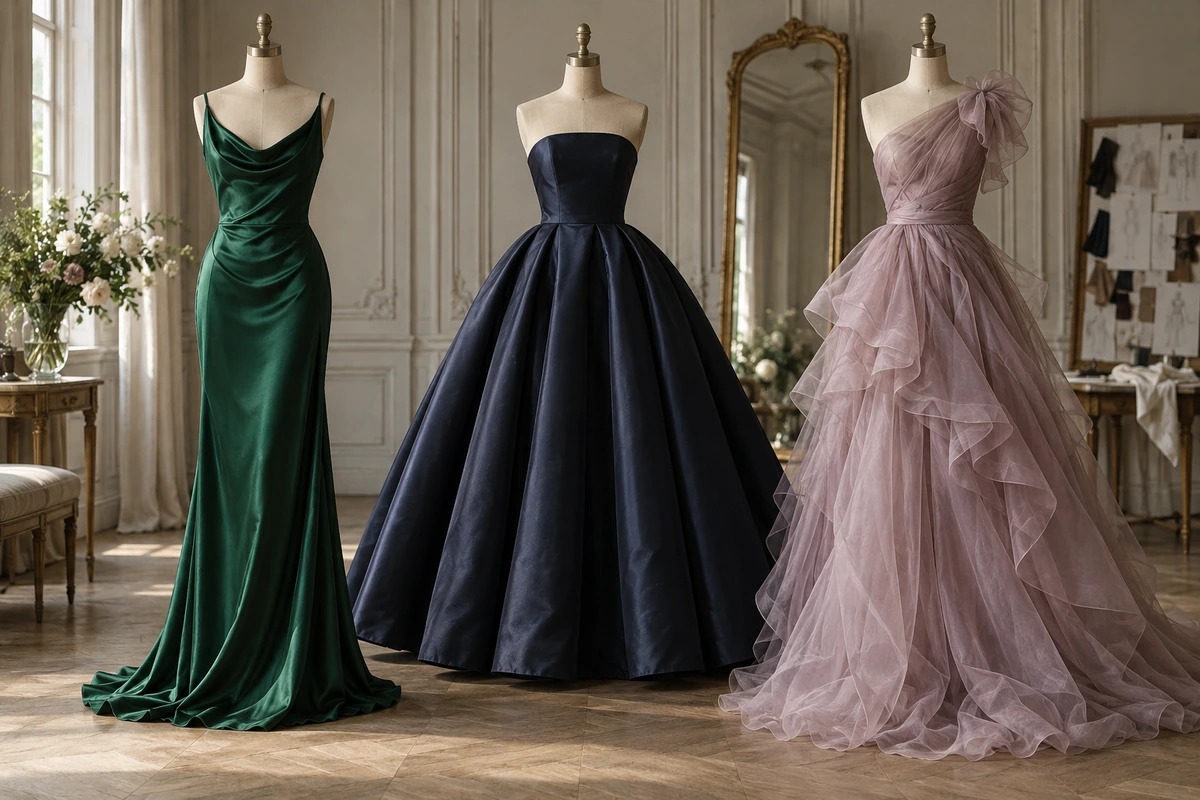
You Can Start with a Silhouette Brief
Trace or sketch outline and then gather names of fabrics. Is the skirt to follow the legs, to fall in loose folds or fit loosely across the shoulders? Is the bodice to remain straight, without shoulder straps? Are the sleeves close fitting, floating or sculpted? In both responses, there is a shift to another association between cloth and support.
Determine the area of focus. Draped neckline might require smooth fabric, while additional substance in the skirt. The supporting layer may be necessary in an area wherein it is unnecessary like a dramatic shoulder. No one fabric system is required to be used in the entire gown.
Indicate the event experience also. A seated dinner gown must be tried sitting up; a presentation gown might require straight shoulders and the movability of the arms. Carry such requirements with the brief so that the design only works in a mannequins.
Make a Fluid Column or Draped Gown
Satin for reflected light
Smooth satin fabric, including some charmeuse fabrics, has the capability to create slim folds and shine. This makes it suitable for cowl necklines and loosely-cut skirts. Nevertheless, satin is a series of structures and goods, rather than the promise of lightness. Request to behave and view the real weight and drape.
Smooth glossy fabric makes cut and finishing choices apparent. The surface may be interrupted by seam puckering or irregular tension or inappropriate underlayer. Determine a sewn sample that has the proposed lining and then accept a fabric simply because it is shiny. The darker colour does not necessarily hide all construction problems.
Crepe for a quieter surface
The line has a wide selection of textiles that are soft and fluid; others are heavier. An appropriate crepe would help hold a modest evening outfit together without rendering surface reflection as the primary domain. Compare compared to the shoulder, hanging of the samples of the candidate and falling over curves.
In a close column, find where walking ease will be obtained. It can be either stitched into the skirt width, a slit or stretch construction. Fabric stretch is not a means of substituting proper pattern balance. Check recover and lining compatibility in case stretch becomes a design feature.
Support a Modelled Bodice or Full Skirt
A fabric with more body is able to support a conscious contour. Duchesse satin is a useful type to explore when it comes to substantial, shaped designs, and taffeta could present a crisp hand and pronounced folds. There are differences between individual products and, therefore, you ought to compare samples instead of using the name as a definite stiffness measurement.
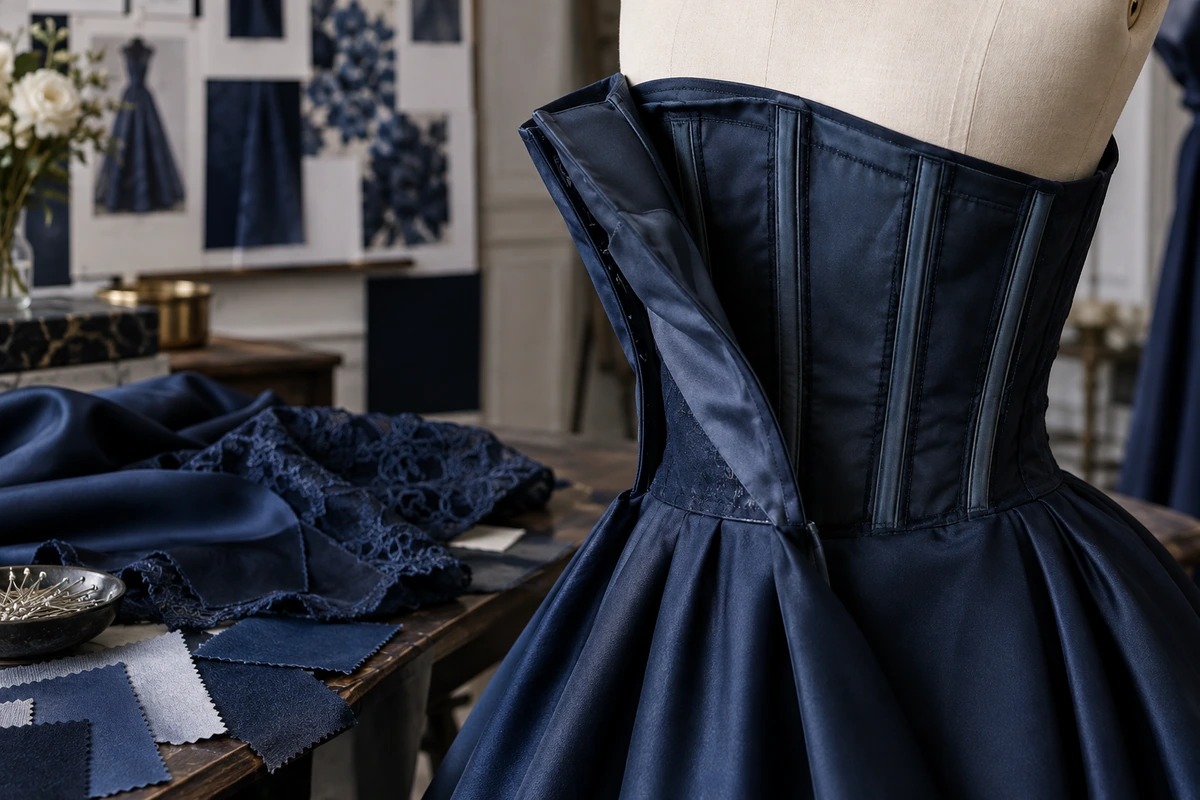
Take into account the behavior of the cloth at the point where there are multiple layers. Bows and shaped collars, pleats at a waist seam, can be bulky. An unsewn fabric that looks superb in a folded state, may require alternative seam allowances or support when used. Request a representative sample of construction at the most demanding area.
The outer fabric should not be left to provide support and make-up fit in a strapless bodice. The inner structure, the position of the seam and hold everything together. Talk about where you will keep the garment and how to weight it. This is not a construction question that can possibly be determined during fitting but included in calling the satin strong.
A practical floor relationship is also required in a full skirt. The cloth can be of any size and can be stored beautifully and will need more room around steps or benches. Choose between a train, an underskirt or a simpler hem, which suits the wearer better.
Create Sheer Volume Without Excess Weight
Different types of movement and transparency exist in organza, tulle and chiffon. Organza can be crisper; tulle can come in more delicate and stronger types; chiffon can create a more flowing layer. Decide by touching the particular cloth instead of on the belief of all the sheer materials acting the same way.
Wear organza in instances where a ruffle or overlay requires some shape. Use tulle when you want it to have a layered effect and chiffon when you want an overlay that will flow with less pronounced lines. These are design points of departure. Result can be varied significantly by finishes, weight of fiber and fabric.
Add up the full layers prior to weight or comfort. Many light layers, a lining and a foundation could make a great gown. Investigate what occurs at the waist, where they can all combine. The finished volume and the internal bulk should be revealed in a sample, thus neither is a surprise.
Select Texture and Build a Plan
Details are also added beyond the drape with lace and embellished fabrics used. Lace can need conscious location of the motifs, an appropriate backing and options regarding see-through space. Velvet has a pile surface the appearance of which can be directional. Surface covering is provided by sequins and beads, and may influence seams, handling and contact with the skin.
Leverage other decisions with any simplification where applicable. The broad uninterrupted panels may suit a large lace motif, and fewer small seams made on a densely decorated cloth. This does not forbid any complex patterns, it is the consequences of construction which are included in the design argument.
Inquire about the closure on the neckline, armhole and hem. The back of a patterned cloth is as important as its front. A smooth inner layer will assist, though that must be fitted and attached fittingly. Check the real sample and not a presumed embellishment of fabric will assure you of a luxury garment.
Treat the Gown Like a Layered System
The visible effect is created by the outer cloth, but other things define the way the outer cloth is put in place and how it is carried. A body and an opacity can be modified by an underlining; a lining may complete the interior; the support of a particular part can be secured. These elements carry out various tasks and are supposed to be selected following the pattern.
| Design requirement | Component to discuss | What the sample must show |
| Stable shaped bodice | Foundation and support | Secure fit during movement |
| Smooth outer surface | Compatible backing and lining | No unwanted ridges or pulling |
| Sheer skirt with coverage | Opaque underlayer | Approved coverage in motion |
| Wide sculpted hem | Fabric body and any hem support | Intended shape without unwanted bulk |
| Comfortable decorated neckline | Edge finish and inner contact layer | Smooth contact against skin |
Do not add layers automatically. Every addition varies weight, heat, thickness and the behavior of seams. Should a sample feels cumbersome, find what element is required, what is merely making up for an inappropriate first fabric choice.
The care approach should also be able to serve the entire system. The outer fiber label cannot be evaluated alone at the cost of a gown with a mixture of materials. Request the producer to incorporate the total garment when specifying.
Analyze the Sample in Event Lighting
Test the gown using common indoor lighting and lighting similar to where possible the same lighting as the event itself in various angles. See the brightest spots, the darkest crevices and any places where there is a different ground beneath the top. The differences that might be discerned in reality can be hidden in a studio picture.
Use both a still view and movement. Walk, turn, sit and raise the arms, as the reason is. Record any changes in the surface due to either natural movement or to a strained area in the garment. These observations can be used to unravel a fabric property and a fit problem.
With photographs, use the same dress without filters and do not have one image as the ultimate reference to the color. Retain the physical approved sample. When several fabrics are combined in a single-gown, ensure that they do not create a relationship against the anticipated light.
In cases of no correspondence between the first sampling and the sketch, it will be necessary to compare the reason and alter the whole cloth. A skirt that seems to be too flat may require another cut, but supports; a skirt that seems too full may have too much gathered at the waist. An unevenly-hanging fabric can require pattern/grain corrections. Request the maker to select what variable he/she proposes to vary and test it in the sample to come. This makes the process of development concentrate and not a proper cloth to balance out an irrelevant construction problem.
Translate the Choice into a Maker Brief
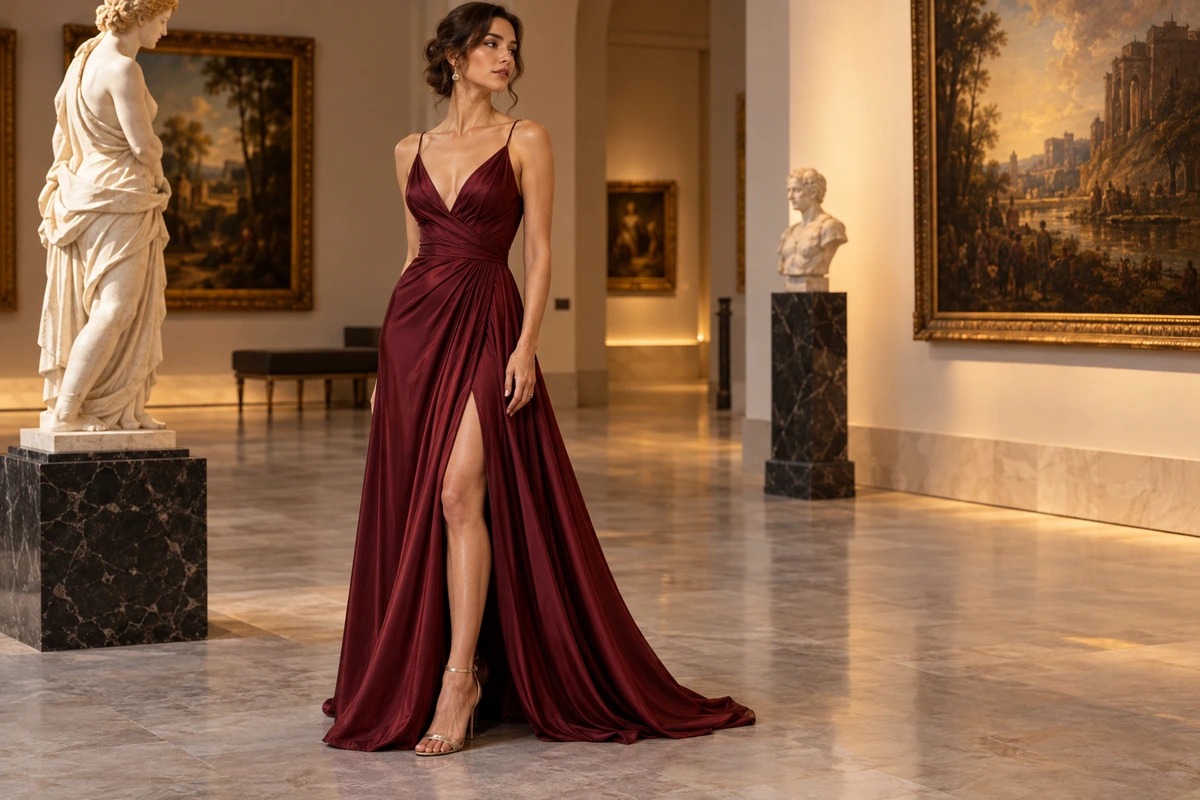
A practical brief takes the cloth to an apparent and usable outcome. Add the silhouette, desired surface, target drape, coverage map, stretch requirements and the suggested supporting layers. Affix an accepted swatch reference instead of making use of expressions like luxury satin or soft crepe alone.
Explain the order of priorities. In case the dramatic skirt shape is important rather than the ease at which it can be packed, indicate that. In case the wearer requires comfortable seating and a versatile hem above all other things, then that should inform development. Priorities allow the maker to suggest realistic changes on a tradeoff noticed in the first sample.
When discussing a collection with Siyinghong, current fabric candidates and sketches along with the information that the sample should prove. The last decision must be passed using the shape of the gown, the motion and the finishing. That makes a more solid foundation of production than the most expensive or impressive name of the fabric sounding.
Post time: Nov-06-2026