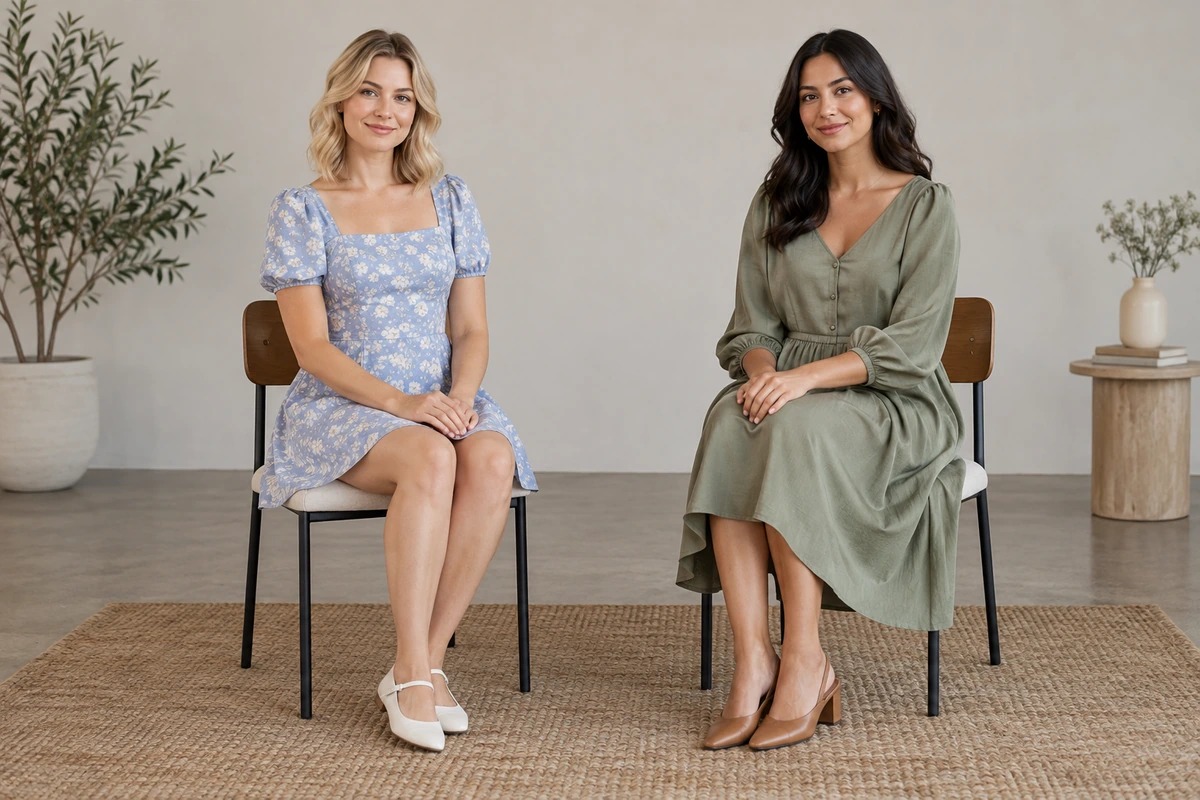
A mini dress usually ends above the knee; a midi falls below the knee and above the ankle. That difference affects coverage, visible proportion and movement, but it does not tell you which dress will feel better throughout a day. A loose mini may allow more stride than a narrow midi, while a midi may provide the coverage you prefer when seated.
The most useful mini dress vs midi dress comparison happens during ordinary activity. Instead of choosing from a still photograph, test sitting, walking, stairs and layering. The following checks help you find a length and cut that support your plans without relying on rigid rules about age, height or body shape.

Decide What You Need the Dress to Do
Write down the activities the dress must accommodate. A dinner with a short walk from the car has different demands from a day involving commuting, sightseeing and an evening gathering. Include the parts that rarely appear in outfit photographs: sitting in transport, reaching for a bag and carrying an outer layer.
Next, identify your preferred coverage. You may enjoy a shorter hem while standing but want more coverage when seated. Alternatively, you may prefer a short, roomy silhouette to fabric around your calves. Those preferences are useful design requirements, not problems to correct.
Separate personal comfort from the event’s requirements. If an invitation or workplace specifies a level of coverage or formality, that establishes a boundary. Within it, compare the actual garments. Neither mini nor midi automatically means casual, formal, practical or impractical.
Perform the Sitting Test
Sit in a normal chair, then in a lower seat if that resembles your plans. Notice where the hem moves and whether you feel comfortable reaching forward. A skirt can rise because of its length, close fit or fabric behavior, so look at the cause rather than judging the category alone.
With a mini, check the front and back coverage without arranging the skirt into a pose you could not maintain naturally. If you spend the entire test pulling at the hem, consider a longer version, more ease or a different shape.
With a midi, inspect tension at the hip and thigh. A longer hem does not prevent a close-fitting skirt from riding upward. Check whether a lining pulls separately or a slit opens beyond your preference. The waistband should remain comfortable through a meal, not only while standing upright.
Use the underlayers you actually intend to wear. Their seams, stretch and surface can change how a dress moves. Extra layers should solve a specific comfort need rather than become a way to tolerate a garment that does not fit.
Walk and Use a Step
Walk at your ordinary pace and turn without slowing down for the dress. A narrow midi may need a vent, slit or sufficient stretch to permit a comfortable stride. A full skirt can move more freely but may need attention in wind or crowded spaces.
A mini shows more of the leg regardless that it might have restricted movement in case the cut is tight. Examine circumference of hips and hem. Do not think that shorter cloth must necessarily imply more freedom.
Try a safe step or a short flight of stairs in the intended shoes. Notice whether you need a hand to manage the skirt, whether the slit changes coverage, and whether the garment catches against your legs. Hold your bag as you normally would so the test reflects real use.
If the dress has a wrap construction, observe the overlap during a turn and a longer step. A static front view may conceal an opening that appears in motion. A secure fastening does not necessarily guarantee that the skirt overlap provides the coverage you want.
Test Weather and Layering
For cooler conditions, compare each dress with the tights, boots and coat you expect to wear. A mini can be part of a covered outfit when layered; a midi can leave an exposed gap between hem and footwear. Warmth depends on fabric, layers and weather, not simply on the category name.
Check friction between layers. Some dress linings cling to tights or catch on a boot shaft. Walk for a few minutes instead of judging immediately after smoothing the outfit. If the skirt repeatedly rides upward, another lining, hosiery combination or garment may work better.
Consider wind for light skirts and outdoor plans. More fabric does not always mean more stability. A full midi can move considerably, while a heavier mini may remain steadier. The purpose is to choose a construction appropriate to the conditions, not to predict performance from length alone.
Try the coat closed as well as open. A coat hem close to the dress hem may create the effect you want, but an awkward overlap can also feel untidy. Compare the complete proportions before buying an additional layer.

Adjust from Daytime to Evening
Imagine a daytime museum visit followed by dinner. A relaxed mini with comfortable boots and an appropriate layer may work if the restaurant and your coverage preferences allow. The important question is whether you can sit and walk comfortably throughout the day, not whether the outfit resembles an evening photograph at every moment.
A midi with sufficient walking ease can provide another option. For dinner, changing a large daytime bag for a smaller one and removing a practical outer layer may be enough. Additional accessories are unnecessary if the dress already has a distinctive print or neckline.
For an event with a specified dress code, assess fabric and construction again. A dress you wear casually may not meet the invitation simply because you change its shoes. A refined mini can fit some party settings, while a casual midi may still feel too relaxed.
Treat these as examples of adjustment, not universal formulas. The same garment can work differently across venues, cultural expectations and personal preferences. If a dress requires constant management during the daytime portion, an evening accessory change will not fix that underlying issue.
Notice When Cut Matters More Than Length
Compare a roomy A-line mini with a tightly fitted midi. The mini may allow easy steps but offer less seated coverage. The midi may cover more leg while restricting stride. Choosing between them requires deciding which feature matters most for your plans.
Now compare a fitted mini with a fluid midi. The result may reverse. The longer dress could provide both movement and the coverage you prefer. This is why a category-wide declaration that one length is more comfortable is rarely useful.
Look at the bodice too. An unstable neckline, restrictive sleeve or pulling waist can make either length difficult. A dress is a connected garment: changing how it sits at the shoulder can alter where the hem falls and how the skirt moves.
When possible, compare candidates in the same shoes and underlayers. Change one variable at a time. That makes it easier to tell whether you prefer the length itself or another feature, such as fabric softness or waist placement.
If you are comparing dresses at home, use a short routine rather than a quick mirror check. Sit, stand, walk across the room, retrieve something from a low surface and put on the outer layer you intend to use. Repeat the sequence with the second dress under similar conditions. You are looking for repeated adjustments, not trying to produce a perfect pose.
Notice whether your attention stays on the clothing. A dress may pass a coverage check yet still feel distracting because it twists, catches or needs smoothing. Conversely, an unfamiliar length may feel easier after you learn how its cut moves. Give each garment enough time to distinguish a real fit issue from simple unfamiliarity.
If you use mobility equipment or spend much of an event seated, adapt the trial to your actual routine. Check fabric near moving parts, access to pockets or closures, and how the skirt settles in your normal position. A standing model photograph cannot answer those questions. The useful comparison is the one that reflects your day.
Keep the result personal. A friend’s preference for a shorter or longer dress can provide ideas, but it does not replace your own movement and coverage requirements. Choose the version that asks the least unnecessary work from you during the activities that matter most.
Record Your Comfort Priorities
Note a short trial record instead of a numerical score which suggests scientific accuracy.
| Test | What to record |
| Sitting | Preferred coverage maintained; waistband comfortable |
| Walking | Natural stride; no repeated hem adjustment |
| Stairs | Comfortable step; manageable skirt and bag |
| Layering | No persistent catching, clinging or bunching |
| Event fit | Meets the actual invitation or venue requirements |
Write one reason to choose each dress and one reason to reject it. A useful reason describes your experience: the hem needs constant adjustment, the skirt permits an easy stride, or the layers stay comfortable. A vague claim that one length is universally more flattering is less helpful.
For a brand developing short and midi styles, these movement checks can guide sample evaluation alongside measurements. Share the intended activities, fit preferences and coverage requirements with Siyinghong so the collection brief describes how the garments should work as well as how they should look.
Post time: Oct-24-2026