The material suitable when having bridesmaid dresses is the one that can be organized by the group and hence work with the timetable of the wedding. Chiffon will allow a soft surface to be supported, satin might be used to provide a glossy surface and crepe may be used to provide a less glossy and more defined look. Lace can be used as a focal point or overlay. It rests on the decision of what has to be shared and what each wearer has to make on his or her own part.
In the case of a wedding party, the cloth selection is a coordination process too. Various individuals might require various sleeves, support arrangements, dimensions and alteration plans. A strong selection process maintains the presence of such differences, but safeguards the overall design. Begin with group brief, then specify the materials.
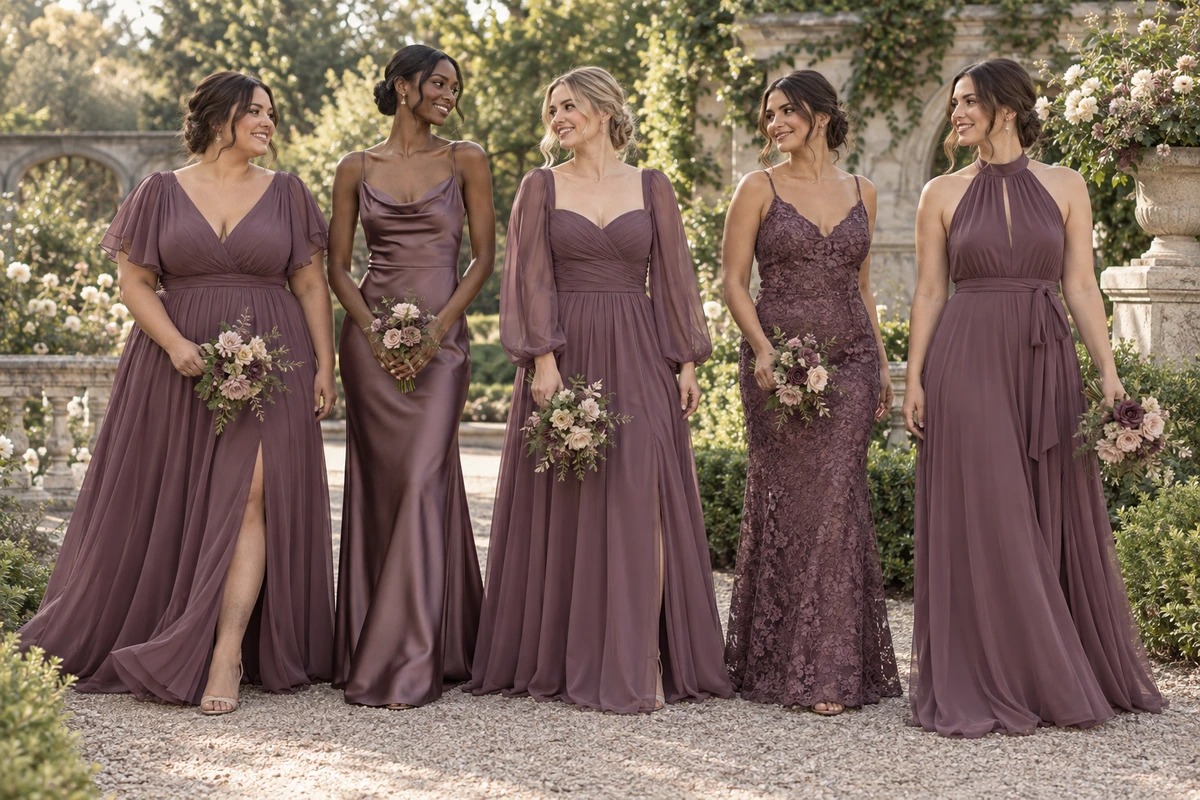
Establish the Common Rule Before Naming a Fabric
Determine the person in charge of overall appearance and features fixed. The common needs may include color family and length of hem and the choice of neckline and sleeve may be adaptable. The style may be required in another wedding that is to be held. Note the agreement realised instead of presuming that the dresses of bridesmaids need to be in a matching set.
Separate necessities and likes. A ceremony coverage request can be crucial; a certain sheen preference may be compromised. This difference aids when one fabric fails to provide an excellent fit or comfortable requirements to the individual. It also prohibits reopening decisions which were already determined by each new sample.
Talk about the budget and payment format. Do not assume who is going to pay for the dress, or alterations or accessories. The choice of fabric can be compared easily when everybody is aware of the overall financial plan and uses it effectively in the future.
Assign Each Fabric a Role in the Collection
Chiffon for soft overlays and movement
Chiffon is an interesting option, when the collection requires floating skirts, soft gathers or sheer sleeves. Test it with the proposed inner layers as these will form a lot of the coverage and feel. A chiffon grouping may attach to a number of bodice types keeping a pertinent layer and action.
Satin for a smooth shiny surface
Satin is effective where reflected light and a clean outer surface is involved in the design. Inquire about what satin is on offer: a flowing one and a heavier one may result in quite different dresses. Determine the look of seams, lining and fit with samples particularly when designs are closely-fitting.
Crepe for restrained texture
Thin fabric can be used as a basis for modest outfits, sleeves and dresses to be worn later on. The type encompasses various fibers, weights and elasticity. Choose the particular fabric that fits the collection and not all crepe dresses to possess the same comfort or construct.
Lace for a deliberate accent
Lace has the ability to add texture with a bodice, sleeve or overlay. Arrange it such that it does not form an unintentional focal point with the rest of the dresses. Coverage, scale of motif and colour below should be approved alike. A lace feature is a design choice, not merely a replacement to a solid fabric.
Allow Wearers to State Their Practical Requirements
Ask everyone to write about requirements privately. Sleeve coverage, stability of necklines, whether the dress will be worn with an undergarment, and any kind of movement that the dress has to support are useful information. Do not match fabrics with the body shape and do not think that all the members require the same size.
Inquire about the real day. The person assisting in preparations might have more difficulties moving the arms than a photograph might imply. The other wearer can spend a longer time seated or use mobility appliances. These are generic design inputs. The use of a coordinated collection must facilitate participation instead of making everyone handle a hard garment all through the event.
Take those requirements to the shortlist prior to ordering. When there were only a few changes made to make a proposed dress work, then another approved style could be more viable. This aims at finding a fit with proper design and sizing rather than to make wearers alter their body to fit in a chosen sample.
Approve Color Across Fabric Families
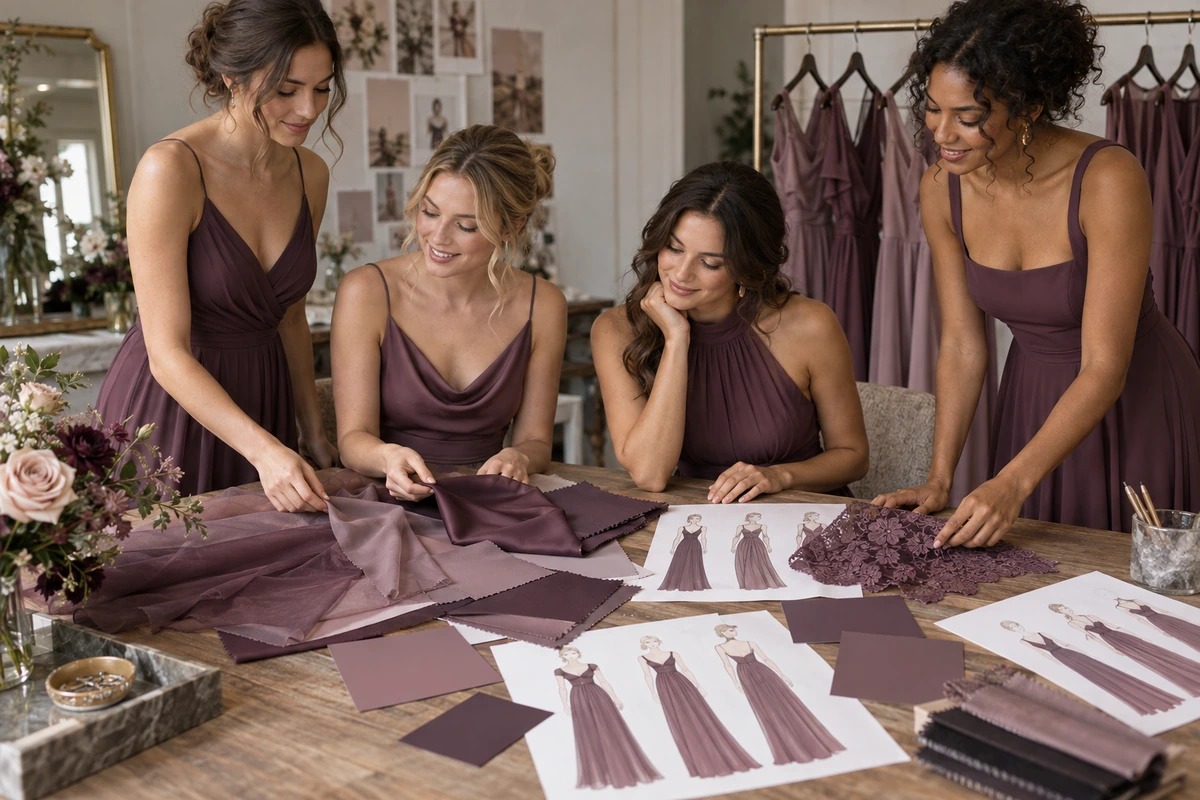
Choose physical references where possible. The same color term can be used to refer visibly different colors in chiffon, satin, crepe and lace. A smooth, shiny surface can seem lighter in certain parts and darker in others whereas a sheer cloth can gain some of the appearance of the fabric underneath it.
Look at the samples as a team in the same light. Review using the proposed lining with transparent materials and fold the cloth into shapes similar to the dresses. Flat color card cannot reflect all of the effects of a collected shirt or a covered bodice. Keep the approved physical references to have photographs to be used in discussion.
When precise uniformity is a priority, inquire of the supplier how they address the issue of fabric and color uniformity. In case variation is purposeful, establish allowable range and approve the combination and not individual pieces separately. Use of mixed palette is easy to implement in case everybody knows the extent of difference they must tolerate.
Match the Cloth to the Wedding Timetable
Track production on the day from preparation until arrival home. There might be wind or uneven ground at an outdoor ceremony; a long time sitting at a reception, a crowded situation moving between temperatures or crowded dancing. These are the elements of the garment that are influenced like the distance of the hem, waste of the skirts, and undergarments.
Do not reduce the selection with a season designation. Summer wedding which is mostly an indoor affair is different to a midday garden wedding. Even a winter wedding could be accompanied with a cozy reception area. Inquire where party will spend time then select the fabric system and outerwear based on that.
In the case of travelling, make sure how dresses are to be packed and prepared on arrival. Certain clothing will require additional room or expert treatment. Do any preparation you need some time to check the outcome. That all bridesmaids can safely steam an unknown material just before the wedding is not why you should assume so.
Compare Prices of Complete Dresses
Fabric cost is not the entire cost. The total can be modified by lining, support, decoration, pattern complexity and alterations. A cheaper outer cloth may end up costing a lot when it has a number of layers or is a challenging finish.
| Cost or requirement | Clarify before approval |
| Dress specification | Which lining, support and decoration are included? |
| Individual fit | Which alterations may be needed for each wearer? |
| Coordination | Are approved colors available in every chosen style? |
| Delivery plan | What dates are confirmed by the supplier? |
| Event preparation | Is pressing or other professional care needed? |
| Later use | Does rewearing matter to the person paying? |
When comparing quotes, confirm that they refer to similar requirements. One of them may contain a lined bodice and another not. One can cover a given change and another provide the ordered dress. Get clarification rather than thinking that a different price will represent nothing but the quality of the fiber.
Make a realistic timing based on information which the supplier confirmed. There are different activities involved in sample development, approval, production, delivery and fitting. Do not consider a production period that has been estimated as being time spent all the way till the wedding.
Use a Group Approval Sequence
On the one hand, confirm the common visual direction by a few fabric references. Second, enable all wearers to choose among the mutually accepted patterns or details. Third, check the combination together. This plan restrains unneeded purchases and leaves space to personal necessities.
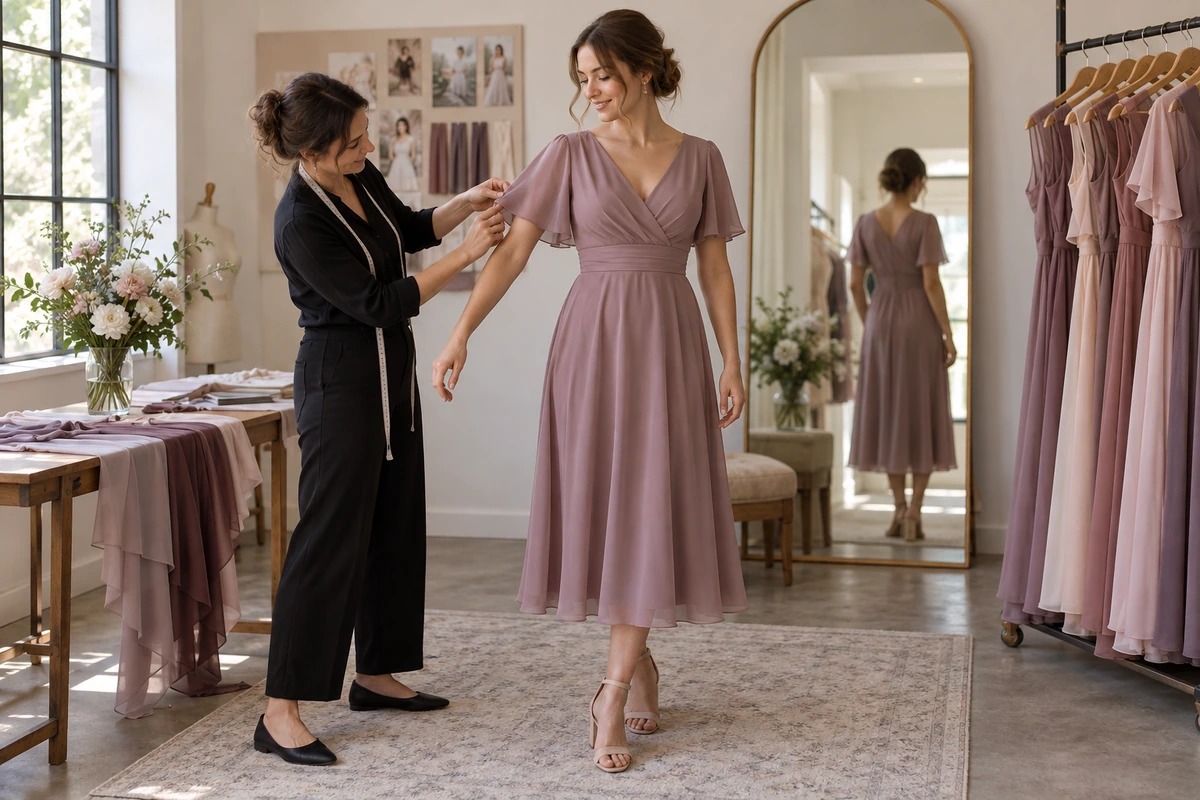
Then check fit and construction. A single size can be used to show a fabric and finishing, but will not be able to tell that all sizes will be used properly. Apply measurement process of supplier and consider personal requirements. Enquire about the evidence of the proposed range of size not solely upon a solitary model photograph.
When a problem emerges, find the smallest useful change you can. Another sleeve or lining can overcome it and does not involve modifying the entire range. Should the outer wear be the issue, re-decide, frankly. When placing an order, do not allow an unrecorded substitute to get into the order, merely because it looks like one on a screen.
Conclude by verifying the practical considerations; the responsible party to make the order, to receive and check deliveries and to make the changes. The most appropriate approval process is one that is clear and no one will keep asking the entire group more than once what is to be done.
Concur on the manner in which late changes will be addressed. Replacement wearer, new size request or unavailable fabric might warrant new decision but must be compared with the existing approved set. Find someone who can facilitate that inspection with the supplier and the harmed wearer. Only communicate changes that involve personal choices of the rest of the group. That simplifies the process to manage and retain the shared visual plan. When a substitute is incapable of close imitation of the original, then think whether a deliberate difference may be preferable to a failure to imitate it perfectly.
Keep One Record for the Order
Make one documented record of approved reference of the fabric, color, style, lining and allowed variations. Record the selection of each wearer and any incomplete fitting information. Make the personal measurements readily available to anyone who needs them to make the order and do an installation process.
When dresses come, check them with the settled references and make sure to go through the whole set before the event. Check the color relationships, missing parts and apparent building problems at a time when possible to call the supplier. An orderly review should be finalized.
This is also a development framework that helps brands that intend to come up with bridesmaid collection. Present Siyinghong with the collective-fabric direction, the variety of silhouette and the fitting needs that the samples have to contend with. An effective material selection will assist in the brand image of the line as well as the various individuals who will utilize it.
Post time: Nov-05-2026