A sequin dress moves and sells with the help of movement and light but is made with weight, attachment and careful handling. A display sample is able to conceal issues which arise after dancing, packing or re-wearing. The question which is useful to a wholesale buyer is to be able to repeat the same surface, fit and comfort across sizes, colors and production lots.
Booking of fabric should be determined by that difference. The size of sequins used, coverage, and how the base is made and mounted influence the pattern, the sewing order, lining, cost of labor utilized and the plan of delivery. Taking embellishment as a later ornamentation decision tends to shift the risk to mass production, where fixes are more unwieldy and costly.
Delimit the Complete Occasion to choose the Surface of the Sequin.
Sequins are not expected to perform in the same way across a short party dress, a fitted cocktail, a floor-length evening dress, and so on. Establish wearing time, anticipated movement and contact with bare skin. These choices determine a useful threshold on the weight, hardness and scratch danger.
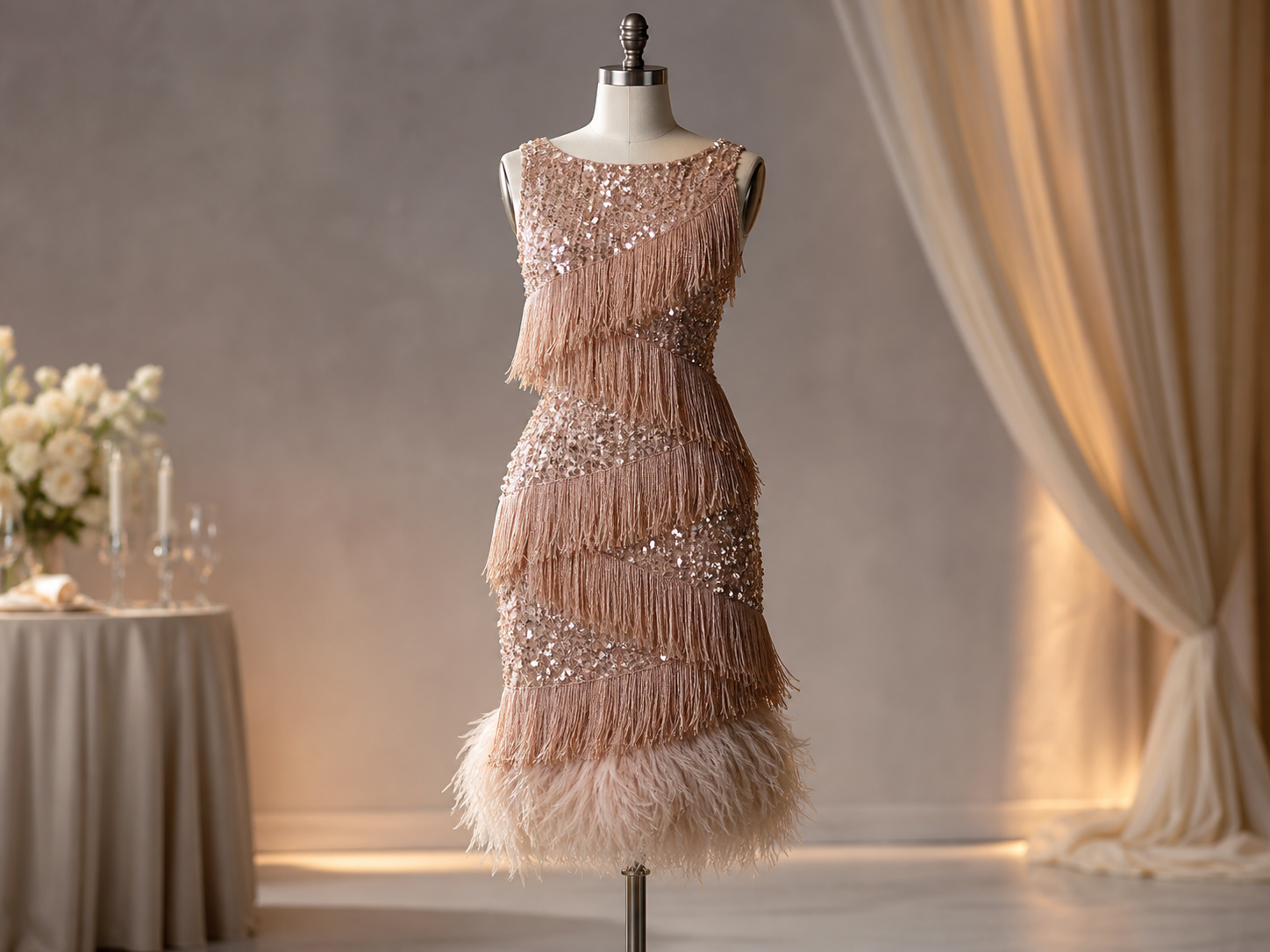
Separate photographic impact from wearing performance.
Huge reflective discs might yield a great campaign look but can be cacophonous, stiff or exposed in dense crowds. Smaller sequins tend to make a less vivid and more continuous surface. Still photography, video under moving light and wear trial should therefore be approved as opposed to a single front sample image.
Indicate the Sequin Material, Finish and Attachment.
“Sequin fabric” is not a full description of the material. Sequins can be flat, cupped, reversible, and can be made of either transparent or opaque, and the finish can be metallic, iridescent, matte or holographic. They can also be sewn in rows, embroidered or attached to an underlying mesh. All combinations alter the light reflection, shedding risk and the manner in which a seam can be built.
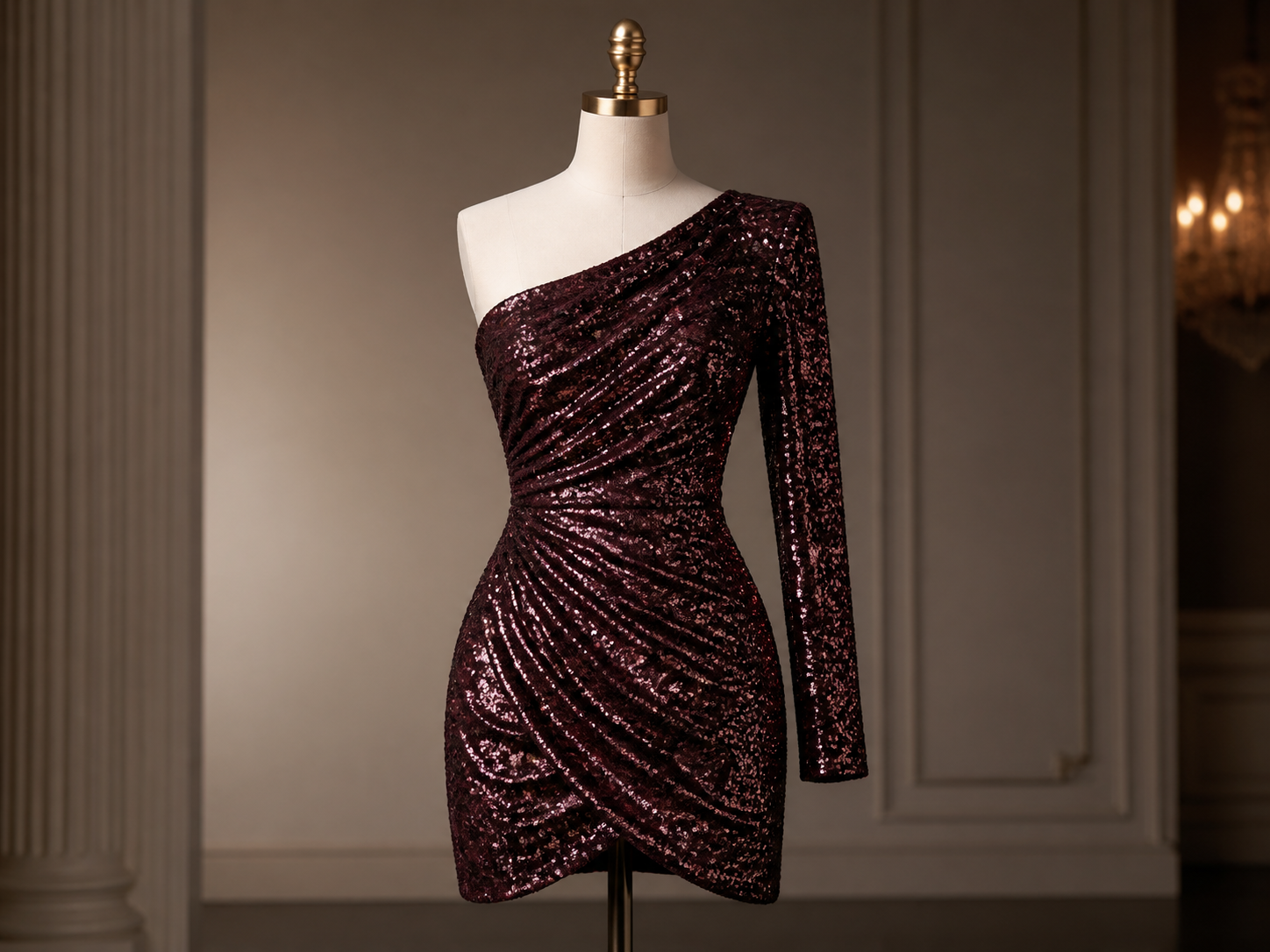
The authorized trim card is allowed to keep a sample swatch and document the data the purchasing and production process will have to repeat:
- Diameter, shape, color and surface finish.
- Base fabric structure, mass, direction of stretch and recovery.
- Attachment technique, stitch spacing and thread specification.
- Negotiated density of coverage and any intentional open areas.
- Tolerable difference in shade or shine with agreed upon lighting.
Have the Base Fabric Bear the Decoration.
The support should hold the decoration without increasing in length, twisting or collapsing at the shoulder. Light mesh can be easily moved about, but thick ornamentation can stretch it out. The silhouette may also be distorted due to different stretch between embellished and plain areas.
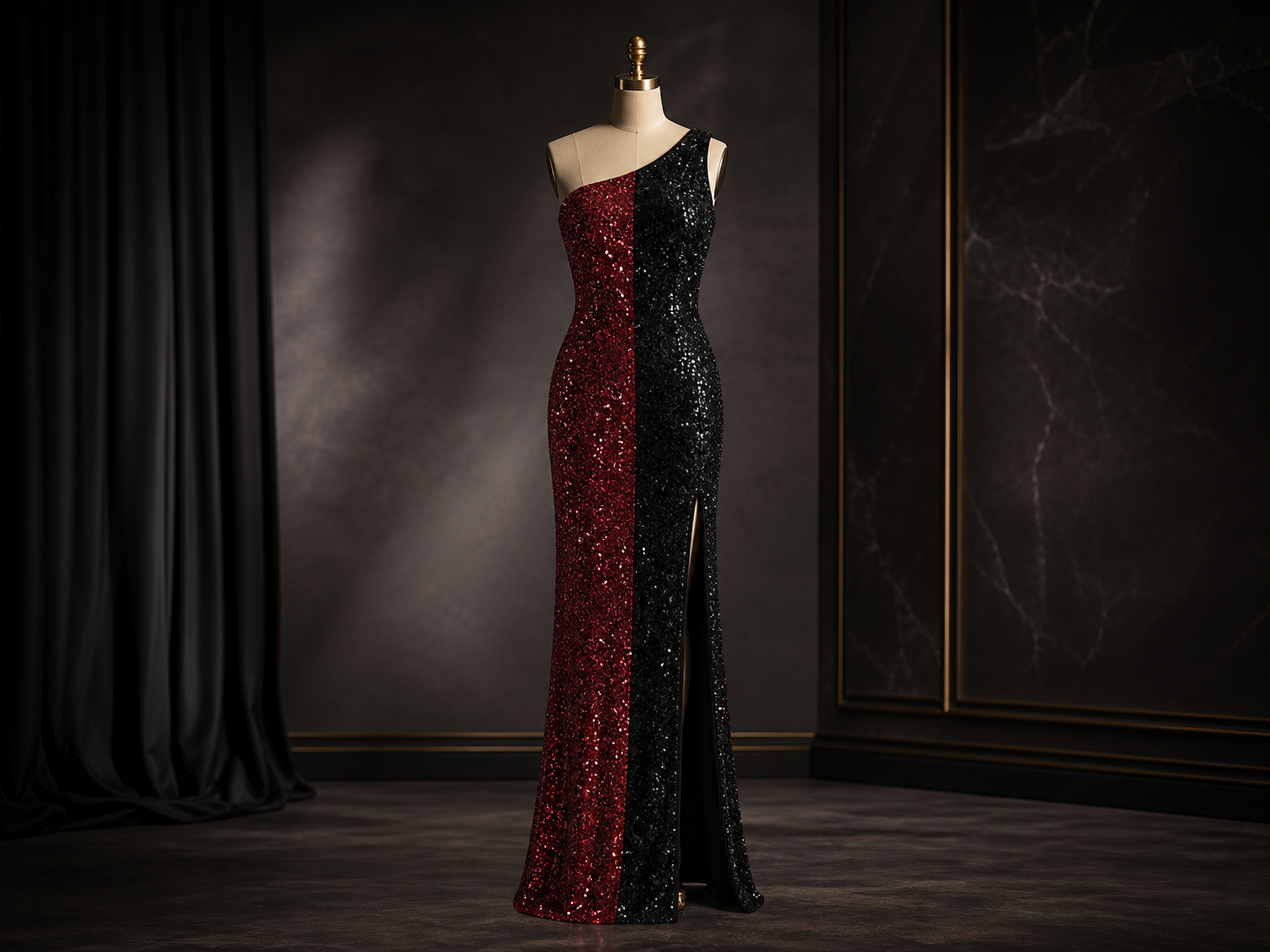
Test weight before approving length and support.
Always allow a full day to hang the sample and then recalculate shoulder-to-hem length, neckline position and side-seam balance. A long or heavily covered style can also entail the need to have a stable shoulder structure, waistline support or a controlled lining attachment. This relaxation test must be approved before the final pattern becomes approved.
Build Sequin Clearance into the Pattern and Seams.
Direct sewing over hard sequins also ends up breaking the needles, destroying the ornamental surface and leaving a painful bump. Production can require a visible seam line on which the sequins are taken off prior to assembly and re-attached by sewing or by gluing. The clearance width should match the seam type and must be evident in the approved construction sample.
Special care should be taken with necklines, armholes, cuffs, zipper openings and hems due to their edges coming into contact with the body, experiencing repeated handling. Tails of loose threads and half cut sequins are minor flaws, with instant impact on comfort and perceived quality.
Protect Fit against Uneven Weight and Limited Stretch.
A sequin dress may fit differently than the plain base on which the initial pattern was created. Decoration constrains stretch, with a weight acting vertically. When coverage is stopped suddenly at the waist or hip, the transition can also result in a ledge that is visible or in a transition of recovery. The actual lining stack and production fabric should be used in evaluating the fit.
Review a moving size set, not only the sample size.
Test with at least one larger and one smaller size as the wearer is walking, sitting, lifting the arms and turning. Note stability of necklines, pressure in shoulders, zipper movement, recovery of the waist and hem balance. Some local corrections might be required in grading so that the density of decoration or the support varies instead of one consistent increment across the entire dress.
Make the Inside Comfortable Enough for a Full Event.
The interior is seen by customers over several hours, yet the picture is of the outside. Abrasive seams should be lined and the backs of the sequins or threads must not come in contact with the skin. The lining should move with the outer layer; a close lining may draw the dress upwards, and a loose lining may come in at the waist.
The underarm, side seam, neckline, zipper guard and hem are to be checked during the wear test during movement. It is impossible to touch a flat sample to get the sense of comfort. It should be verified on the body and recorded alongside the visual approval.
Control Surface Consistency in Bulk Production.
Bulk variation usually begins before sewing. Trim lots can be different in the way they reflect the light even though they have the same color names. Roll inspection should compare shade, finish, space, missing sections, tension and width of base-fabric. Single garment panels need to be in the accepted direction since turning them to yield can result in a two-tone effect.
Defects that can be fixed should be detected with the help of inline inspection. One such control sequence is:
- Check the first cut panels against the location reference.
- Check attachment loss after handling and seam construction.
- Comparison of surface densities and directions of left and right sides.
- Check zippers and openings without snagging the decoration.
- Log repairs so repeated defects reveal a process issue.
Pack the Dress for Pressure, Friction and Unpacking.
A completed garment may get out of the factory properly and arrive with scratched sequins, the crushed surfaces or the decoration having fallen on to other pieces. Folding must avoid hard creases through dense areas. Depending on the surface, tissue, protective garment bag or interleaf may be required and the carton pressure should be tested using the actual pack ratio.
Treat unpacking as part of quality control.
Open a packed trial carton after simulated handling, and inspect dresses in order of sale. Record the amount of shaking, steaming or manual preparation to photograph or display. A wholesale pack counts as a success when the garment is quick to present without any unnecessary repair, lost sequins or marks on the surface.
Accept a Standard that is Reorder-supportive.
Records that outlive the first order: material swatches, location photographs, seam-clearance notes, lining descriptions, measurements, repair limits and packing guidelines should support the signed sample. Siyinghong can incorporate this in creating bespoke sequin dresses and in organizing mass production, however it is up to the buyer to determine the visual and wearing features that constitute acceptance.
A reorder should also contain a comparison method for new lots. Changes in shine density and hand can be located more easily before cutting out starts by retaining the accepted sequin and base fabric, instead of by a simple colour code.
FAQ
What can a buyer do to minimize the shedding of sequins?
Approve the attachment method and thread choice on the actual base fabric and test high-movement areas like underarm, waist, zipper and hem. The apparent difference between a single repairable loss and recurring attachment failure should be detected by bulk inspection.
Are all sequin dresses to be fully lined?
Not necessarily. The decision is made based on the transparency, scratch risk, fit and the design in mind. But still, body-contact areas and other exposed seam areas must have a comfortable finish that is stable.
What is the reason why two identical sequin lots might appear different?
It can be changed by variations in film finish, dye lot, sequin direction, base color and viewing light. Compare complete material stacks under the lighting used for approval and not the color names provided by suppliers.
What to put on a sequin dress quote request?
Attach design or reference, target market, size range and quantity, preferred base and sequin direction, lining requirements, placement needs, shipment date, labeling and packing instructions. Indicate whether or not the target price is all-over coverage or selected embellished areas.
Post time: Sep-04-2026