Satin and silk do not comprise contrasting fabric types. Satin is a weave, whereas silk is a fiber. The dress can be created using silk satin, polyester satin or a different type of satin. Fabrics with another surface can also be woven with the help of silk. The comparison that is useful starts with the composition label but not with shine.
When you want to know the difference between satin vs silk dress before purchasing then find out what each of the dresses is really made of. Then and only can you make comparisons of drape, comfort, construction, care and price. A satin dress is not necessarily made of silk, and a dress consisting of silk is not necessarily shiny.
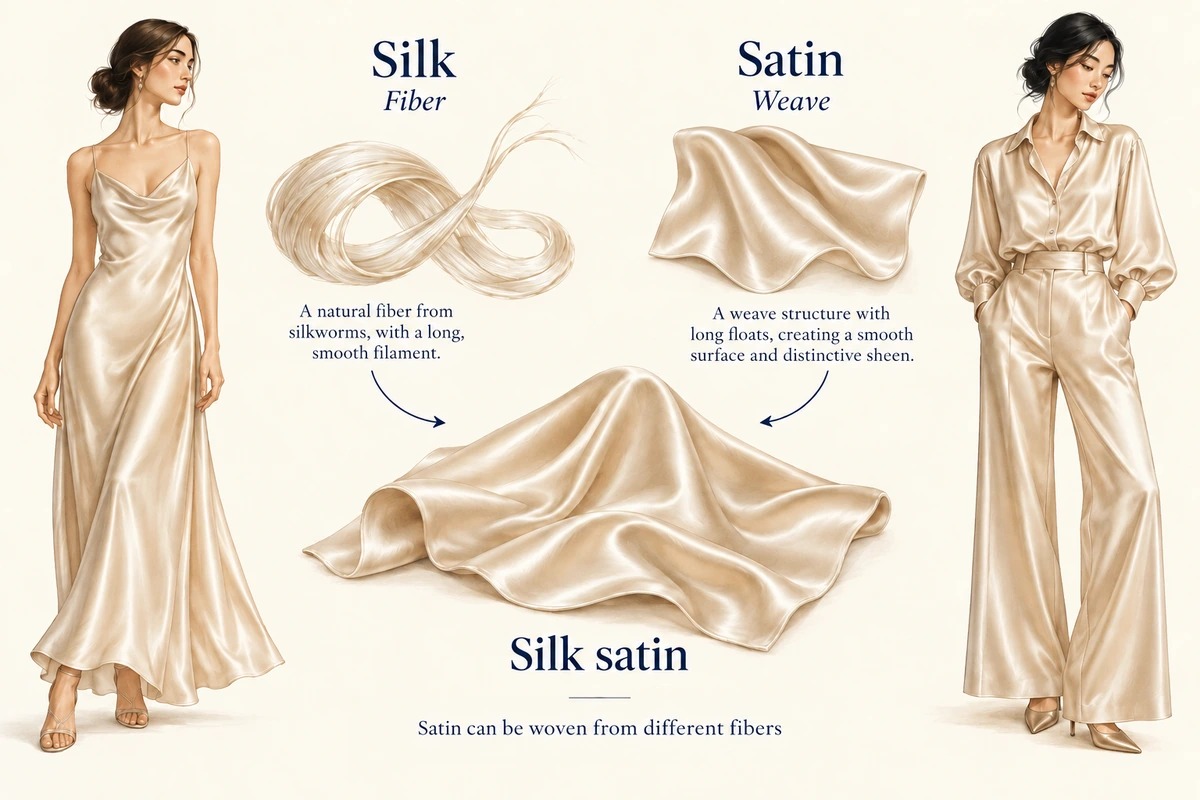
Separate Fiber from Weave
Fiber describes the material used to make the yarn. Weave describes how yarns interlace to create a woven fabric. These are different levels of information, much like ingredients and the method used to combine them.
Satin weave creates characteristic smoothness and reflected light through its structure. It can be made with different fibers. The Museum of Fine Arts Boston’s CAMEO satin weave entry identifies silk, polyester and nylon among fibers used in this construction.
Silk is a description of the fiber, so it does not define one weave, thickness or finish. A silk cloth can be relatively matte looking or shiny. The overlap is silk satin: a silk fiber in a satin structure.
This distinction changes the shopping question. Instead of asking whether satin or silk is better, ask whether you are comparing silk satin with polyester satin, or comparing two silk fabrics with different constructions. Those are more precise and useful comparisons.
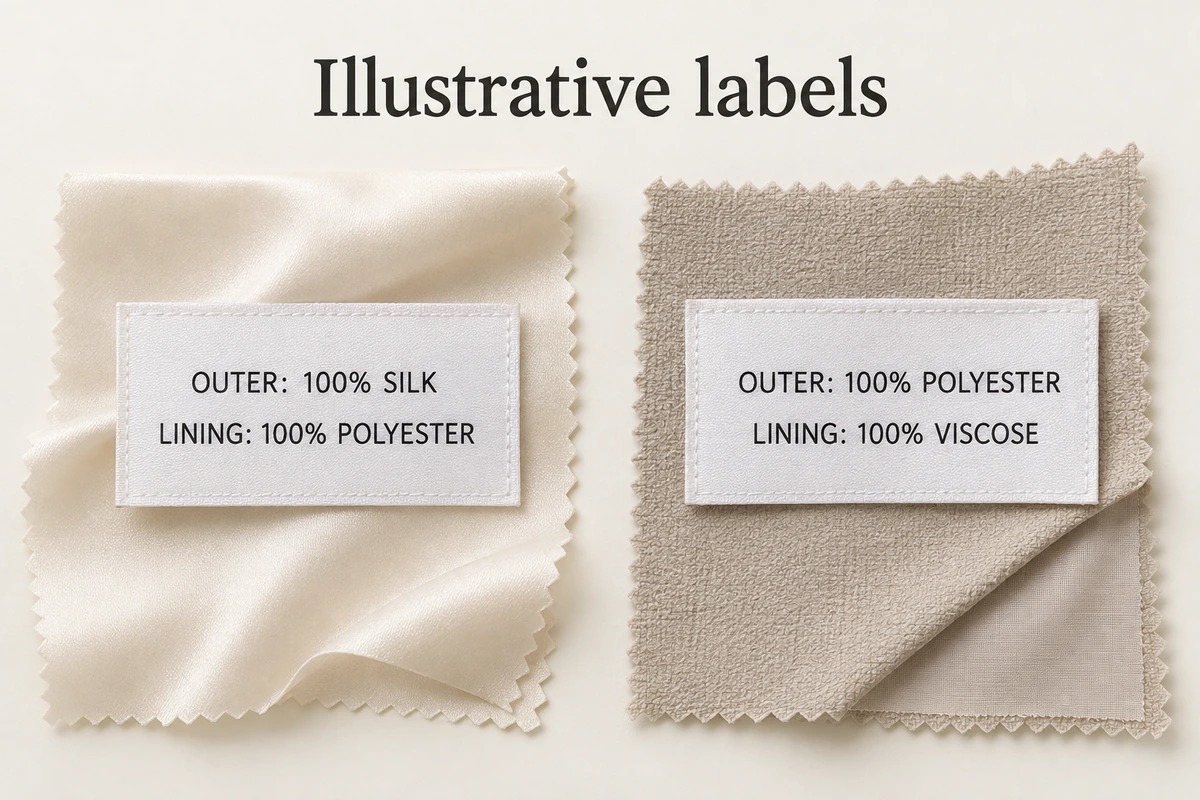
Read the Label Before Trusting the Product Name
Look for the fiber composition of the outer fabric and the lining. A silk outer layer may have a different lining, and the lining influences what touches your skin. A blend should identify its constituent fibers rather than being treated as identical to a single-fiber fabric.
Words such as silky describe an impression and do not by themselves establish silk content. Similarly, satin finish describes a surface effect or construction reference without telling you every material in the garment. Ask for clarification when a product title and the detailed composition appear inconsistent.
Check whether added stretch is listed. Stretch can affect fit, but the presence of an elastic fiber does not tell you exactly how far the garment will stretch or how well it will recover. Construction, cut and the amount of ease also matter.
| Label or description | What it establishes | What it does not establish |
| Silk satin | Silk fiber with satin construction | Garment quality or easy care |
| Polyester satin | Polyester fiber with satin construction | Exact weight or comfort |
| Silk blend | Silk combined with other fibers | The proportions unless listed |
| Silky | A descriptive impression | Verified silk composition |
| Satin dress | A fabric or surface category | The fiber without further detail |
Compare Like with Like
If your choice is silk satin versus polyester satin, try to compare garments of similar weight, cut and lining. Otherwise, you may attribute a difference to the fiber when it actually comes from the pattern or fabric thickness.
A fluid bias-cut dress and a structured dress with a stiff lining will behave differently even if both use silk satin. Likewise, two polyester satin fabrics may differ considerably in weight, surface and hand. The material name is useful, but it is not a complete performance specification.
If shopping in person, hold the fabric gently and observe how it falls without stretching it. If shopping online, look for clear moving views and ask about lining, garment measurements and the fabric’s weight or intended structure. Do not expect a single close-up to reveal how a full skirt will behave.
Treat broad claims cautiously. Neither fiber name guarantees that a dress will feel cool in every setting, remain wrinkle-free or survive a particular cleaning method. Those outcomes depend on the finished garment and conditions of use.
Consider two product descriptions. One says satin dress but provides no composition, while another identifies the outer fabric, lining and care method. The second gives you more information even before you decide which material you prefer. Ask the first seller for the missing details instead of filling the gaps with assumptions about silk.
If you can obtain a swatch for a custom order, evaluate it in the light and with the lining intended for the garment. A small sample can help you understand color and surface, although it cannot fully predict how a completed dress will hang. A finished sample remains useful for judging seams, proportions and movement.
Keep any comparison fair by recording what you actually know. Separate observed qualities, such as a heavier hand or visible sheen, from unverified claims about durability or temperature comfort. This makes the decision more honest and gives a supplier specific questions to answer. It also prevents a preferred fiber name from obscuring a poorly suited garment construction.
Look Beyond Shine to Drape and Construction
Shine is affected by the surface, lighting and viewing angle. It is not a reliable way to prove that a dress contains silk or that it is well made. A bright studio photograph can also exaggerate sheen compared with ordinary indoor light.
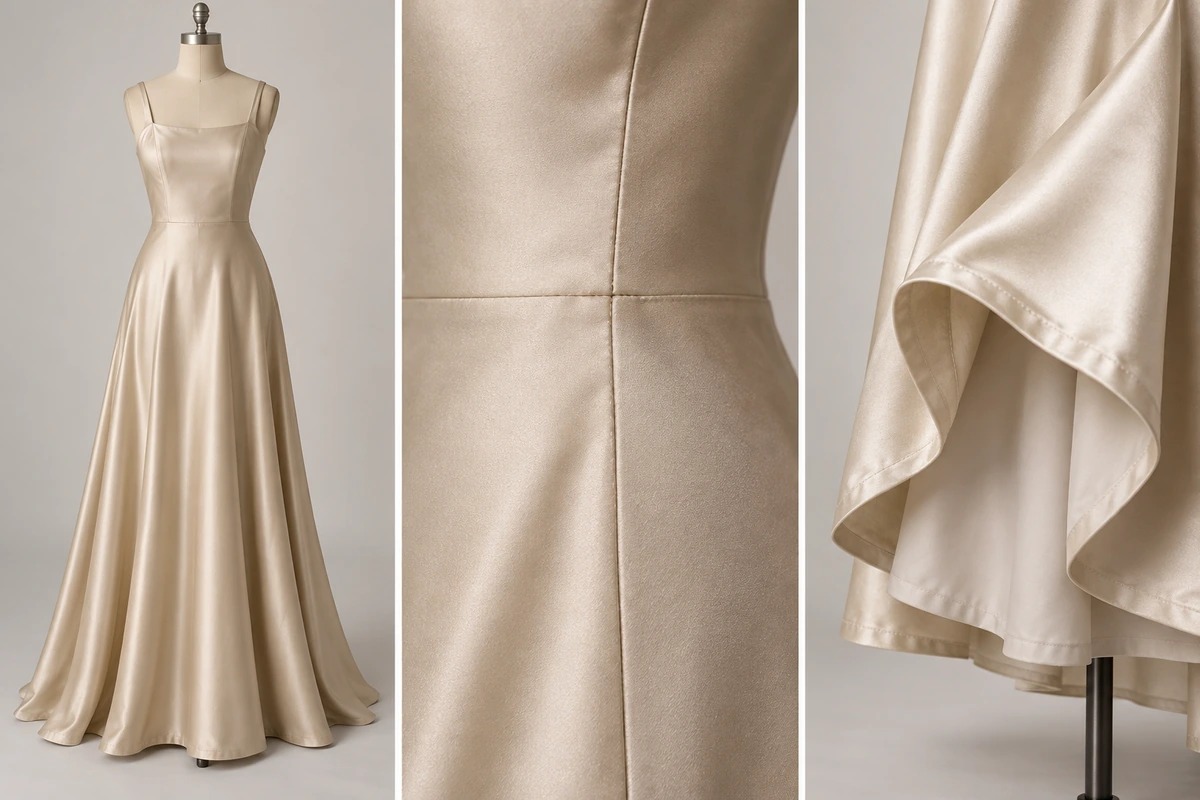
Study the seams. On a reflective surface, puckering or tension may become conspicuous. Check whether the neckline lies as intended and whether the hem hangs evenly. A simple satin design leaves little visual distraction, so these details can strongly affect its appearance.
Consider how the dress is cut. A bias-cut skirt may follow the body differently from a garment cut in another direction. That behavior should be understood as part of the design, not automatically credited to silk or blamed on polyester.
Look at the lining and fastenings as carefully as the outer fabric. A zipper should operate without pulling the surrounding material out of shape. A lining should support coverage and movement without creating unwanted bulk. Quality is visible in how the complete garment works, not only in the composition of one layer.
Assess Comfort as a Garment Question
Comfort includes fit, surface feel, heat, movement and the layers against the skin. Your experience may differ between a loosely cut sleeveless dress and a closely fitted lined dress even when their outer fabrics share the same fiber.
Try sitting and walking in the complete outfit. Notice whether the lining restricts movement, whether the skirt clings in an unwanted way and whether the waistband remains comfortable. Test with the underlayers you plan to use, because their interaction with the dress can change the result.
If you will wear the dress in warm conditions, ask about the whole construction rather than relying on a promise that one fiber always feels breathable. Weight, lining, fit and the environment all influence the experience. If you are sensitive to a particular material or finish, use your own experience and the detailed label as guides.
Online shoppers can reduce uncertainty by requesting the lining composition and a clear description of the fit. A vague claim of luxurious comfort offers less practical information than knowing what touches the body and how much room the garment provides.
Follow the Care Instructions for the Finished Dress
Use the garment’s care label. Do not assume all silk must be treated identically or that all polyester satin can be washed in the same way. Dye, embellishment, interfacing and lining can affect the instructions for the finished item.
Read those instructions before purchase if maintenance matters to you. A dress requiring specialist care may still be a good choice, but the ongoing cost and convenience should be part of the decision. Ask the seller when the care information is missing.
Avoid experimenting with strong heat or improvised stain treatments on a visible area. A smooth reflective surface can show damage clearly. For an unfamiliar garment, follow the label and seek appropriate cleaning advice rather than assuming that an online household trick is safe.
Store the dress according to its construction, keeping it away from rough hardware that could catch the surface. Support heavier garments appropriately rather than hanging them indefinitely from delicate straps. Check the garment after wear so small issues do not remain unnoticed until the next occasion.
Decide What the Price Is Buying
Silk can contribute to a higher material cost, but fiber alone does not explain the final price. Fabric quality, the amount used, pattern complexity, finishing, labor and brand positioning all influence what you pay. A higher price is not a substitute for examining the garment.
Compare the total purchase: fit, alterations, useful occasions and care. A dress that suits your life and needs few changes may be a better choice than a more prestigious material in an unsuitable cut. Conversely, if you specifically value the feel and appearance of a particular silk fabric, that can be a valid reason to choose it.
Before ordering, ask for the outer and lining compositions, relevant measurements, stretch information, care instructions and return conditions. Those answers provide a stronger basis for a decision than shine or the word luxury.
For brands, write the fiber and weave separately in the development brief, then define weight, lining, fit and care expectations. Discuss the intended result with Siyinghong so that a satin collection begins with clear material requirements rather than an ambiguous comparison with silk.
Post time: Nov-09-2026