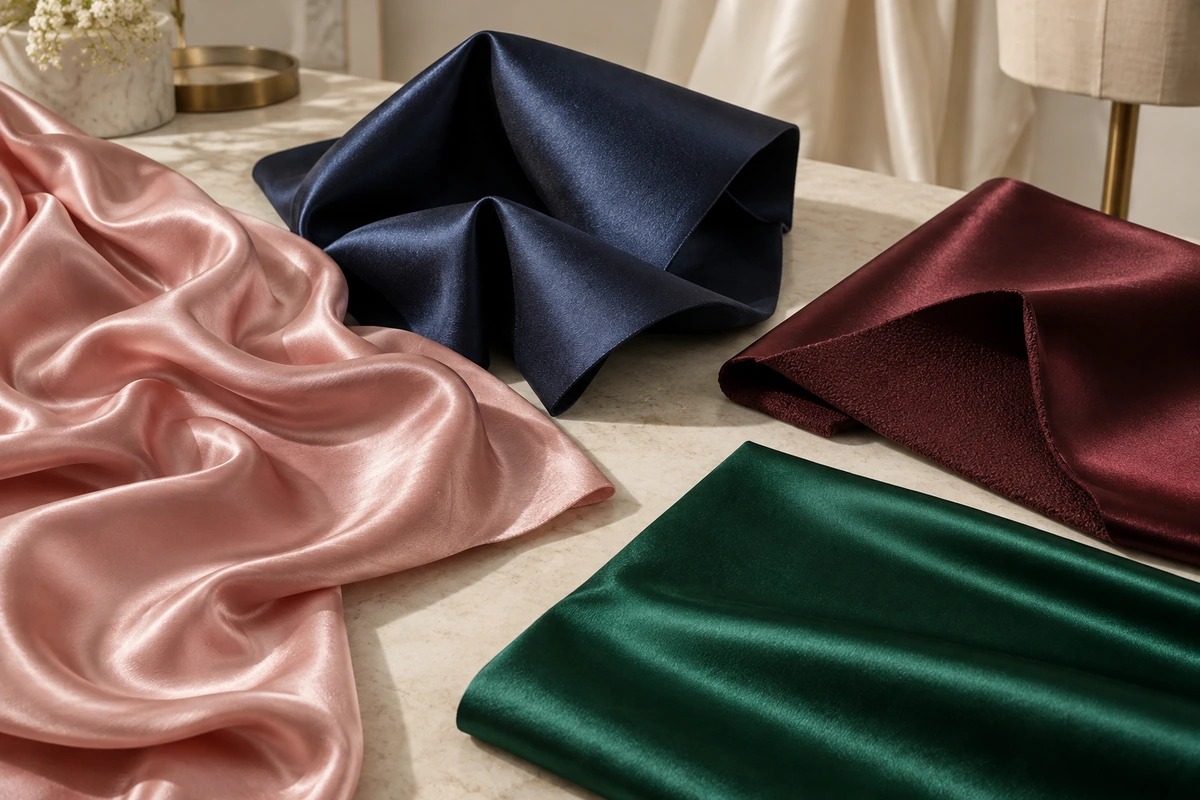
Satin fabric is commonly available in charmeuse, duchesse, crepe back satin and stretch satin, with other surface descriptions like hammered satin or printed satin. These names are not a group of absolutely distinct types. One of the fabrics could be polyester stretch charmeuse, and the other could be silk crepe back satin. Read one of the terms as the information about another part of the material.
In dressmaking, body, drape, surface, stretch and composition are the key differences. A fluid satin that is perfect to make a cowl may not suit a sculpted bow. This guide defines the names by the choices that they are used to make, to enable you to make a clear choice of a sample.
Know What a Satin Name Can Say
Satin is a weave related to yarn floats that form a comparatively smooth face. It is not a synonym of silk. Silk may be used in satin fabrics and polyester and other fibers may be used and fiber composition should be specified, not as part of the name of the construction.
Retail names may be to describe a known kind of fabric; they may describe an effect, finish or target market. An example of this is bridal satin, which might mean a variety of fabrics that are being sold as occasionwear and not a technical specification. Request the actual, composition, weight, and sample reference and then consider that as a complete description.
A related term, often used to refer to a weft-faced construction of satin, usually with spun yarns like cotton, is sateen. It cannot be considered a spelling variation that can assure a same cloth. When pattern or supplier dictates either of the terms, make clarification of the desired properties of the fabric then replace the other.
Charmeuse for Light Fluid Drape
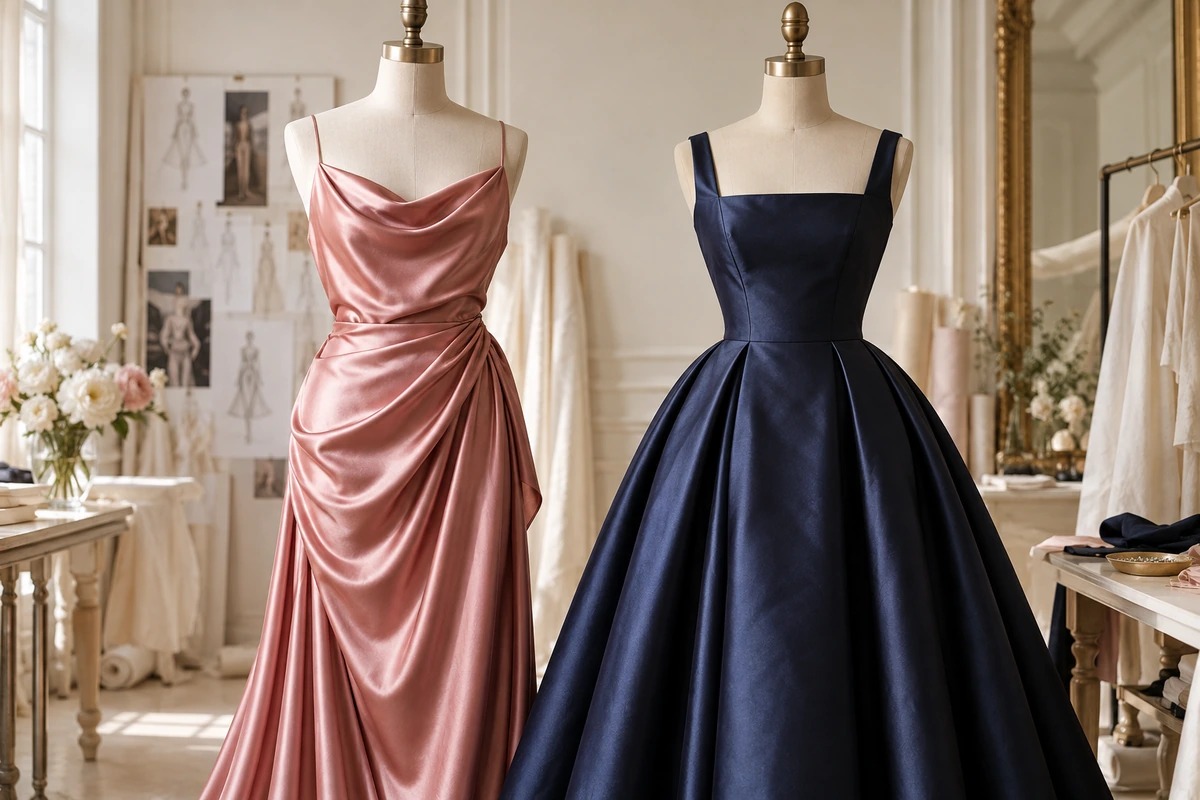
Charmeuse is typically an lightweight satin with a fluid fall. It is an effective type to consider for loosely fitting dresses, bias construction and elements that have to fold themselves into tiny creases. It can be handwoven, or composed of synthetic fibers, so even its name by itself does not determine its composition.
Take one end of a sample and observe the falling. Then wrap it around a rounded shape and compare the two sides. Seek out the degree of movement you desire, but not just the brightness of the face. A swatch might be pretty and would only be suitable as a dress; it might be too low cut or a loose garment.
To wear closely, consider the proposed inner-layer at the first stage. Its texture and seams, might determine what may be seen by the outer satin. During construction also to consider: a fluid cloth can turn when it is cut or sewn. It is supported by the trial seam and a small draped sample that can help with having a feeling about whether or not the pattern and fabric are a working pair.
Duchesse for Body and Shape
Duchesse satin is generally, where greater body and form are desirable. It is a contender of properly cut skirts, defined bodices and theatrical folds. A duchesse proper is likely to possess a wider feather than is the case of a light charmeuse; the latter has to be clung round the contours of every bulge.
Do not suppose that all duchessees are weighty and hard. The supplier offerings may vary in composition, finishing and hand. Check the actual with the design work, especially at pleats, waistlines and bends where more than one layer comes together.
An organized image remains based on construction. The support might be required to be compatible in the cloth in certain locations and in others less bulky. Inquire of whether the sample reflects the outer fabric alone or a full-fledged supported format. This division will enable you to know what is in charge of the ultimate shape.
In case the design necessitates frequent travel or sitting, consider it in the decision. A sculpted dress may work great on its own but require different work when compared to a draped dress. Selection of the tradeoff is deliberate.
Crepe Back Satin for Contrasting Surfaces
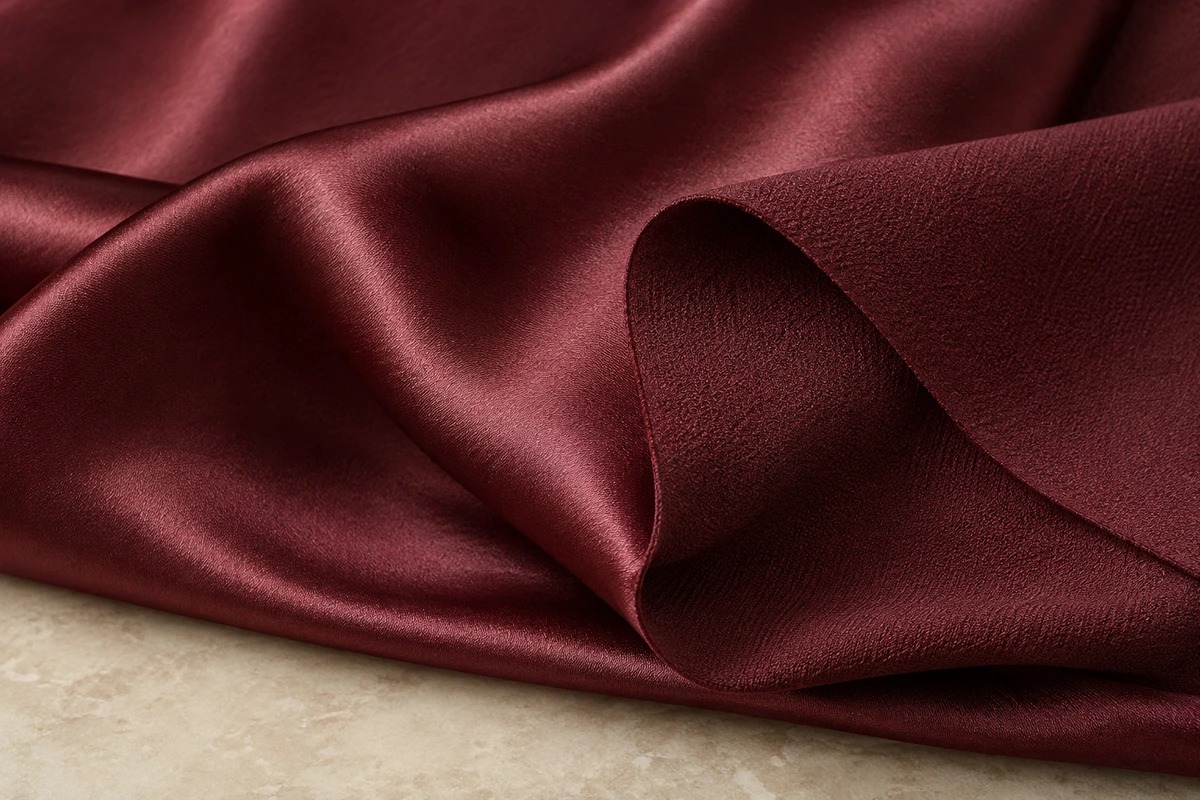
Crepe back satin has a smooth satin face with a textured back. This contrast may be helpful in instances where a design is crafted with shininess and less shininess such as a bodice with contrasting bands or a dress that has reversed panels. Examine either side and not the other way.
Enquire which side the pattern is trying to depict. Mark the face chosen in cutting, and record each piece. It can be conspicuous by chance, such as when lighting is used to highlight the contrast. Doc and in case of intentional use, note such a position in the design sketch.
The textured reverse, does not necessarily take the place of a lining. It can still require an inner layer to be covered, comfortable or constructed. Work with the fabric in front of the desired underwear and assisting items. Its two surfaces provide choice of design, though not finalizing the rest of the garment detailing.
Stretch Satin for Movement and Recovery
Stretch satin is satin that has stretch, and can be created with a blend of elastane. The direction, amount or recovery is not stated in the term. A stretchy fabric across the grain may have entirely different behavior than one that stretches in the grain, and two similar fabrics can have different behavior that may occur even when mixed with different percentages.
Take as the starting point the requirements of the pattern. A fitted design can be based on some level of movement, whereas the designed dress can require some stability in some places. Stretch ought to be in collaboration with the ease, closure and support of the garment as opposed to trying to fill the size of the garment that is not large.
Measure a sample at rest and gentle extension. Record status of change of surface whether it returns and whether proposed lining is compatible. To achieve production, ask the supplier to provide the suitable measured specification in case stretch performance is of high importance. A casual hand test can be helpful in the initial comparison, but cannot be replaced with agreed testing.
Hammered and Printed Satin for Surface Effects
Hammered satin has a surface effect of pebbled or uneven surface which alters the light reflection patterns over its surface. The word is used to refer to a look, not one of the fibers or warranted weight. It does not require any decoration to add visual interest and the sample would still have to be tested as far as the drape and construction is concerned.
Printed satin is a combination of printed design on a satin base. Examine the size and the direction of the print and the cloth. A large pattern might require specific placement on the bodice or skirt whereas a smaller all over pattern might allow greater layout freedom. The real repeat influences the decisions to chop.
These qualities may be overlapping with other names. A printed charmeuse will be able to stay light and fluid; a textured satin can as well include stretch. Note the entire description in one place rather than dividing the adjectives into different material categories.
Review under the same light under which the dress will be worn is important in terms of color and surface. Particulars of a print can look dissimilar on a reflective ground when the cloth undulates. Accept physical sample and representative garment description in case the visual consistency is necessary.
Do Not Treat the Names Like Separate Boxes
The best comparison to make is what each word establishes and which is unknown. This helps to avoid making a false buying decision such as selecting instead of silk or duchesse without further knowing that a duchesse fabric may have silk.
| Description | Information provided | Information still needed |
| Silk charmeuse | Fiber and fluid satin category | Weight, opacity, finish and care |
| Polyester duchesse | Fiber and substantial satin category | Actual body, usable width and support needs |
| Stretch satin | Satin with movement capability | Composition, stretch direction and recovery |
| Crepe back satin | Contrasting face and reverse | Fiber, weight and suitability of each side |
| Printed hammered satin | Print and textured surface attributes | Base construction details and drape |
Shine should not be used as a quality score. A satin that is of a very reflective nature might be perfectly suitable to one of the designs, and not suitable to another. A lower sound surface does not necessarily decrease the cost or formality. Determine whether the fabric manufactured is working out and the finish sound.
Similarly, there is no name of categories that ensures easy care. Areas of finishes, dyes, blends and garment parts influence the needs of care. Write down instructions on the finished garment, and require clarification when a fabric listing has not given you the information you require to use in your project.
Look at the quantity of useable cloth not just price per length. Consumption can be affected by width, defects, directional cutting and the placement of motifs. A cheaper satin will need another design or more to make the same dress. Use real pattern and supplier data to determine the total material requirement.
Compose an Effective Satin Specification
An effective specification will have the reference of the product presented by the supplier, fiber composition, weight, usable width, color and face of intended use. Include stretch direction and recovery requirements as required. In the case of a printed cloth, specify repeat, as well as placement; in the case of a shaped gown, describe the body, and fold behavior the sample should attain.
Include pictures of the desired clothing effect, but not the same as the approved sample cloth. The expression of a silhouette is possible in a photograph, but without being able to recreate the color or lustre. Use a physical control sample with consistency in decisions.
Consider a sewn detail on a smaller scale, that encompasses the part of the design that is challenging. It could be a cowl or a curved seam or a deep pleat or a lined bodice. Even a plain square swatch will not tell about all of the problems that arise when satin is covered and sewn.
In case of a collection that has been created with Siyinghong, explain how the satin by describing the behavior you desire and specification that you can confirm. The name will assist in opening up the discussion; a accepted material and construction sample will provide the choice a sound basis.
Post time: Nov-02-2026