A prom dress is selected to be worn in a school prom whereas, an evening dress is a wider scope of attires worn in an occasion involving dressing up in the evening. There are numerous garments, which are both. However, the distinction between the dressings is real in the requirements of the events, what the wearer wants and what activities he or she needs to perform but not necessarily divided into groups according to their colour or age or sparkle.
In comparison between prom dress and evening dress, design the whole event and think on what is to come after. A dress that looks fab in photos, yet is challenging to sit in or dance with may not be the most perfect one. Design that you could reuse might have extra worth, but one great experience can be a reasonable buying objective.
Start with Different Occasions and Overlapping Garments
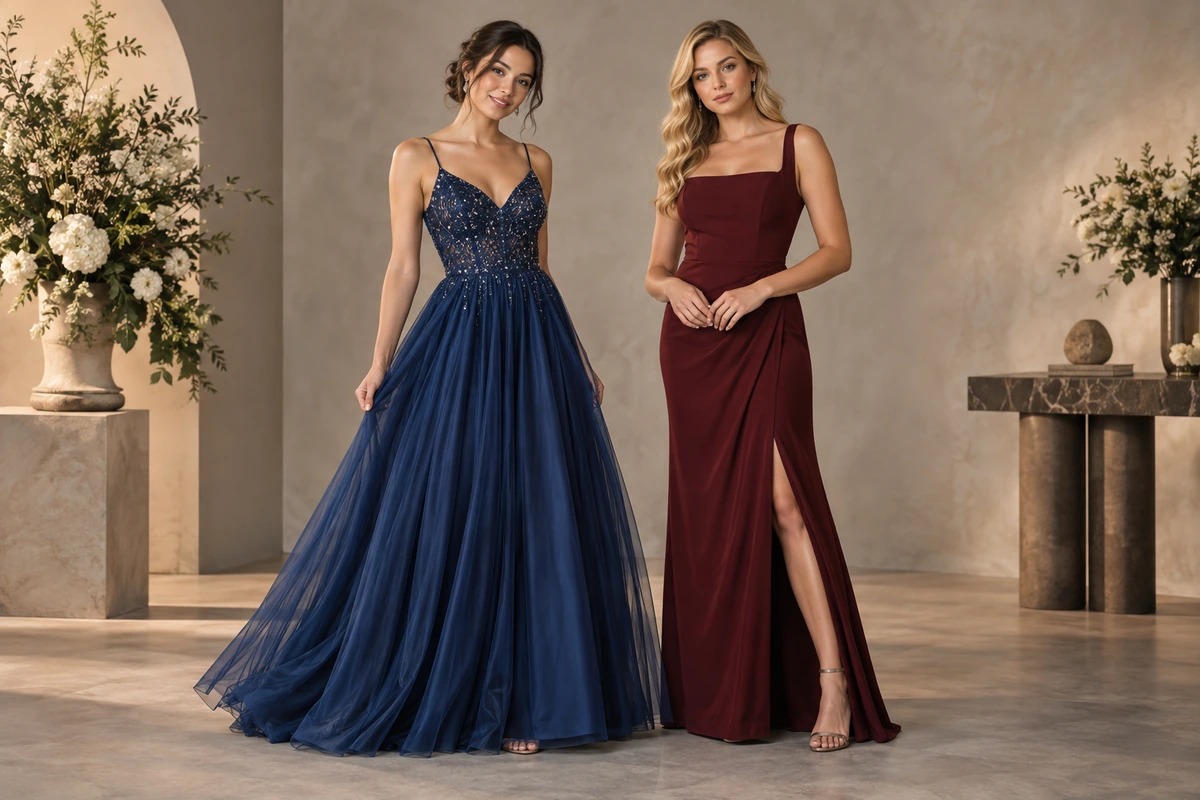
Prom dress describes a use, not a single construction. A prom outfit might be short, long, simple or elaborate, depending on the school’s requirements and the wearer’s taste. Evening dress also covers considerable variety, from restrained silhouettes to highly decorated formalwear.
This overlap means you do not need to restrict your search to one store department. A dress marketed for evening events may be ideal for prom. A dress first worn to prom may later suit another invitation. In each case, assess the garment against the actual occasion.
Do not think of bright colors, full skirt or sequins as the preserve of the younger wearers. And those are features of design, not age certificates. Similarly, a simple dress does not necessarily make the worst garment to wear to prom. The questionable one is whether it will suit your plans in appearance and practicability.
Read the Rules Before Falling in Love with a Dress
In case of prom, check school or group instructions first prior to place an order. Any guideline concerning coverage, shoes or any other information has a precedence over a retailers claim that a product is a prom dress. Requirement varies, and therefore, do not depend on the event of another school, or an old posting on social media.
If wording is unclear, ask the organizer about the specific design feature that concerns you. A clear photograph or description of the neckline, back or slit is more useful than a general question about whether a dress is formal enough.
For another evening event, check the invitation’s dress code and purpose. A black tie gala, a restaurant party and a wedding reception can all take place after dark without sharing the same clothing expectations.
Also check the practical schedule. Travel, outdoor photographs, dinner and dancing may involve different temperatures and surfaces. The dress does not need to perform every task perfectly, but you should understand where you will need a layer, different shoes or extra help managing a hem.
Plan for Photographs Without Buying Only for Photographs
Take into account the appearance of the dress in the front, side and back in the normal light. A close view of beaded bodice might look good, yet when the entire outfit is seen the question of how the skirt and the waist interact is raised. Attempt to look at the garment in a normal position as opposed to taking up a dramatic position.
Problems that can be shown in photographs include underlayers or a shifting neckline, but not everything about comfort. Take your time in the dress then make your choice. A clothing that requires re-adjusting between photos can also be as tiring as in the party.
When talking with friends or a partner, decide how much of a coordination you want. There is no necessity to match every detail, it is up to your common perception. Although you might want to preserve the dress decision, I recommend you relate it to what you feel comfortable in, and not just to how the group photo looks.
Make Dinner and Dancing Part of the Fitting
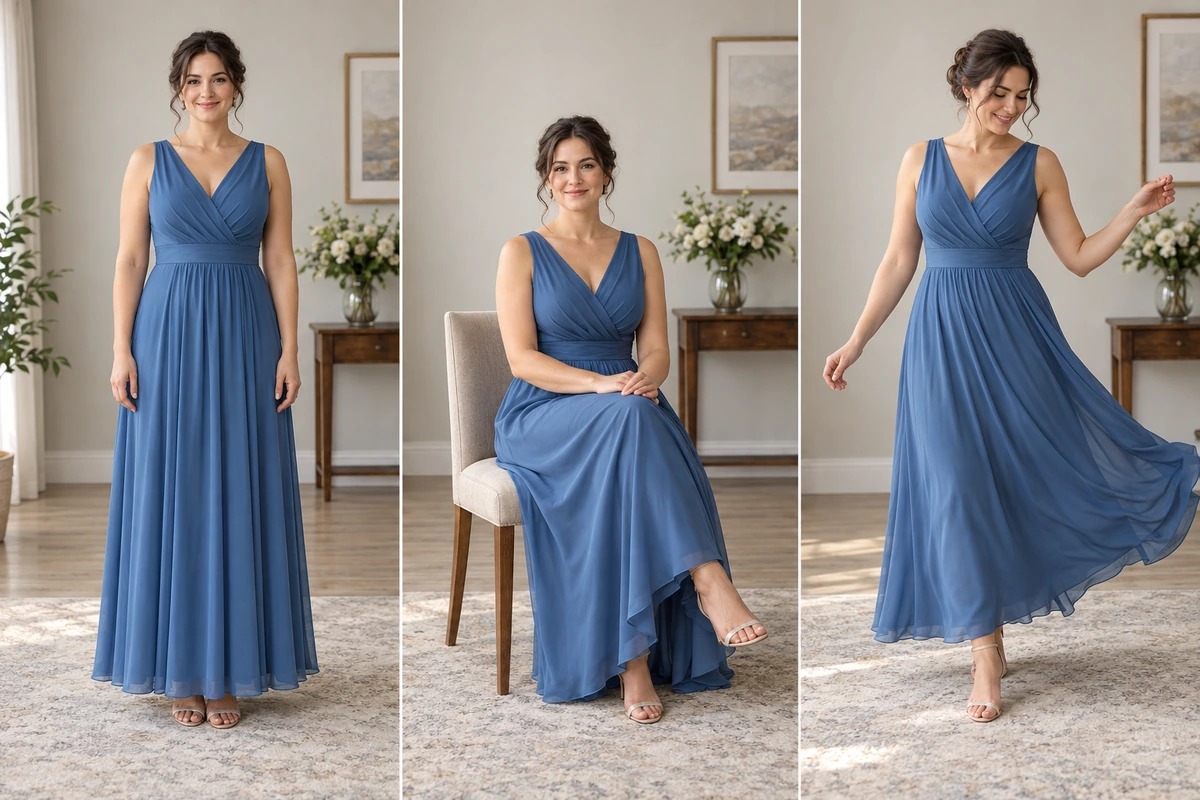
Sit on a dining chair until the pressure occurs at the waist or ribcage. Ensure that the skirt folds in a natural way, and that ornament does not rub against your arms. The structured bodice ought to have a normal feel without restriction to breathing or movement.
Walk, turn and raise your arms. In case dancing is included in the evening, do trial moves that are similar to how you wish to dance. Do so in good, meant shoes. A long hem which suits a still photograph can snarl your feet when you have to alter your steps.
Check closures and bathroom practicality. A garment with a difficult fastening may require assistance, which should be part of your plan. If the skirt has a train, find out whether it has a reliable way to lift or secure it for movement; do not assume a hidden solution exists.
Determine the possibility of changing shoes. When a gown is adjusted to suit high heels, a change to shoes with much lower heels can be left on the floor. The hem plan and backup shoe plan ought to be combined.
Recognize When an Evening Dress Works for Prom
A formal evening dress can be a strong prom option when it meets the event rules, fits comfortably and suits your desired appearance. You may prefer its restrained detailing, its sleeves or a silhouette that feels less tied to a particular party mood.
Start with the features you need. A clean-lined long dress with stable straps may suit someone who expects to dance extensively. A fuller skirt might appeal to someone who enjoys a more dramatic shape and is willing to manage its volume. Neither preference is more authentic to prom.
Assess the scale of the event. A substantial train may be awkward in a crowded venue even if it looks attractive online. A heavy fabric may feel different after several hours indoors. When possible, ask for garment details or try the dress instead of predicting those qualities from the name.
The best alternative is the one that makes you excited to wear it, passes your event and comfort tests. The flexibility of categories broadens your options; it must not be a motive to disregard practical requirements.
Give a Prom Dress a Second Occasion
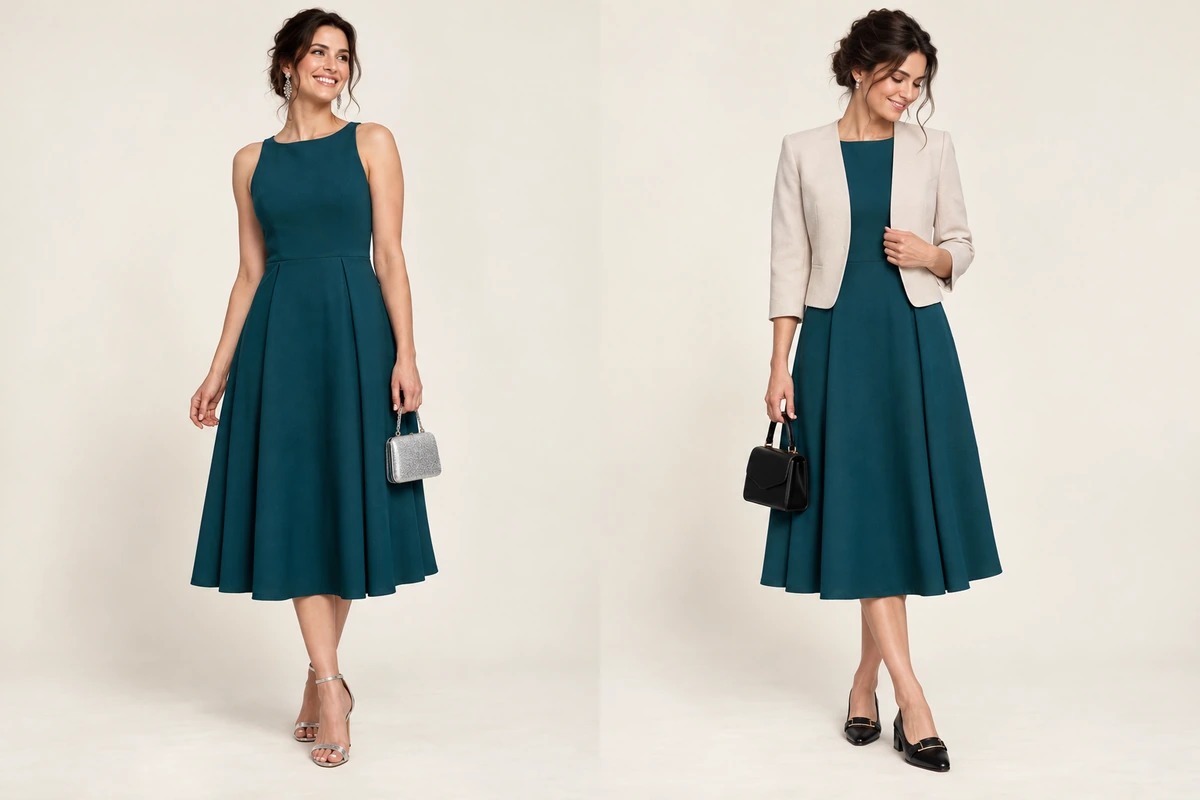
Before altering a dress, try a simpler restyling. Different shoes, a quieter bag or a tailored outer layer may change its mood. If the original look relied on several decorative accessories, removing some of them can make the garment easier to wear elsewhere.
Next think of the second invitation. The dress that fits at a prom is not necessarily the one that fits a wedding, a company dinner or black tie event. Formality and cultural expectations, as well as color requests, might vary. Assess the following occasion separately.
Things can be improved and may get better but it is not always easy and cost effective. Making a beaded skirt shorter or altering a highly designed bodice can be very labor-intensive. Propose anything to a professional and inquire about the changes and how it will impact the design.
| Future use | First adjustment to consider |
| Dressy dinner | Quieter accessories and manageable footwear |
| Another formal dance | Fresh styling after a fit and condition check |
| Wedding invitation | Verify color, role and dress code first |
| A shorter occasion dress | Obtain an alteration assessment before cutting |
Consider two hypothetical shoppers. One expects to attend several formal events and prefers a simple long dress that can accept different accessories. The other wants a strongly decorative prom look and has no realistic occasion to wear it again. Both can make a sensible choice if they understand the budget and practical demands. Repeated wear is a preference, not the only measure of a successful purchase.
The first shopper should test the proposed future occasions rather than assuming a plain dress fits everything. Does the garment satisfy the more formal invitation? Is it manageable for dinner? Can it be maintained without an inconvenient level of care? The second should focus on whether the decorative features remain comfortable through the whole prom, not just during photographs.
After the event, inspect the dress before storing it. Check the hem, fastening and any embellishment that experienced friction. Follow the care instructions, and resolve necessary cleaning rather than putting the garment away with marks that may become harder to address later. Store accessories separately if their hardware could catch the fabric.
If you decide to lend or resell the dress, describe its actual condition and alterations accurately. A shortened hem or changed bodice matters to the next wearer. Good information makes the garment’s next use more realistic than a vague promise that it suits everyone.
Compare the Full Cost Before Deciding
Include alterations, shoes, underlayers, cleaning and storage alongside the ticket price of the dress. A simple design may require fewer additional purchases, but that is not guaranteed. Check what you already own and what the garment specifically needs.
If repeated wear matters, list two realistic future occasions rather than assuming that a neutral color guarantees versatility. A pale, heavily bridal-looking gown may have limited wedding guest use despite its quiet color. Construction and context matter as much as the palette.
If your priority is one particular night, set a budget that reflects that choice and focus on fit, enjoyment and practical preparation. You do not need to invent a future use to justify every preference.
For brands developing prom collections, record both the event experience and the intended afterlife of each style. Those decisions guide skirt volume, support, closures and embellishment. Siyinghong’s custom prom dress service is a relevant starting point for discussing a range with distinct roles instead of interchangeable party labels.
Post time: Oct-30-2026