To make comparisons between lace fabric types, first look at what sits between the motifs. Raised outlines or open connections without a continuous net or a fine net ground can guide you to various lace families. Next consider stretch, motif scale, borders and added decoration. These characteristics are more useful when choosing a dress material than the flower pattern.
Other names like Chantilly, Alencon and guipure have historical and commercial connotations, and others like stretch or beaded describe other features. They can be paired or even together in contemporary listings. This handbook prioritizes finding effective attributes and posing superior purchasing inquiries, as opposed to verifying a lace’s source through a photograph.
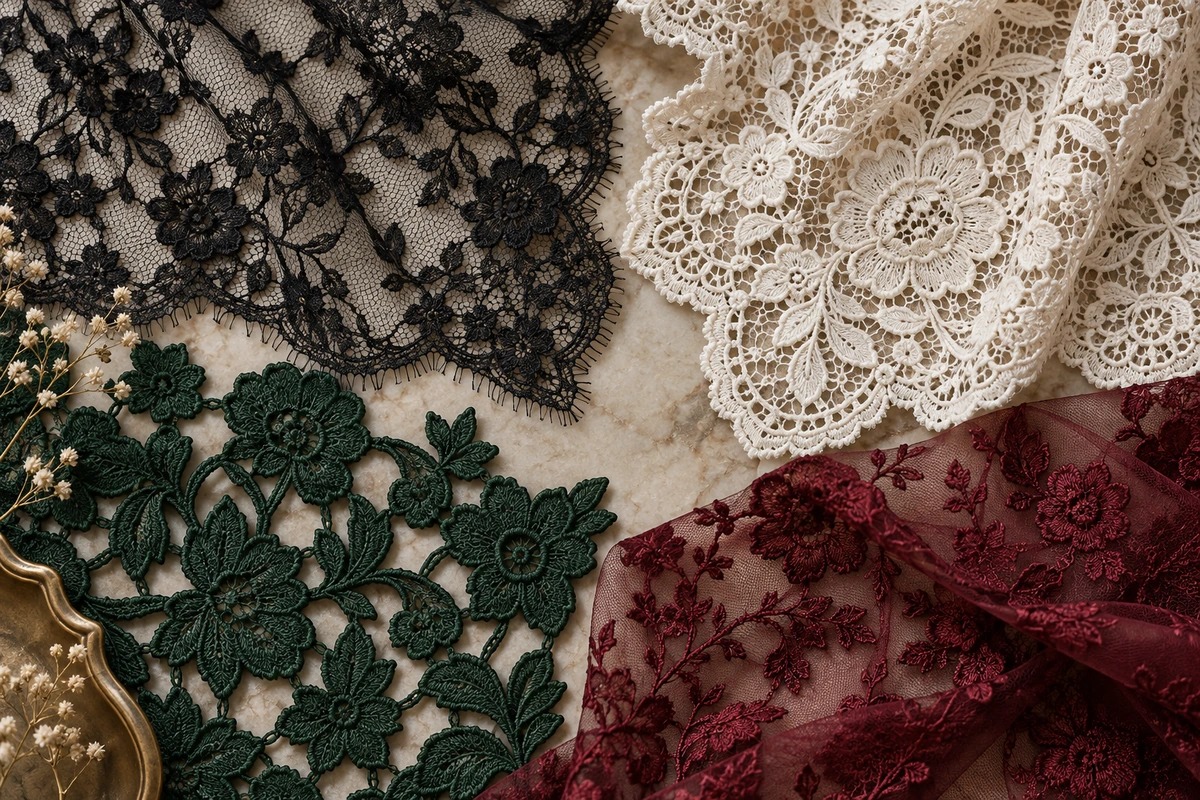
See the Ground Before the Motif
Place a sample onto a plain contrasting background and look at the open spaces. Does it have a fine net between all, or does it have visible bars or bridges between the motifs? Are the shapes created in the lace structure, embellished in a separate space or attached as separate pieces?
Invert the sample and examine an edge. The back can tell where the ornamental features are secured and whether one raised features may scrape the skin. This can be hidden in a small photograph on the front, particularly where the lace is displayed over a groundwork of the same colour.
Keep production process and appearance separate. Differing procedures are known as needle lace, bobbin lace, machine-made lace and embroidery and a name used in retailing can be primarily the appearance of the finished product. In case the source or process is part of the purchase, have the supplier fill out the documentation. A fine design is not an indication that a cloth was produced in the craft.
Recognize the Fine Net Effect of Chantilly Style Lace
Chantilly lace is generally known by being surrounded by fine net ground and delicate motifs. The visual effect is frequently light and intricate and as such a candidate of the overlay, sleeves and areas where it is desired that transparency is incorporated in the design. The suppliers in the modern world can have varying interpretations, and thus, check the very sample, but do not strictly follow the label.
In the case of a dress, consider how the motifs are related to the spaces surrounding them. What appears to be a good-looking pattern on a large piece might show up on a narrow bodice panel out of proportion. Consider the repeat size and the presence of seams, darts or a zipper to interrupt important motifs.
Try backing suggested underneath the lace. The same shade can result in a light surface and a different shade renders the pattern more vivid. That support also alters the transparent coverage. Accept the mix at a handy garment scale rather than make the decision based on a single motif on a sample card.
Depending on the construction, fine lace can be supported at the edges that are desired. Ask the craftsman to determine how the neckline and seams will be stabilized without encumbering the light look you desire.
Know Corded and Alencon Style Descriptions
The outlining of the pattern is more prominent in corded lace which gives depth to the pattern. The Alencon style of retail description tends to describe them in terms of outlines on a net ground. Historical Alencon needle lace is a narrow convention and thus a contemporary piece of fabric marketed under a related manner of style cannot be presumed to be one of an approved specimen of that work.
See the difference in the design created by the raised line at a distance. It could simplify the process of seeing floral shapes, though it might also impose mass where motifs intersect, or seams meet. This is important to fitted bodices, slender straps and edges close to the skin.
Inquire about the presence of a corded detail throughout the entire width and the presence of borders. A photograph of the product can depict a pretty scallop without indicating where it is on the cloth. The width to be used and the layout of the borders influence not only the layout of the pattern but also the amount that is needed.
In an evaluation of two corded alternatives, evaluate outline, ground, drape and reverse individually. The heavier the cord does not necessarily imply superior or stronger lacing. It can just have a different visual impact and need a variation in building strategy.
Identify the Open Connections of Guipure
Guipure is usually known for connected designs but without a continuous net background. The associated shapes are capable of bringing forth a heavier, more sculptural touch, though the individual fabric differs. The design includes the open spaces and, therefore, the color and coverage under these spaces should be considered at an early stage.
Check the relations among motifs. The arrangement influences their cutting and sewing. A seam, through a large open area, might take a different plan than a seam, through the thick of the flower. To develop a garment, do not assume that a generic lace construction will work and hand over the actual pattern repeat to the maker.
Take account of your bending material around the body. A sample that seems bulky on the table might drop well, and another might resist being rolled into a ball. When it comes to a fitted dress, look at the bodice and curvy sides. To create a less curvy figure, determine whether the open shape requires an underlining, an independent lining or a detachable slip.
Guipure is a powerful graphic option as a sleeve or hem, where the edge of the motif is established. Plan those placements, in advance. The design opportunity includes the frame of the border and it must not be addressed as remaining decoration.
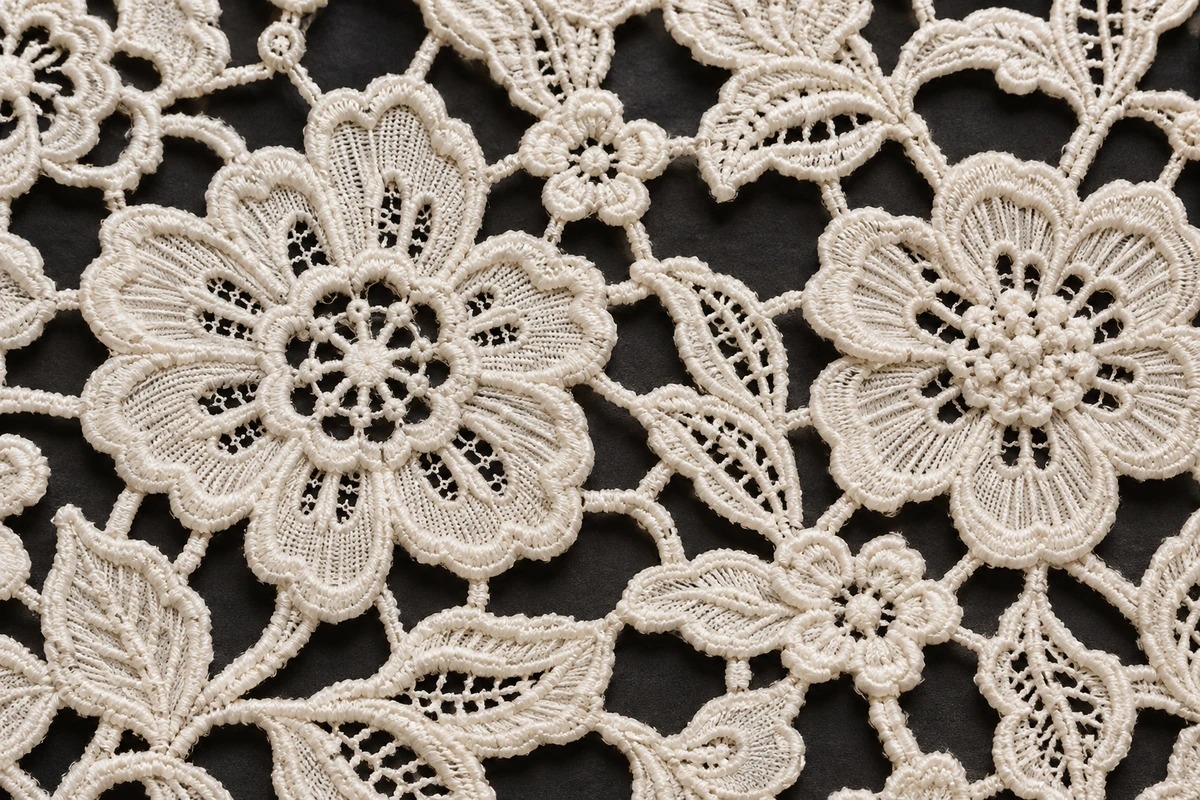
Separate Embroidered Tulle from Other Lace Constructions
Embroidered tulle begins with net ground to which design has been embroidered. It is frequently sold as part of large lace collections, and may produce floral, geometrical or excessively decorated effects. It can be better explained through words in order to understand what is on the ground and what has been implemented on it.
Examine any variations in fabric density. A pattern may be densely worked up on the periphery and lightly on the centre, or patterns may be sparsely distributed intervals. These variations can be exploited to add decoration to a skirt, but are more precise than an allover repeat.
Finally, dimensional effects can be achieved by additional appliques. Inspect the fastening, and the other side of the embroidery, particularly around the neckline and armholesots. Using a lining could enhance comfort during contact, although this should be tested with the full decorated layer. Do not suppose a soft net will give a soft surface when finished all over.
Treat Stretch and Embellishment as Extra Attributes
Stretch lace refers to the ability to move as opposed to a single motif family. Inquire about the direction and recovery and compare the requirements with the garment pattern. A tight sleeve can require varied movement compared to a loose overlay. The inner cover should also allow the desired range.
Additions to the surface are beaded, sequined and three-dimensional. They may be present on various bases, and can alter weight, care and alteration work. Check the area of the garment where a decoration intersects, a seam or an edge; usually, the construction becomes more challenging there.
These characteristics may overlap. A description may include beaded embroidered tulle, corded stretch lace or a guipure with some extra appliques. Note every detail in the description and not to select a single one. This enhances more accurate comparisons and prevents the ordering of a fabric that looks similar off the shelf but acts differently.
Compare Lace for a Real Dress Design
Select the desired position and refine the group. A sheer jacket, a tight bodice and an entire skirt put another pressure on the same lace. Begin with the most difficult part to create or the most significant visually and proceed to a more assessment of the garment rest.
| Visible feature | Possible design use | Detail to verify |
| Fine net and delicate motifs | Light overlays or sleeves | Support, coverage and motif scale |
| Raised outlines | Defined bodice or focal panels | Bulk at seams and skin contact |
| Motifs linked without continuous net | Open patterned dresses or borders | Connections, shaping and backing |
| Embroidery on tulle | Graduated or decorative placements | Ground, density and reverse surface |
| Stretch construction | Designs requiring flexible movement | Direction, recovery and compatible lining |
A label must be able to focus the search, not determine the design. When there are two samples, which satisfy the same need, compare the full repeat, edge treatment, and behavior in the proposed lining. All those details usually determine which one is more successful to utilize.
The decision as to whether the lace should be seen to be continuous over major seams also. The size of a motif can be matched, affecting the width of panels, location of cutting and use of fabric. Purposely introduced non-black-and-white breaks can work effectively in one design and be distracting in another. Check a sketch, or sample, of the joining place, before the production is sanctioned, particularly around the centre front, where the pattern is likely to be visible.
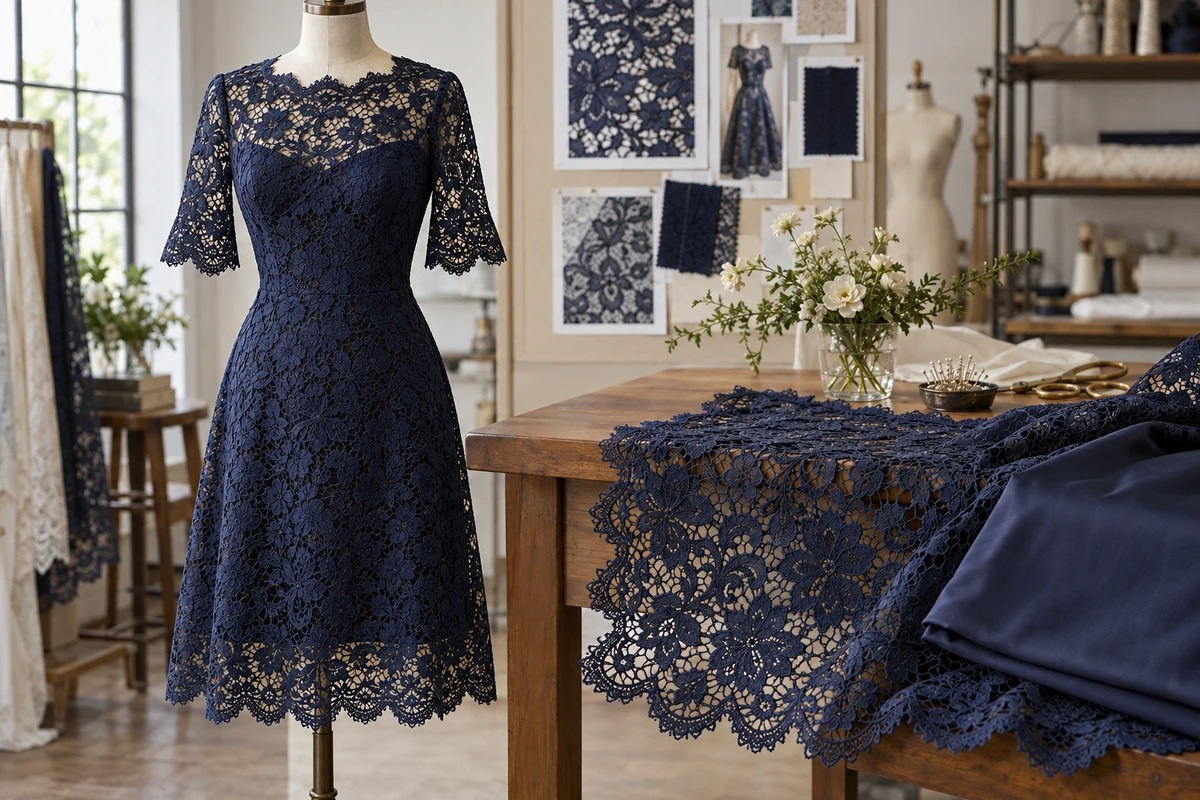
Check a Swatch Before Ordering
Ask them to take a sample that is big enough to display the motif and ground. A small bit may not reveal the information you need in a large design of a border or placement. Request the repeat dimensions, width in use and photographs of complete layout where necessary.
Compare the lining and check with the color, touch one side and the other and test a representative seam on a sample when doing the dress. verify make up and care instructions individually. The name of a visual cannot be a determinant of the content of fibers, and the lace of a visual beauty is not necessarily in that kind of way that you would prefer to have.
Retain the reference and placement decisions that are approved with the garment sketch. When talking with Siyinghong about a lace collection, learn what are the features that will have to be seen at the neckline, sleeves and hem. An explanation of the dress structure and importance of the lace is better than requesting a specific style/lace name without a sample.
Post time: Nov-01-2026