A successful lace dress lining provides the coverage and comfort you want while allowing the lace to keep its intended shape. Start with the areas that need coverage, then choose a compatible fabric, color and construction. Buying a material simply because it is sold as lining is not enough: a rigid inner layer can restrict stretch lace, while a heavy backing can flatten a delicate pattern.
This lace dress lining guide follows the decisions in the order they affect the garment. It works for discussing a custom dress, assessing a ready-made style or planning a sewing project. The central question is how the outer lace and inner layers will behave together on the wearer.
Separate Lining from Underlining and a Slip
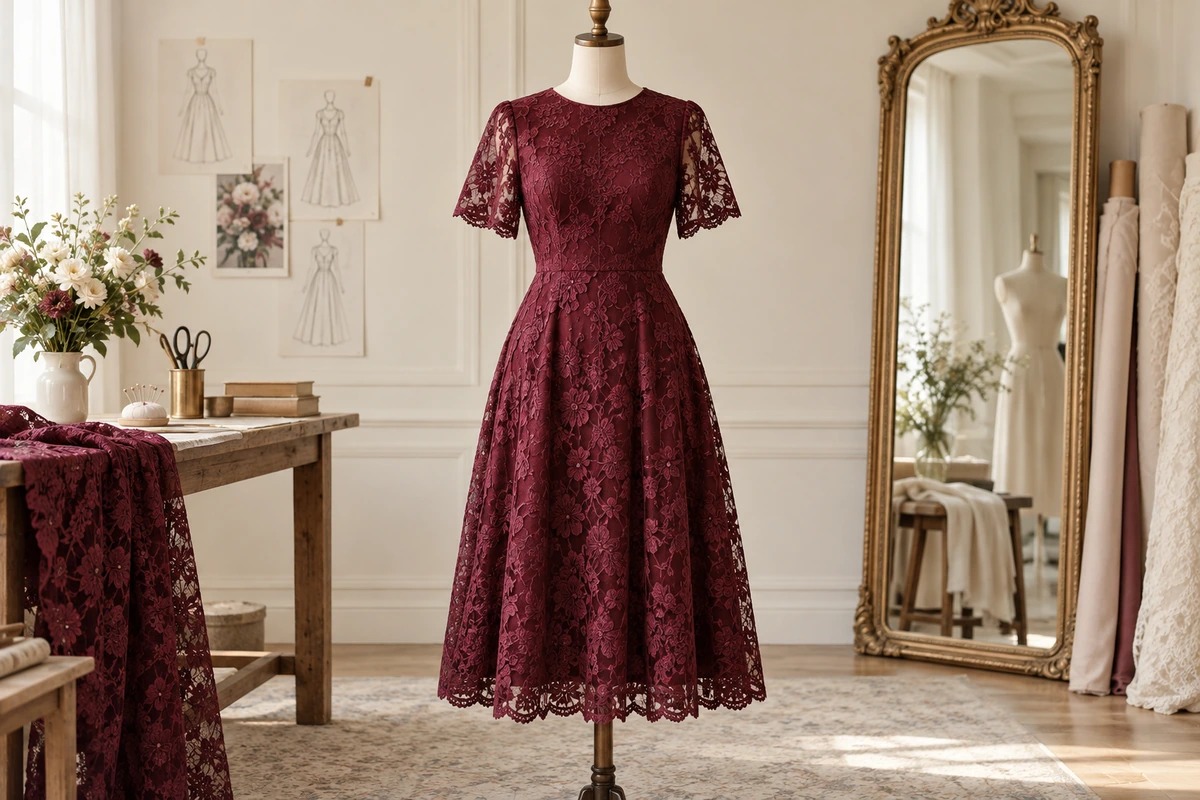
A lining is usually constructed as an inner garment and attached at selected edges or seams. It can cover internal construction and create a smoother surface against the body. It does not have to be attached to every seam in the outer dress, and its pattern may include different ease or finishing details.
Underlining is joined to the outer fabric pieces so that the two layers are handled together during construction. It can alter the lace’s opacity and body, but it does not automatically hide the inside seam allowances. A dress can have both underlining and a separate lining when their jobs differ.
A slip is an independent garment worn underneath. It can make an existing lace dress more versatile, although its neckline, straps and hem may move independently. If a slip rides up while the lace stays in place, the desired coverage can change. Try both garments together before relying on the combination for an event.
| Inner layer | Main relationship to the dress | Question to settle |
| Lining | Attached inner garment | Does it move comfortably inside the lace? |
| Underlining | Backing joined to outer pieces | Does it give the desired body and opacity? |
| Separate slip | Independent garment | Does it stay where coverage is needed? |
Draw a Coverage Map Before Choosing Fabric
Mark the neckline, bust, waist, hips, sleeves and skirt on a simple front and back sketch. Identify which areas should be opaque, translucent or completely unlined. This turns a vague request for more coverage into a plan a maker can assess. Include the back neckline and side panels, which may not be clear in a front photograph.
A dress might have a fully lined bodice and skirt with unlined lace sleeves. Another might use a lower inner neckline so the lace pattern remains visible above it. Neither arrangement is inherently better. What matters is whether the wearer approves the effect while standing, sitting and raising their arms.
Think about undergarments at this stage. Their straps, edges and color can remain visible through open lace or a thin inner fabric. Bring the intended undergarments to a fitting, or explain the support arrangement you need. A lining can provide coverage without providing the support of a separate foundation garment.
Compare Backing Colors Under the Actual Lace
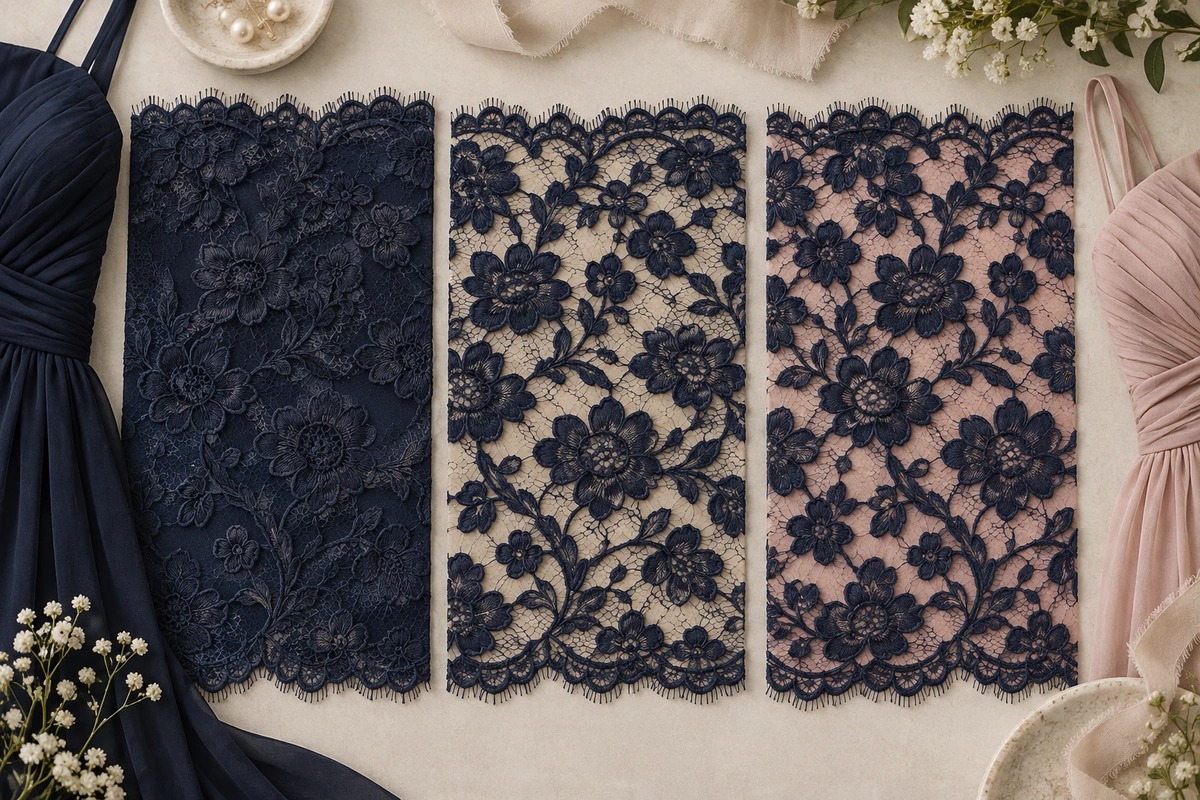
A matching lining often gives a quieter, more unified surface. A contrasting lining can make each motif stand out. A shade close to the wearer’s skin may create an illusion effect, but there is no single universal nude color. Choose the actual shade with the wearer rather than using that word as a complete specification.
Test several pieces beneath a generous area of lace, not just one flower. Include an open section, a dense motif and the edge treatment. Hang the combination vertically because light passes through it differently than when both layers are pressed against a tabletop. Check the result in daylight as well as the expected indoor setting.
Look at the dress from a normal viewing distance. A contrast that seems attractive in a close photograph may make seams, darts or the edge of the inner bodice more prominent in the full garment. If that outline is intentional, record its exact position. If it is distracting, try a different shade or construction before changing the lace itself.
Match Stretch and Drape Across Layers
Stretch lace needs an inner arrangement that accommodates the movement required by the pattern. A nonstretch lining can sometimes be used with enough ease and an appropriate closure, but it should be a deliberate design decision. Substituting it into a close fitting stretch pattern may stop the garment from moving as intended.
Compare both direction and recovery. A fabric that stretches across its width may not stretch similarly along its length. After gentle extension, observe whether it returns to shape. The inner and outer fabrics do not need identical properties, but they must work together without one layer pulling, sagging or carrying all the strain.
For nonstretch lace, consider a lightweight woven lining, a suitable crepe or another smooth fabric that supports the desired drape. For a stretch style, test compatible knit or stretch woven candidates. These are starting categories, not guaranteed solutions. Weight, surface friction, opacity and the dress pattern decide whether a specific sample is suitable.
Place the layers over a rounded form and let them fall freely. If the lace creates soft folds but the backing stands away, the result may be more structured than planned. A small sewn sample reveals more than touching each fabric separately, especially around a curved seam or gathered waist.
Resolve Necklines Sleeves and Hems
Necklines and armholes
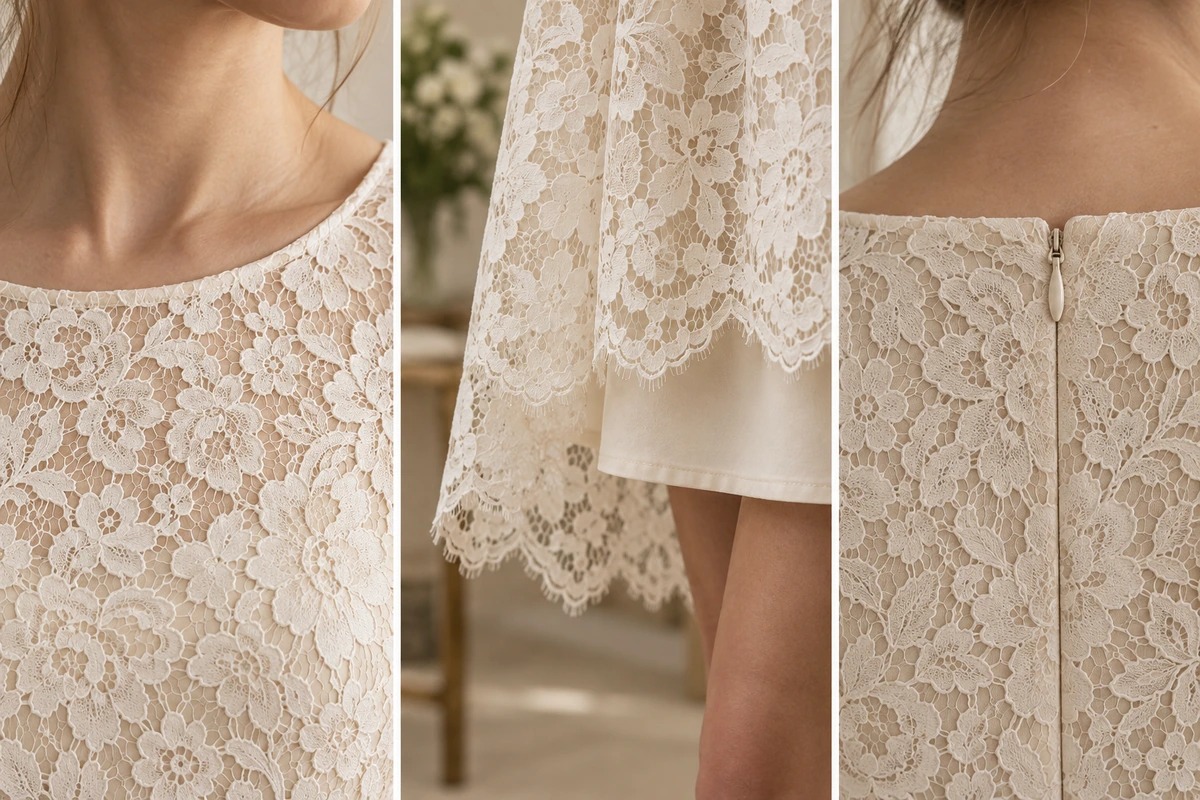
Decide whether the lining finishes at the lace edge or stops below it. A lower lining edge needs a clean, stable shape because it may remain visible through the lace. Check that the inner neckline does not roll outward or pull the outer fabric. The maker may need to adjust the pattern and finishing method rather than simply trimming the lining.
Sleeves and close contact areas
Unlined sleeves show the lace clearly, but texture and embellishment may rub against the skin. If sleeves need lining, test arm movement with both layers. A sleeve that feels generous in lace alone can become restrictive when a less flexible inner fabric is added. Pay particular attention to the elbow and upper arm.
Skirts and decorative borders
A scalloped lace border can remain visible below a shorter lining, but the difference in length should be chosen on the wearer. It may look different when seated or walking. Finish each layer so it hangs without dragging the other. If the pattern has a slit, coordinate the lining opening with the outer opening and the requested coverage.
Diagnose Common Lining Problems
Start with the symptom and inspect the relationship between layers. Adding more fabric is not always the answer. A coverage issue, a fit problem and a finishing problem can look similar in a photograph but require different changes.
| What you notice | What to inspect first | Possible direction to discuss |
| Lace bunches above the waist | Relative lengths and attachment points | Correct the balance between layers |
| Dress restricts a step | Inner skirt width and slit | Add suitable ease or revise the opening |
| Lining shows at the neckline | Inner edge shape and stability | Adjust and secure the edge |
| Motifs look unexpectedly flat | Backing weight and attachment | Test a lighter or separate inner layer |
| Inner hem becomes visible | Length, movement and layer balance | Reassess both hems on the wearer |
Avoid diagnosing every ripple as poor sewing. Some lace has dimensional motifs, and some designs deliberately use a separate floating overlay. Ask which effects are intended. Then check whether the same area changes when the dress is fastened correctly and worn with its intended foundation.
A lining that feels uncomfortable may have a rough seam, an unsuitable surface or insufficient room. Identify the location and activity that causes the problem. Saying that the elbow pulls when bent is more useful than describing the entire dress as tight. Specific observations help preserve the parts of the design that already work.
If you are adding a lining to an existing dress, let a qualified maker inspect how the garment is assembled before choosing a method. The available seam allowances, closure and neckline finish can limit what can be changed cleanly. A detachable slip may be practical for one dress, while another benefits from an attached inner garment. Ask to see a pinned or basted preview of the coverage line before permanent work begins. This is particularly valuable when the new lining will be visible through a large open motif or across an otherwise sheer back.
Approve the Dress from the Inside Out
At the final fitting, inspect the inner garment first for rough edges, twisted layers and closures that catch. Then assess the full dress in front, side and back views. Repeat the movements that matter for the occasion, including sitting and reaching. A still photograph should support the approval, not replace it.
Record the lining composition and follow the care instructions for the complete garment. Lace, dyes, trims and the inner fabric may have different limitations. Do not assume that a washable lining makes a decorated dress washable. For a new design, ask the maker to confirm a compatible care method before production.
Brands can reduce repeated sampling by sending a coverage sketch, approved backing color and movement requirements together. Siyinghong can be contacted with that design brief for a custom womenswear discussion. The most useful brief explains where the lace should remain visible and how the complete dress must fit, rather than naming a lining fabric in isolation.
Post time: Nov-08-2026