A denim dress may be left in the sewing room and return from the laundry as a different product. The waist can be smaller, the hem can twist, the placket can lean over and a clean blue surface can get patchy around seams. Not even one of these failings can be detected when the garment is examined in its unwashed state.
The useful approval point of a wholesale buyer is not “sewing complete”, however. It is the time when the dress has gone through the intended wash, rested, been measured again and been worn in motion. That strategy alters the way in which a sample is assessed and provides the factory with evidence that it can replicate in bulk.
Start with What Changed in Laundry.
Suppose that the fit sample was accepted on Friday. The side seam of the garment has shifted forward after washing on Monday and the skirt is shorter than indicated. It is not sufficient to refer to such a problem as a general fit problem. The first task of the team is to note what and where it changed and whether all test garments changed equally.
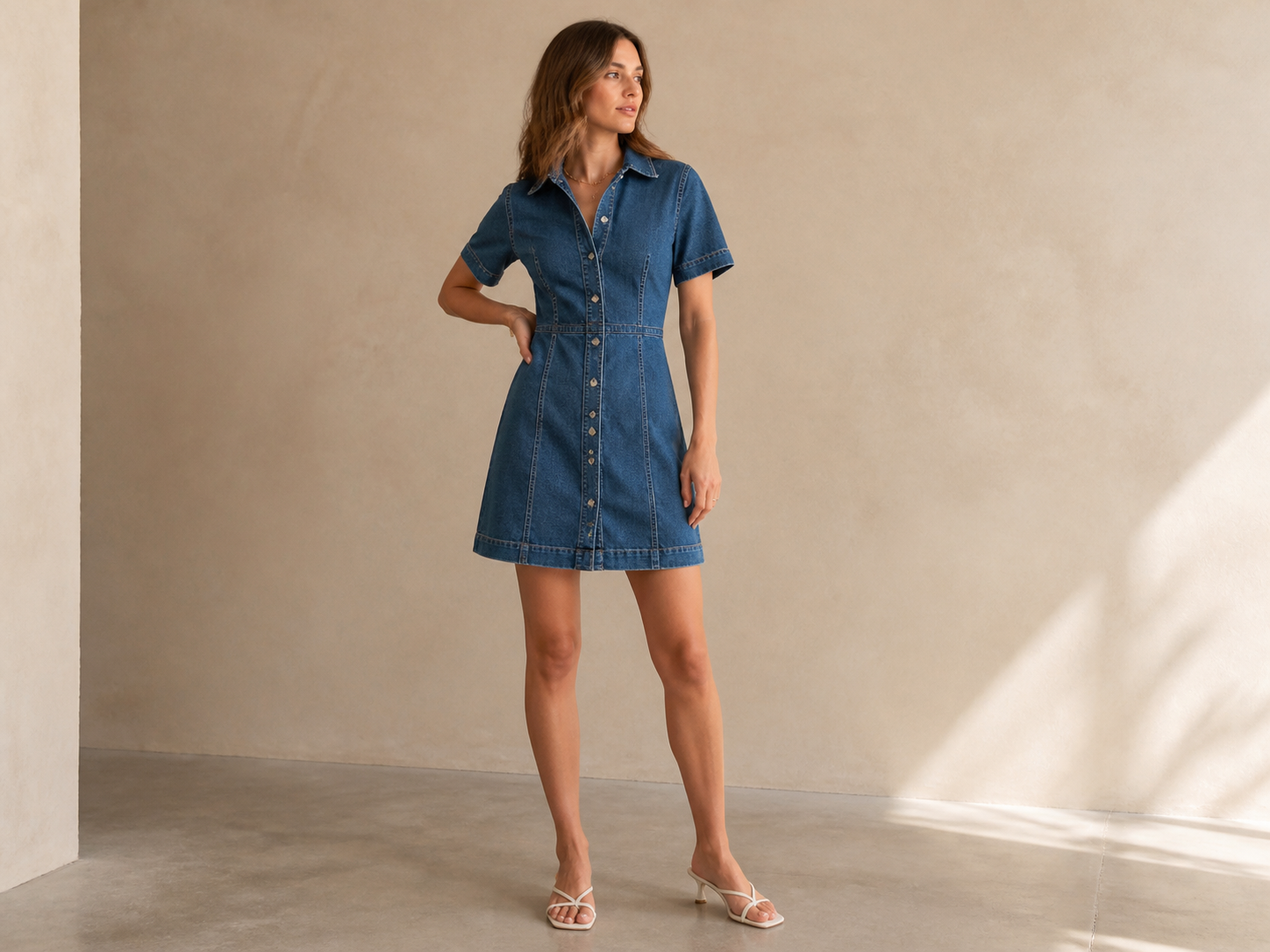
Take pictures of the same points before and after washing.
Utilize front, side and back shots with the same wearer, footwear and camera position. Measure garment prior to washing, after it is dry, and after it has been laid down. This isolates a temporary wet-process impact on one side as compared to a stable change that will be passed on to the customer.
Dissociate a Shade Failure with a Shape Failure.
A darker panel along with a light panel can be due to fabric shade grouping, wash loading or mixed cut orientation. Some other points are indicated by a twisting skirt: yarn twisting, grain placement, unequal feeding or unequal shrinkage. Combining both symptoms in a single wash problem can give another sample of a better color and with the same distorted silhouette.
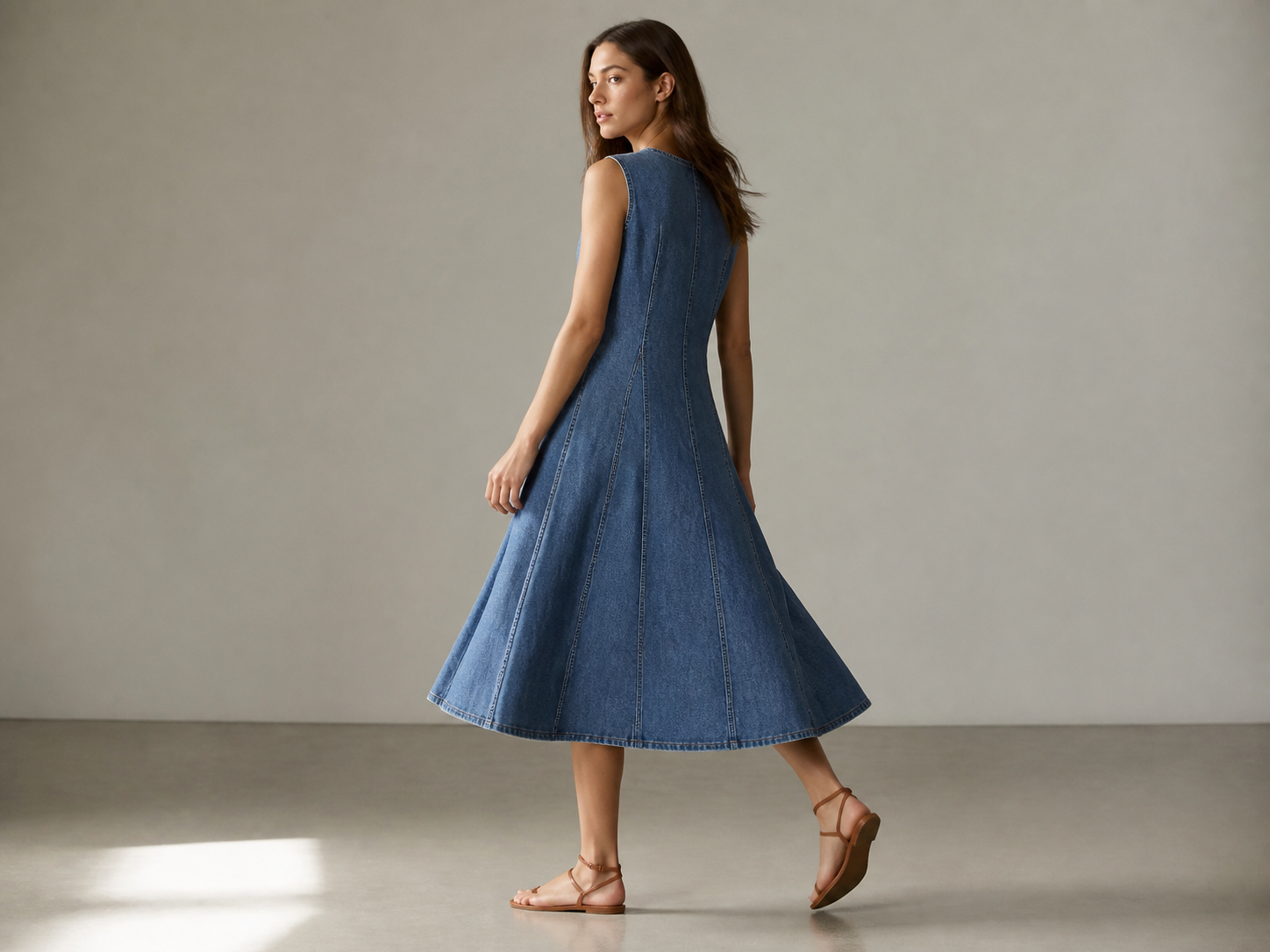
The initial review is to assign all defects to a working group:
- Surface: darkening, abrasion, streaking, hand feel or unwanted marks.
- Dimension: change of length, bust, waist, hip or sleeve.
- Balance: twisting, a rising hem, a leaning placket or uneven pockets.
- Component: rust, zipper movement, button damage or label staining.
Reroot the Sample onto The Wash Sequence.
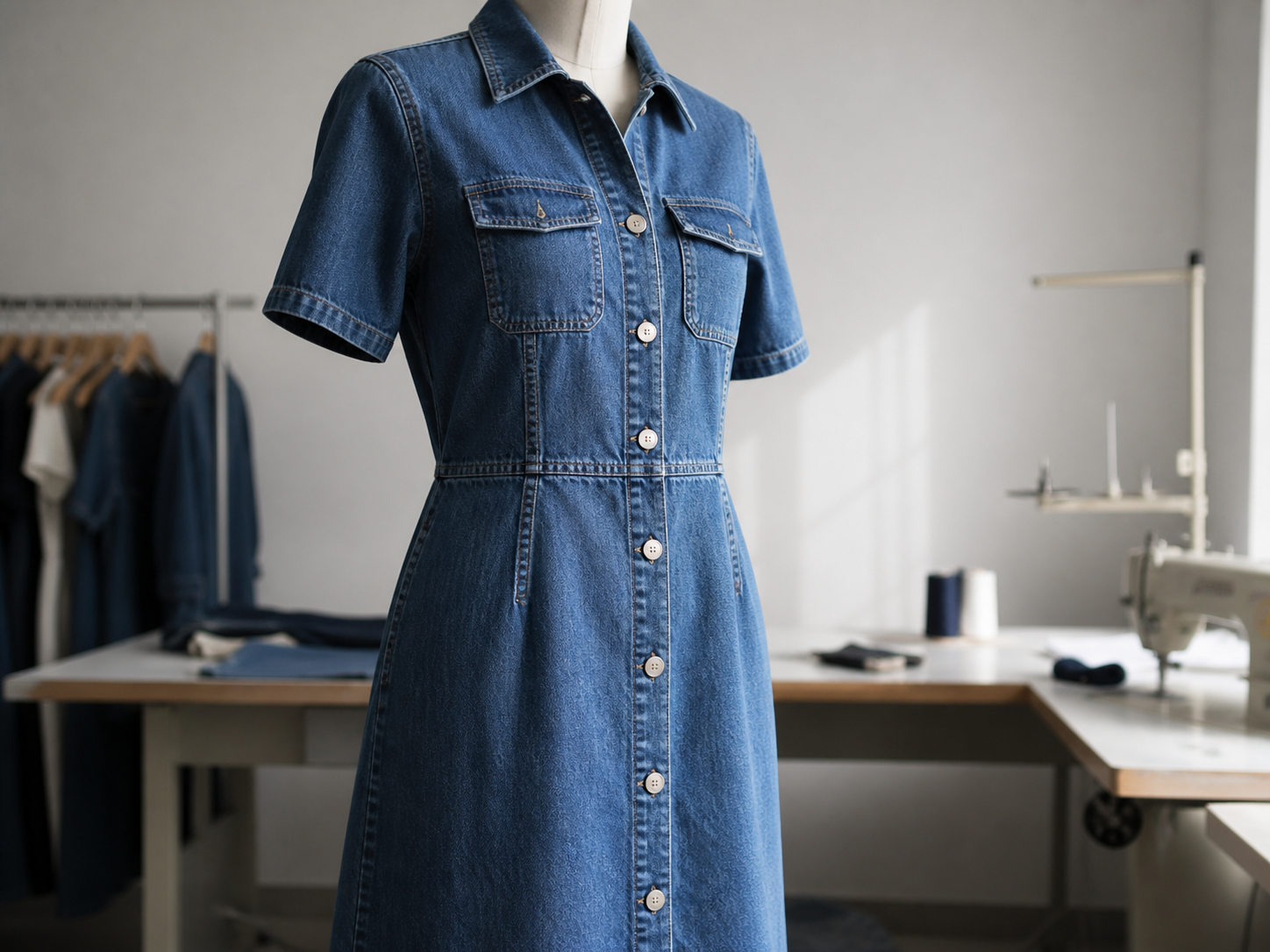
The failure is now named, and the next sample should not simply be sewn again. It must go by the desired production path: the desired denim batch, approved thread, actual hardware, planned wash formula, drying process and finishing process. A loose wash swatch might confirm color direction, but not how the entire dress will respond around pockets, seams and closures.
Do not freeze the pattern unless the wash has solidified.
When the wash formula continues to change, the final pattern compensation occurs prematurely. The first step is to achieve a manageable step of a wash; the second step is to compare before wash and after wash measurements and rectify the pattern. Otherwise one will request the pattern maker to compensate for a moving target.
Find Hidden Distortion with One Trial Dress.
There is a certain level of usefulness of a controlled trial dress than multiple samples with variables. When washing, mark the grain line, side seams, top point, pocket corners and center front. Then, test whether those landmarks shifted together or not. The signs indicate that the issue may have started in cloth behavior, cutting, sewing or laundry.
The wearer is then to walk, sit, turn and lift the arms. A dress could fit flat and the placket stretches as it moves or the back bit of the skirt creeps up when sitting. The notes belong to the sample record, rather than an informal message, which is lost before bulk production.
Determine Which Changes Remain part of the Product.
The mathematical uniformity of a solid-dyed dress cannot be expected in denim washing. The consumer must determine which variations are part of the charm and which result in the assortment appearing out-of-control. Even with more realistic lighter and darker extremes, center wash sample is more feasible than stipulating one shade per load of the laundry.
Judge the difference where the dress will be sold.
Review the range in consistent light and arrange several garments side by side, as they would be displayed on a rail or product page. What might seem to be a small difference alone might show up when compared to other sizes or repeating counts.
Bulk by Wash Batch, Not Sewing Date Only.
Garments sewn on the same day may be split across laundry loads, while garments sewn on different days may return with a similar finish. Inspection at bulk should thus ensure that every dress is linked to its lot of fabric and batch of washes. This facilitates easier tracking of shade drift and shrinkage changes as well as isolated processing errors.
A feasible post-wash release test must include:
- Finished measurements and garment balance after rest.
- Side-seam position, pocket level and placket alignment.
- Accepted color gamut, location of abrasion and noticeable streaking.
- Topstitch tension, closure function and hardware condition.
Allow Packing to Test the Finished Dress Once Again.
The dress can pass inspection and still arrive poorly. Dark indigo can stain a pale lining or imprint, a buckle can be left impressing the garment under it, and a folded line might be hard to take out. Packing of a trial carton follows the ratio, storage, opening and reading order in warehouse.
Calculate the amount of work following unpacking.
In case all the dress items require steaming, re-folding or washing before being photographed and shipped, the packing system is not complete. Handling can be reduced by covering with tissue, single bags, hardware security or a different fold without changing the garment itself.
Convert the Failed Sample to an Asset for Reorders.
A failed sample can come in handy when its cause and correction are entered. Retain the rejected and accepted wash references, pre-wash and post-wash measurements, fabric identity, wash recipe, hardware record and dated photographs. Test the new fabric lot against the references prior to cutting on a repeat order.
Siyinghong can use that record to develop and manufacture custom denim dresses, while the buyer keeps control of the wash character and final fit that identify the retail product. The point here is not to end all denim variation; it is to make sure that an unexplainable variation does not become the new norm.
Deliver a Decision-Ready Denim Dress Brief to the Factory.
One useful enquiry describes the intended result instead of sending merely a photo. Add the target customer and wearing season, silhouette, dress length, size range, desired denim weight and stretch, direction of the wash, hardware, quantities and delivery date. Indicate if the measurements are made before or after cleaning.
Reference images must relate the targeted abrasion level or fading spot, and not merely display an overall mood. Should that appearance be determined by a belt, shoes or undergarment, note that, too since this information also determines length, comfort and flexibility of fit.
Approve the Washed Dress, Then Approve the Order.
A good denim dress program does not finish with a sewing sample. It concludes with a garment that has gone through a wash and its fit, balance, shade and constituents are checked in unison. When failures are carefully identified to the actual cause, acceptable variation is established and every wash batch is checked against retained evidence, bulk approval is a decision made on the finished product and not an assumption made prior to laundry.
The approved record provides a precise starting point for the subsequent order. Consumer and factory are able to compare new material and washing outcomes to an agreed commercial standard rather than recreate the product from memory.
FAQ
What is the reason a denim dress will fit before washing but not after?
The wash is able to modify the shrinkage, recovery, hand feel and torque of the fabric. Parts of the garment will also not change in equal measure due to seams and topstitching, therefore, the final dress is not going to appear evenly.
Does it require a wash swatch to be bulk approved?
No. A swatch is useful for shade and hand-feel direction, but a finished garment is required to assess completed measurements, fit, seam lines, pockets and hardware.
How should a buyer approve denim color variation?
Accept a center wash sample in combination with acceptable light and dark limits. Compare the samples under consistent light and state whether different wash batches may be mixed in a single delivery.
What should be checked before reordering a denim dress?
Check the new fabric lot, test shrinkage and recovery, repeat the approved wash, compare the result with retained references and verify the finished measurements.
Post time: Sep-03-2026