The main difference between a cocktail dress and an evening dress is their usual occasion and degree of formality. They are usually worn at a dressed-up party or wedding and normally in shorter or midi flair. Evening dresses are used in a wider evening context often using long gowns. The categories can be considered as intersective, such that length will not be enough to make the judgment.
When comparing cocktail dress vs evening dress to an actual invitation, do not look at the label of the retailer. The practical question is what is the right amount of ceremony where you can move, sit and take part, what garment provides this purpose? The answer to that question can be presented very differently with two different dresses that seem to be of the same hem.
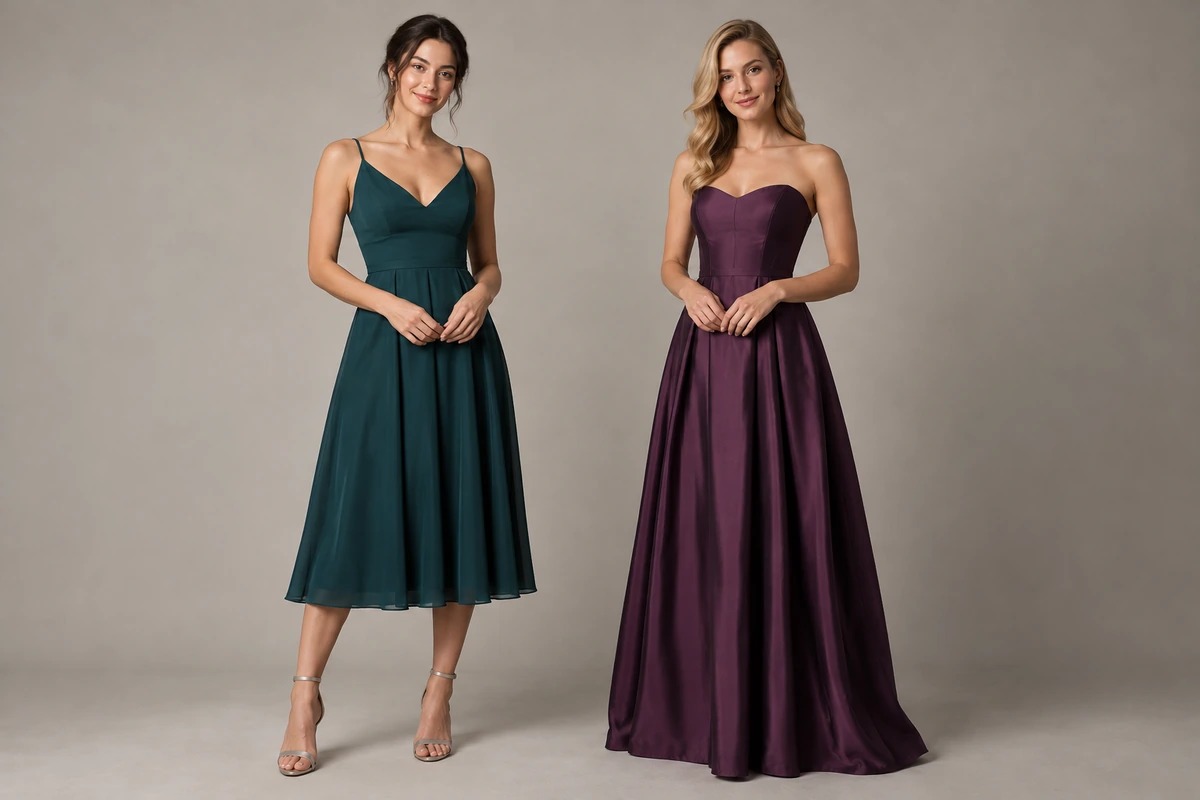
Compare the Dress Categories at a Glance.
| Decision point | Cocktail dress | Evening dress |
| Usual purpose | Dressy parties and receptions | Formal evening occasions |
| Common length | Above knee, knee or midi | Often long, with shorter options |
| Typical visual scale | Manageable party silhouette | Is capable of increased volume or drama. |
| Useful movement check | Standing, socializing and dancing. | Walking, sitting and hem management. |
| Main purchase question | Is it appropriate to the invitation and repeated gatherings? | Does it supply the necessary formality? |
These are generic inclinations instead of product norms. One shop can refer to a plain satin midi as an evening dress, and another as cocktail client. Consider the measurements, material details and construction specifications and arrive at a conclusion that two labels make two completely different garments.
Know also a name of a garment and a name of an event. A cocktail dress is just one of the potential items in that broader discussion, but trousers or a jumpsuit may be worn as cocktail clothing, as well. In this comparison, the attention is paid to the choice of dresses.
Look at the Differences That Affect Wear
The size and form.
A cocktail dress usually provides you with a small shape which is easy to navigate in between tables or those standing visitors. A longer continuous lines can be employed by an evening gown, sweeping skirt or a train to make it more ceremonious. Nor is there a monopoly of fitted or loose forms with either category.
Personal questions (how much space physically, visually does the dress cover). A huge skirt will be stunning in a big ballroom and will be clumsy during a crowded restaurant dinner. Even a stern figure may touch formal with the backing of the fabric and finishing.
Fabric and surface
The impression of a dress is affected by texture, the sheen, and transparency and ornament. A cocktail dress made of matte crepe can appear better than a thin, poorly-finished shiny dress. Use not glitter to show good; use not silk to show gilt.
Check medals, a lining and fastenings as well as the surface. An overly decorated dress can require an additional boost of comfort to the points of contact between arms and body. An exposed dress reveals its craft and thus an uneven hem or a bunch of stitches can be particularly striking.
Movement and maintenance
When viewing the photograph, think about what activities occurred. You will dance, take steps, walk or sit and eat dinner? A long dress can require another strategy as compared to that of a knee-length dress. It has also been noted that care needs influence ownership: a smooth surface might complicate cleaning and storage processes, irrespective of the type of garment.
Learn Why Length Makes No Decision.
A full-length cotton sundress does not necessarily qualify as a dress-up when in an invitation to a formal evening. This can be communicated in its fabric, construction and style even today as attire of daytime. On the other hand, a short dress that has a sophisticated cut and has heavy evening fabric could be used in certain formal occasions.
The use of length is when it is used with other evidence. Consider the product images of the waist construction, neckline, skirt volume, finish and accessories. Think then of the dress without theatrical lighting or the attitude of the model. Still seems appropriate to the occasion?
The last reference is the invitation. In the case of a classic black tie event, a gown may be the definitive answer. To have a party of life, a shorter or midi dress can be more convenient, more appropriate to the event. In cases when the host has made a given expectation, then do not allow an ambiguous shopping label to override it.
Exercise Two Borderline Cases.
The satin midi
A midi of satin can be worn in cocktail and evening. Examine its weight, lining, neckline and overall finish. An untidy, absolutely thought over style could appear elegant with appropriate footwear and a neat bag. A clear, casual version is slicker and it might require a different setting.
Never think that the glittery surface recognizes silk. Satin is a weave which can have various fibers. Consider the composition and care label before making conclusions regarding price, comfort or maintenance.
The minimal maxi
Plain maxi may be simple formal clothes or a long dress in everyday life. Find the hints in building. Is the neckline well cut? Does the skirt lay out? Are the closures not conspicuous and the material suitable to night wear?
Lack of decoration does not make any dress casual. But it is not formal either because of its length. Compare the value with the request of the host and consider how the entire outfit would look believable once the decorative jewelry was removed.
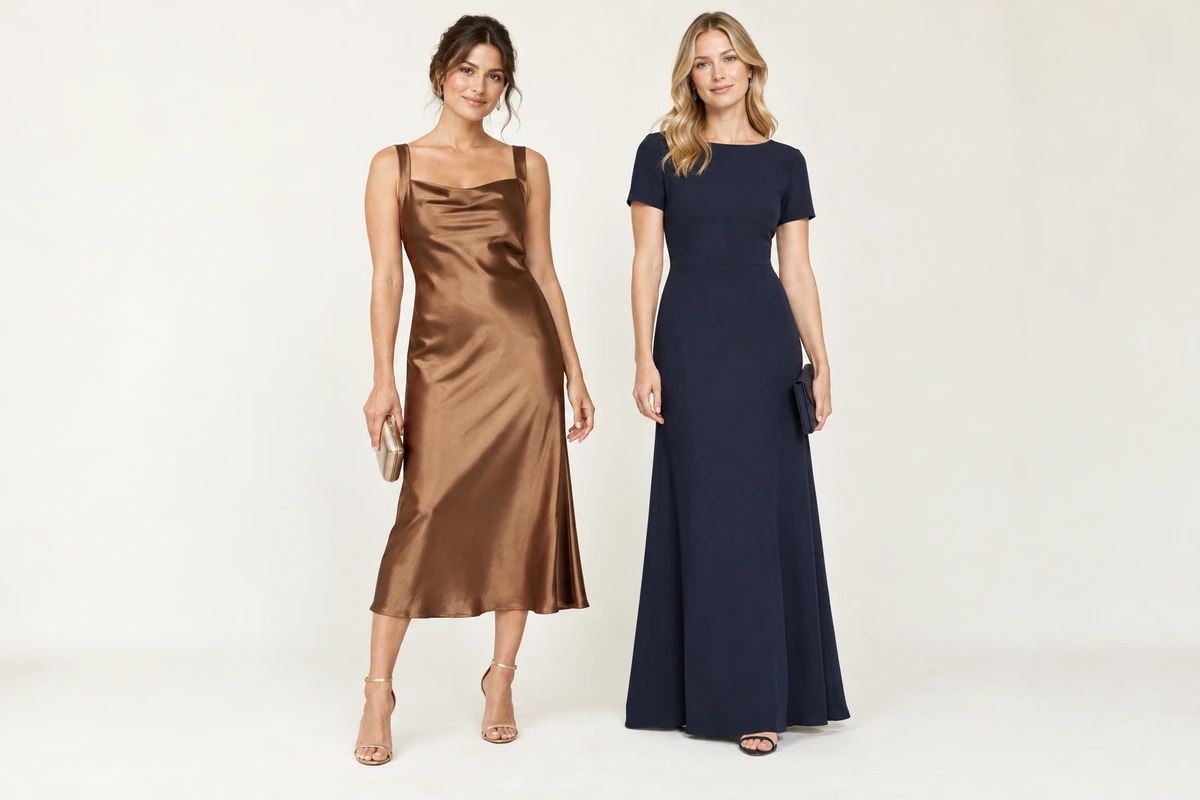
Decide on Two Dresses at the same Event.
An evening wedding reception that is cocktail-dress booked. What you have got is a navy crepe midi, with a low neckline, and an oversized train and full-length gown with large skirt. The starting point is probably the midi, though due to its scale, the midi is more likely to be practiced in mingling, dinner and dancing and yet it is not excessively ceremonious. Verify any other requests of the couple.
Now visualize that a formal gala with black tie invitation. The most flexible cut can be a tight-fitting dress down to the floor. It does not necessarily mean that a shorter dress will be excluded but, again, you must decide whether the fabric and the overall styling of the dress meets the expectations of that event. The need to reuse cocktail outfit based on the fact that one already has it can be misleading to a significant difference in occasion.
In a third case, the invitation explains that it is only evening reception. Inquire about the dress code and not by the manner of time. Evening is not a program, it is not a whole package of dress code. The solution can steer you away of purchasing a garment with much more pomp than you require.
Three things to be noted and then decided upon are the given dress code, the activities and the conditions in the venue. Compare the applications with those facts. This makes the decision narrow when a beautiful photograph distracts you off the real needs.
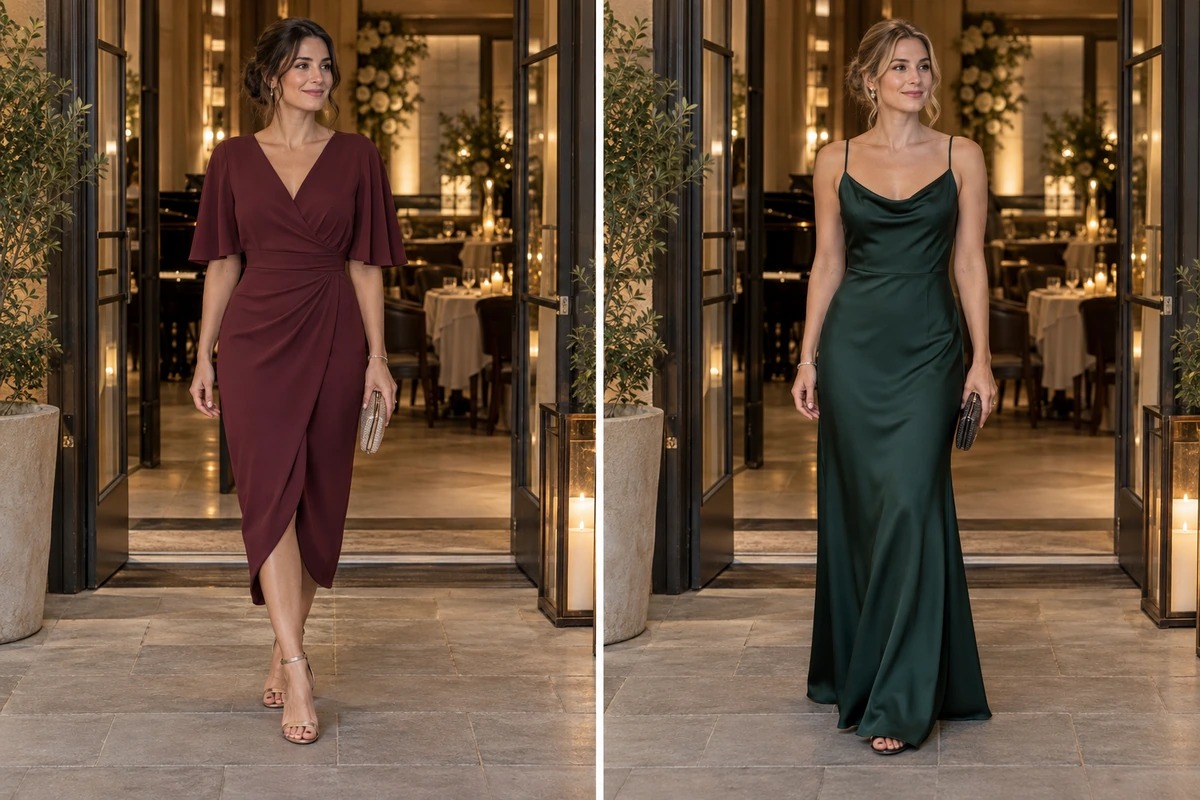
Know What Accessories Can Transform.
The mood of an appropriate dress can be altered with shoes, jewelry and a bag. Midis that are plain can use ornate earrings to make them look more joyful; meanwhile, minimal accessories allow a glamorous neckline to shine through. Outerwear influences also the impression at the point of arrival.
Limitations can not be deleted by accessories. A bathing dress is never a fancy gown since the clutch is very costly. A big train is a train made by a pairing with a pair of simple shoes. When dealing with several basic features all at once then the starting point is likely to be the main garment.
Wear all the outfit and take out items little by little. When a dress appears correct in the presence of many conspicuous objects that appear to accompany it, then reevaluate the nature of what this dress could be. The best mix usually has a convincing foundation prior to the initial decalcification being made.
The distinction we face when purchasing a single dress which is adaptable and relying on one dress to suit all the invitations is also practiced. A less-obtrusive midi can be drifting through a variety of social environments, but only to a point. Even the most conservative gala or a very informal out-of-doors party can need an alternative. Establish the events you would like to cover before making the judgment that versatility is the key consideration.
Do a little wardrobe audit: enumerate your 3 upcoming probable dressed events, and outline the dress requirements excluding mentioning products. Maybe you want to move freely in order to attend a party, a discreet shape in order to attend a business dinner and fancy clothes in order to attend an annual party. In events whereby two occasions have common requirements, a single dress can be used. When the third is very different, accept that, rather than purchasing a compromise that you do not like anywhere.
Make a determination of the feature you would not find easy to change on each candidate. Any type of jewelry can be worn with a plain neckline; a highly adorned bodice will always shine. A plain hem can stand to be modified; an ornamental border cannot. Such comparatively fixed traits inform that there is a long-term flexibility more than the promise that a dress is perfect in every occasion that is offered by the retailer.
Make the comparison narrow. This is not a permanent benefit to a kind you are granting one group in favor of the other.
Buy for the Events You Will Actually Attend.
Select a cocktail dress in case receptions, parties and dressed-up dinners are mostly on your calendar and a manageable silhouette will hold value. Wear a formal evening dress when you require befitting clothes to parties that have a more ceremonial feel. In case you have to have them both, designate one of them a prominent role rather than purchasing almost the same brand but with a new tag.
Consider the changes, shoes, stockings and care and then compare them. The dress that requires a lot of alterations at less cost may not be the one that is easier to buy. Examine the policy of returns prior to making a change.
In the product brief, establish the following roles: the dress code that the product is meant to serve, the volatility of the skirt, the movement and the hem as required in the likely dress code. Those distinctions allow brands to talk about an occasionwear line with Siyinghong on those terms, instead of using what marketers consider synonymous marketing terms, cocktail and evening.
Post time: Oct-26-2026