The bridesmaid dresses (usually chiffon) tend to make a softer, layered effect, while the bridesmaid dresses (usually satin) have a smoother surface with better visible highlights. Wear chiffon when the floating movement is focal to the appearance; wear satin when you wish to emphasize the appearance and light that the garment reflects. Both the fabric names do not inform you on how well, supportive or comfortable the final dress will be.
The most useful way of comparison is the complete dresses in the planned wedding scenario. Lined chiffon gowns may have multiple layers to them, and satin may be light, watery, or a heavy material with a good deal of body. The details given suggest that chiffon vs satin bridesmaid dresses is a realistic move rather than making a decision using a single picture.
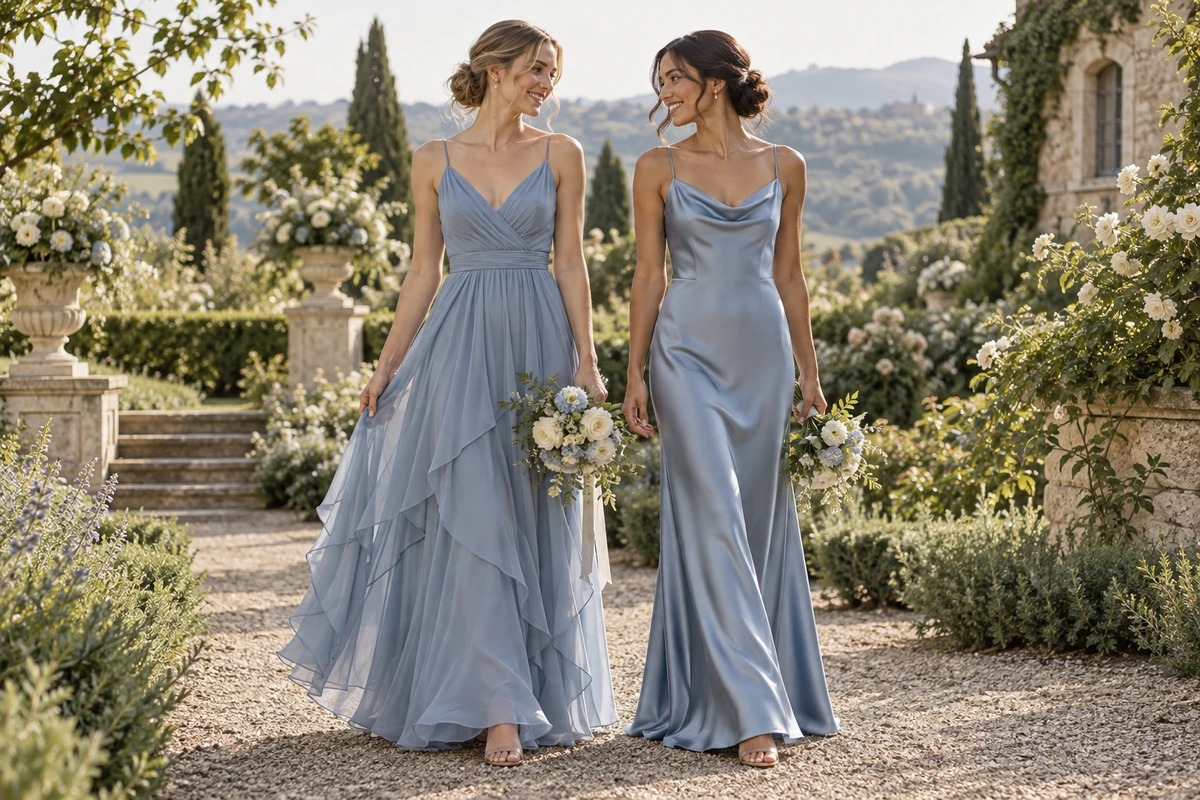
Choose the Effect You Want First
Describe the wedding party in a few visual terms before ordering samples. Do you want skirts that move separately in a breeze, a consistent glossy surface across the group, or a mixture of textures within one color family? These are more helpful starting points than deciding that one material is automatically romantic and the other formal.
A chiffon overlay can soften the outline of a dress, especially when gathered or cut into several skirt panels. A smooth satin surface can make draping, waist shaping and seam placement more noticeable. Both can suit a formal wedding, and both can be styled quietly. The silhouette, neckline and overall finish still influence the result.
| Priority | Chiffon option | Satin option |
| Floating skirt movement | Often a natural starting point | Look for a fluid, lighter satin |
| Visible reflected light | Usually more subdued | Often a defining feature |
| Sculpted shape | May need a supporting foundation | A satin with body may help |
| Coverage | Evaluate the underlayer | Check weight, color and lining |
| Group consistency | Compare layers and color | Compare sheen, color and cutting direction |
Compare the Same Color in Two Surfaces
A shade name is not a color standard. Dusty blue chiffon and dusty blue satin may look related without appearing identical, even when ordered from the same seller. Surface texture, transparency and the cloth underneath can change the visible result. Start with physical samples whenever a close match matters.
Place the chiffon over its proposed lining before comparing it with satin. A single transparent piece against a white card tells you little about a finished dress over an opaque blue foundation. Fold the samples, hang them vertically and view them together. This reveals differences that disappear when small pieces lie flat.
In the case of an intentionally mixed party, make a decision as to the welcome of variation. A coordinated range may consist of multiple tones but it should be selected as a range. Requesting them all to purchase an independently obtained dress known as sage green results in confusion which could be avoided by a common approved sample.
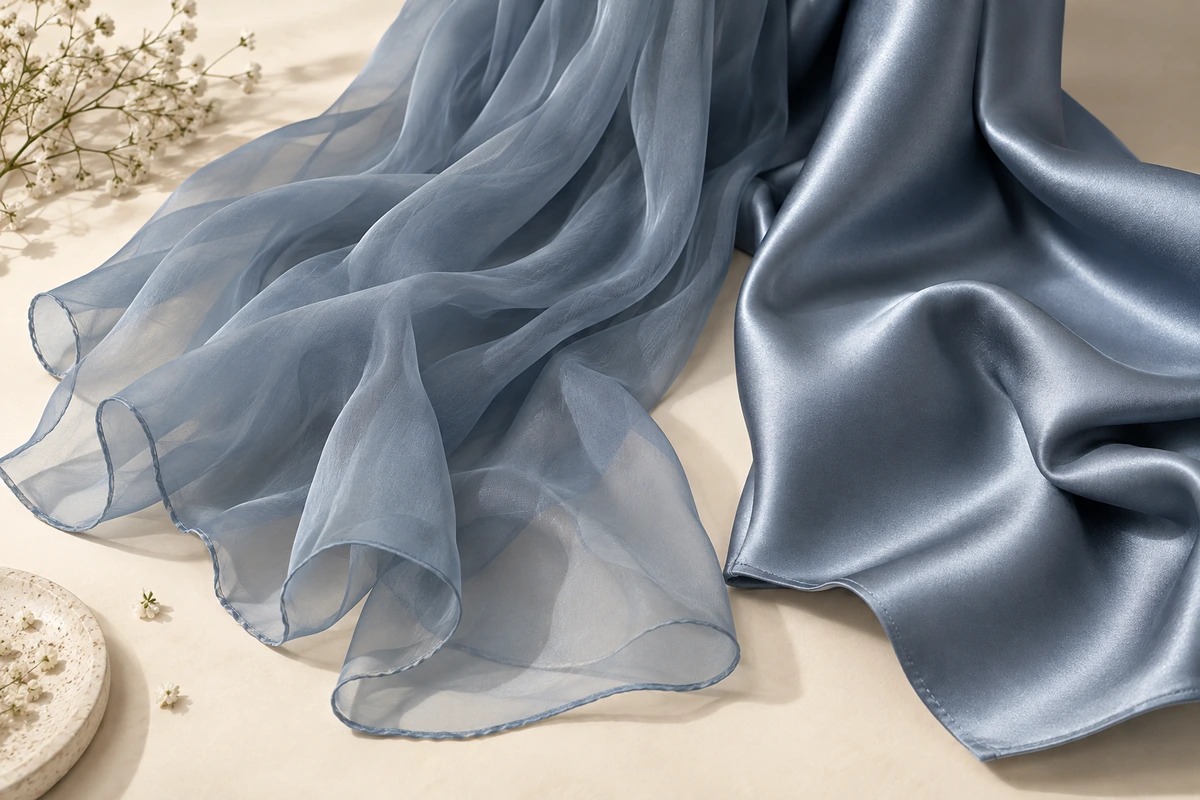
See What Changes Between Daylight and Evening Light
The satin tends to make brighter effects where the garment is bending toward a source of light. It is possible that those highlights will be used to accent some gorgeous draping, but they can also highlight a puckered seam or even an overly tight spot. Look at the dress in different angles and not just by judging the color by looking on it at the front.
Chiffon tends to distribute the visual effect through its layers and folds. Backlighting can make sheer sleeves or skirt edges more apparent. This is not necessarily a problem; it simply means that the intended coverage should be checked in the lighting the party will encounter.
Take comparison photographs in open shade and ordinary indoor light with automatic filters turned off. Use the same camera position for both fabrics. The photographs are a communication aid, not a measurement of color accuracy. Everyone should still know which physical sample has final approval, especially when dresses come from different suppliers.
Account for Wind and Movement
The light chiffon dress can be even livelier when used outside, and movement can have an impact on the wearer. Consider a ceremony on an exposed terrace, a walk across a courtyard or stairs between venues. Ask: Does the skirt, slit and lining give the coverage and freedom that every individual desires when walking around?
A narrow satin skirt may need more walking room than a fuller chiffon style, yet that difference comes partly from the pattern. A generous satin A-line can be easier to move in than a tightly fitted chiffon dress with a restrictive lining. Compare similar silhouettes before attributing everything to the outer fabric.
Put on the dress with the bouquet and the shoes of choice. Sit, walk up and twist without grasping the skirt in some special position. Indicate the movement of the layers either together or against one another. These observations present to the fitter something in particular on which it is possible to make adjustment before the wedding.
Read the Layers Beneath the Surface
Chiffon is a thin sheer material hence, numerous bridesmaid gowns need another layer to be covered. Find out what that layer is of and how deep it is. A light outer skirt is not an assurance of a light overall dress when the undergarment is thick, tight or made up of multiple layers.
Satin is the construction of a fabric but not a single fiber. A satin dress can involve silks, polyester or a mixture and the lining can be of another composition. Read the outer and the lining information individually. The rest of the word satin alone may not be a sure predictor of care, hand and price.
Examine the bodice as carefully as the skirt. A neckline may depend on cups, straps, internal support or a stable lining. Ask what is included instead of assuming that a flowing photograph means an unstructured garment. The support required by the design belongs in the comparison from the beginning.
Decide Whether to Match or Mix
Even matching all the dresses is handy when a couple wishes to have a similarity in the visual rhythm. Then, settle on the fabric reference and also on the color. Variations in satin weight or the number of chiffon layers can be disruptive to uniformity even though the dresses may have a common neckline and length.
This is because by blending fabrics, every wearer will have more choices to make but there must be some decision towards organizing the combination. You may maintain the length and family of color and change the surface texture. Or, buy one piece and provide citizens with alternative sleeves or bodices. Keep a small number of variables constant, as opposed to having all features free.
Place the real samples next to each other in the probable sequence. Between two plain dresses can be a glittering dress which can be a greater visual object. Choose whether or not that is welcome. How the photographs are to be planned is a matter of choice, as well as the preferences of the couple, and has nothing to do with a general rule concerning matching bridesmaids.
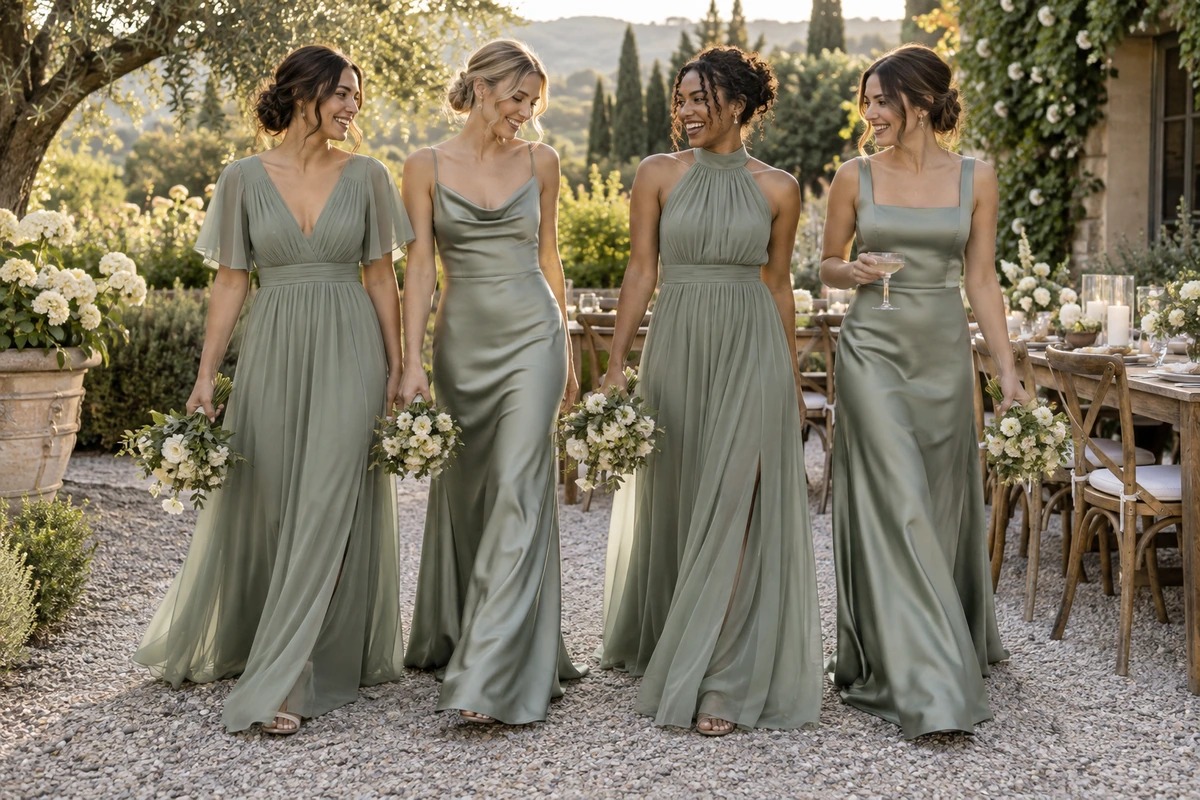
Resolve Three Wedding Scenarios
An outdoor afternoon ceremony
Begin with route, shade and wind forecast. Chiffon is a good option to a flowing dress, but evaluate the overall lining and hem. Satin may also be worn outside when the cut can be moved about, and when it is acceptable to the wearer in daytime. Neither variant eliminates the necessity of appropriate shoes and an appropriate length.
An indoor evening reception
In case the party desires luminous, defined dresses, test the samples of satin in warm indoor light. In case the textile wanted is soft and layered, the option of chiffon is available. In either case, include time spent seated at dinner. A piece of clothing that fits perfectly on a short occasion might require re-fitting at the waist or hips in case it happens to be on a more protracted occasion.
A wedding with mixed personal preferences
Choose the shared feature first, then let wearers shortlist within it. Someone may prefer sleeves, a higher neckline or a particular undergarment arrangement. Different fabrics can support those preferences, but ask for photographs and samples before finalizing. The objective is a coordinated group whose members can participate comfortably throughout the day.
In both cases, two dresses of roughly similar extent of coverage and length should be compared. Otherwise, it might be between a figure-eight tailored and a loose dress, but not between chiffon or satin. Make a record of the feature that contributes to every preference: more movement of the sleeve, a brighter surface, easier sitting or fewer layers. The given note comes in handy in case the original dress has disappeared.
If you need to substitute a design, return to those priorities and the approved color reference. Do not approve the replacement from its fabric name alone. A second chiffon style may have a different lining and skirt width, while a second satin style may be much firmer. Check the new dress against the original requirements before treating it as equivalent.
Agree on a Final Sample
Before placing the order, record the approved color, outer fabric, lining, silhouette and any permitted variations. Confirm the actual size guidance and alteration arrangements with the seller. If several dresses will be ordered, ask how color consistency is managed and whether later additions could differ. Do not assume a separate order will reproduce the first exactly.
Keep one clear decision record that everyone can access. It should identify what was approved, who needs which style and what remains to be checked. This prevents a last-minute substitution from becoming an unexpected change to the whole wedding party.
For a brand developing a bridesmaid range, present the two fabrics as different design options with visible details about layers and fit. Share the intended group effect and sample requirements with Siyinghong. A well specified brief makes the choice between chiffon and satin meaningful for both the maker and the eventual wearer.
Post time: Nov-09-2026