Chiffon is a sheer, light, woven material that is characterized by a floating overlay. It is popularly employed to make overlays, gathered skirts, scarves and delicate sleeves. The name signifies the kind of fabric as opposed to one fiber: you can come across silk, polyester and viscose chiffon. The treatment and handling of a specific chiffon is determined by composition, finishing and garment building.
This chiffon fabric guide tracks a piece of cloth to a finished dress. It says what to verify prior to purchasing it, how to make the layers and why sample work is important when cutting and sewing. This is to maintain the light look without disregarding that of coverage, seams, or daily handling.
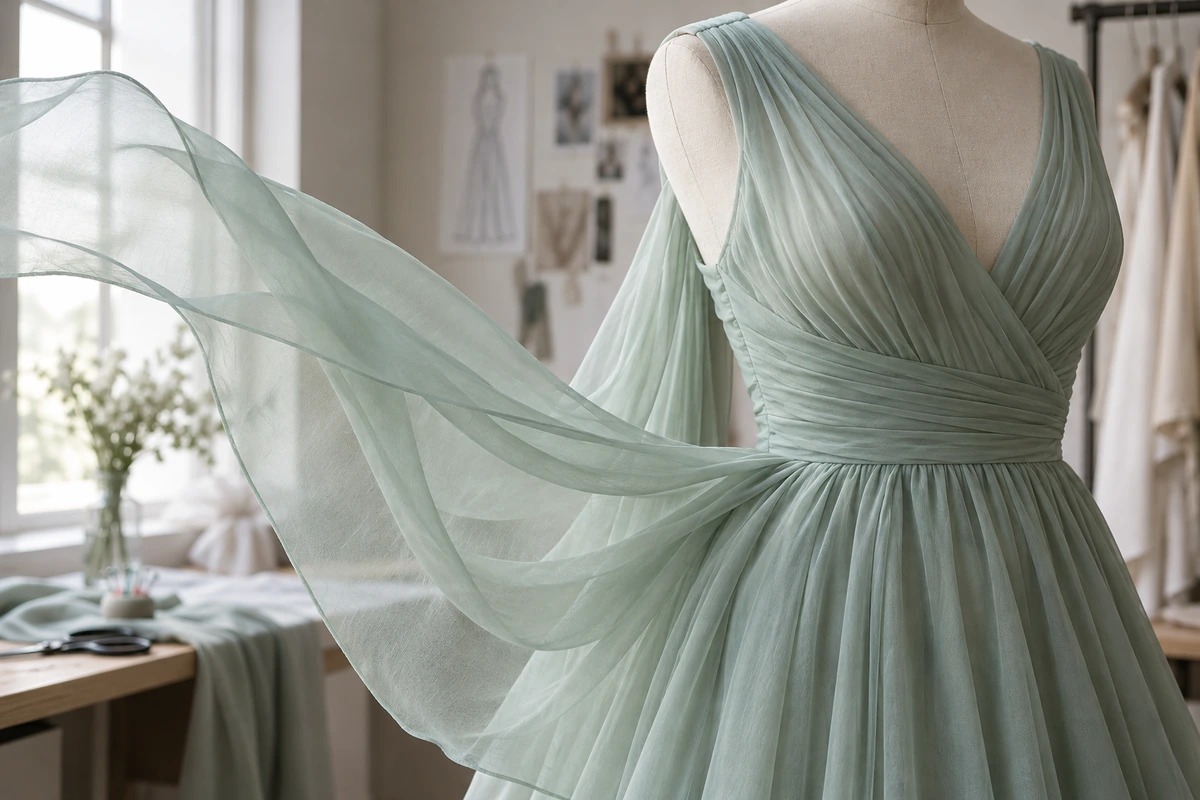
What Makes a Fabric Chiffon
Chiffon is usually plain woven with a very twisted yarn, and is a sheer material given a slightly textured feel. It can have a very attractive motion, and can be folded into fine folds, which contribute to its beauty. A single layer will look drastically different when compared to a number of layers external to the ST, as well as that of identical material over an opaque substrate.
Use that difference. A bodice can be lined or unlined to reveal the transparency of the fabric used, an unlined sleeve can be worn. A gathered dress can create a textural infinity with overlaps. The design should include the amount and pattern of those layers rather than something thought of when the cloth has already been chosen.
Chiffon is no assurance of stretch, stability or coolness. A loose outer can also be very fragile on seams, and the entire garment might have significant interior materials. Test the real fabric and the quality supposed construction rather than all chiffons should look like.
Read the Fiber Before Predicting Care
The two types of chiffon silk and polyester chiffon belong to the same genre of fabric yet they have a different composition. Another option is provided by viscose versions. Further variation is provided by blends and surface treatments. Be sure of the seller you are purchasing, with any extra fibers that they may be offering, and then determine whether the material will suit your finances and care requirements.
Do not identify fiber based on appearance. A picture of a cool white material cannot prove that it is silk. Similarly, the fact that a surface is more matte does not mean that it is man-made. Use the composition given with the actual product and get clarification on a list that is not clear.
In case of a pre-made dress, look at the label of the entire dress. The chiffon can be paired with lining, embroidery, pleats or trims which impact cleaning and pressing. In case of a sewing project, request care advice prior to making the fabric. Check out the desired preparation on a test first, but do not consider all chiffon to be washable or all the silk chiffon to be the same.
Differentiate Between Chiffon Georgette and Organza
The same can be said of chiffon, georgette and organza which can be worn in sheer occasionwear but give very different effects. Georgette has a stronger texture in Georgette and a stays in its hand are frequently more crisp and holdier in organza. Chiffon is a fabric mostly used when a floating layer is desired to be soft. Real goods may have an appearance overlap hence compare samples.
| Desired effect | Category to investigate | What to verify |
| Soft floating overlay | Chiffon | Drape, transparency and layer count |
| More textured fluid surface | Georgette | Hand, weight and opacity |
| Defined sheer ruffle or shape | Organza | Crispness and compatibility with the pattern |
Do not substitute based on color only. A style of wide pleated collar, planned around a delicate sheer collar, in a very flowing chiffon can lose its stiffness. A loose sleeve that will fall flat can drape away form organza. The cloths role in the design is rather significant as compared to their appearance on the screen.
When supplier has a name that is not familiar as a variation, enquire what has changed. A pleated or ruffled chiffon might require a variant of layout and care than a plain one. Record those details along with the sample reference.
Consider a Swatch for Your Dress
Choose a sample large enough to drape. This can be well demonstrated by a small cut that can demonstrate color, but not the movement of a skirt or multiple layers. Put the cloth on the proposed lining and examine it under light and dark background.
Check the seam and a tiny area that you have sewn when sewing the garment. Note the ease of movement of the yarns along the seam, and the type of stitching chosen, whether puckering occurs or not. These are practicable considerations to communicate with the creator. They are not standardized strength tests or guarantees about long-term performance.
In the case of a printed chiffon, take a look at the repeat and direction. An oversized floral pattern could require a bigger planning as compared to a smaller allover print. Transparency may also render coinciding motifs to seem more more compact where the cloth is stacked. That is an effect worth taking into consideration before giving the nod to a bodice, heavily gathers.
Note down the supplier reference, composition, color and your intended layer composition. Assuming that the sample is granted, keep a copy to refer to later at which time there is something to compare. An saved product picture is good but not satisfying the cloth.
Plan Work Cutting and Handling
Chiffon is easily movable and in such a case, it should be placed on large clean space and should not allow surplus chiffon to slide across the table edge. Now leave it to lie untvilked before you put the pattern up. Be awake of check grain and direction of the print; even a slight shift in the layout may show as an evident imbalance in the final garment.
A flat layout would allow tracking of alignment to become easier to monitor, especially with a slippery cloth or a directional print. Enter the information needed in cutting the pattern and bear in mind that you need to make mirrored pieces where it is needed. Do not suppose that you will make a correct pair by cutting off all the pieces with the same side up.
The tissue under the cloth may be useful to stabilize the handling, however, test the procedure on scrap. Select tools and weights that will not drag the fabric or leave marks. Fine pins in seam allowances can come in handy as long as they are used correctly, sharp cutting tools can aid preventing the edge coming out of form.
Retain cut pieces in place and labeled. Do not keep on picking them up by a small side. When dealing with curved and bias areas, one must be careful because the shape can change prior to stabilizing it. When the pattern directions require a staystitch or some other support procedure, do it at the necessary stage, not when the edge has been stretched out.
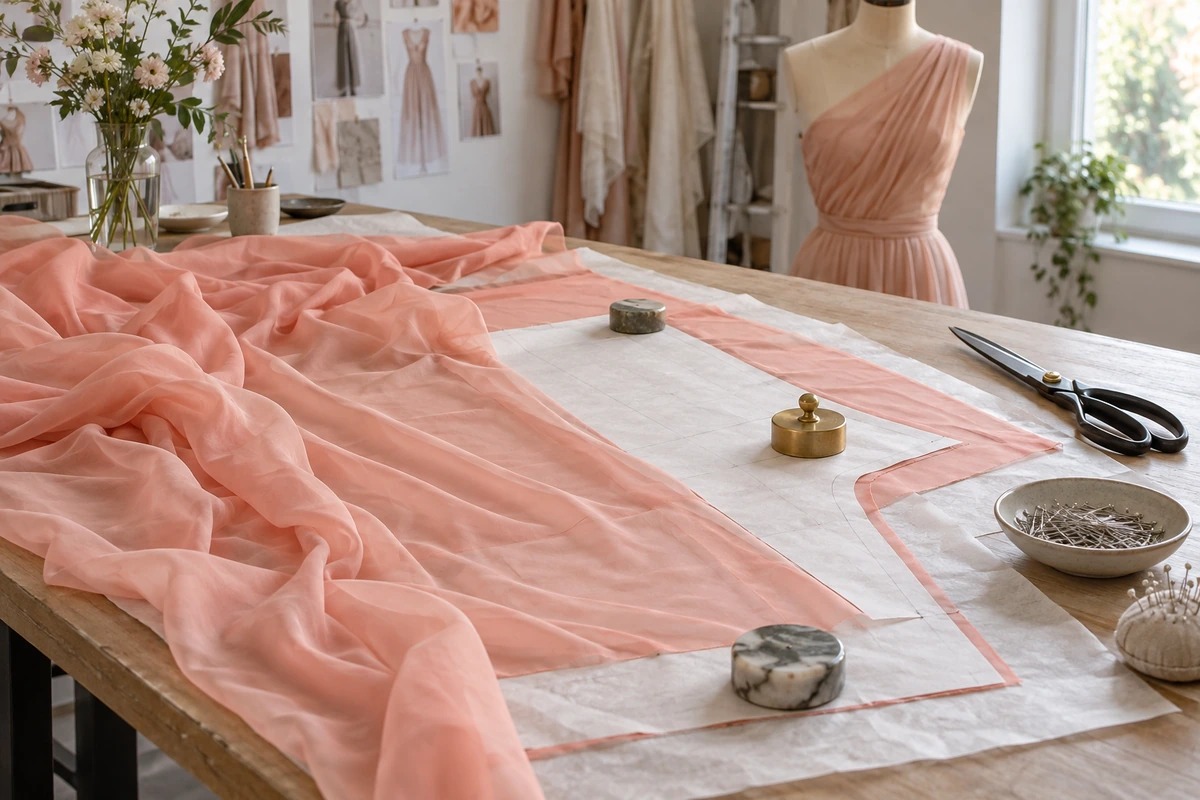
Select Seams and Hems on a Test Piece
Begin with a new needle and thread that best matches the lightweight fabric and set the standards by the instructions of the machine manufacturer. Stitch length on the test, tension and feeding on scraps. One setting does not accommodate all chiffons, machine and seam. Create changes in one setting at a time to determine what makes the result better.
Raw edges of appropriate seams can be enclosed like French seams. They do not necessarily offer the solution to all narrow turns or bulky intersections. Compare finish with the pattern requirements and the look using the sheer fabric. Even a narrow seam must be substantial enough to sew up.
Test a narrow turned or rolled finish, suitable to design and equipment, in hems. When possible practice in the same direction of the grain and shape as the actual hem. The action of a straight sample will not be the same as a curved skirt edge. Let the finish show whether there is a smooth finish or an unintentional ripple.
Do not pull the fabric through the machine, so as to make the cloth run faster. Prop it and shepherd it. In case a support paper or stabilizer is taken, ensure that it is removed in such a way that does not cause damage to the fragile stitching or leave any residue. Wet ironing the clothes on the ironing board and then with heat.
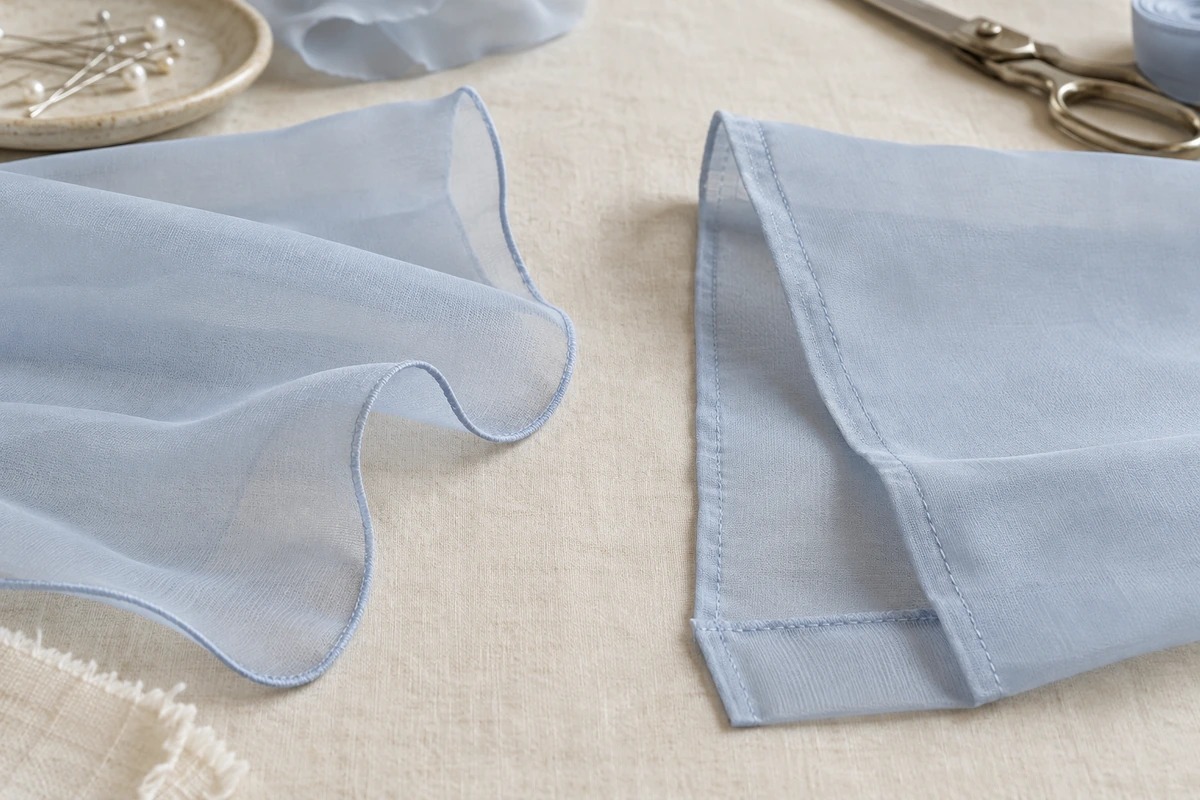
Plan the Underlayer with the Outer Cloth
Select the inner layer for the coverage, movement and shape the dress has to have. An overly tight lining will cling to a generous chiffon skirt. Excessive backing may transform the flaky look into that of a sturdier one. Evaluate the combination as a system.
Choose the places of fixation and detachment of the layers. The floating layer can be moved freely whereas the underlining brings closer the layers when constructing it. Both approaches cannot be used universally. Which will depend on which pattern and what visual effect you want.
On fitting, check the inner neckline, width of the skirt opening and length of the relative hem. Sitting and walking in the dress to check whether the layers are kept in balance. When the chiffon and the lining tend to pull sideways, find out why and not just shorten one of them. All of this can include fit, attachment and fabric behavior.
Take Care of the Final Garment
Keep delicate chiffon supported and free of rough tools and snarls. Follow the garment cleaning instructions, with limitations made by decoration or pleating. In case of the label being absent, the seller or a relevant cleaning specialist should be consulted before deciding on a approach.
Lay the dress in a supportive position of the weight and construction. A heavy, lined garment cannot and must not be left to hang indefinitely on the light ornamental belts. Store ornamented items not to rub on a surface, and examine the garment after wear to be able to respond to small concerns on time.
Concerning a chiffon line, notify Siyinghong who will be developing the line: approved cloth, lining, seam finish, hem treatment and the movement that the sample is expected to exhibit. The lightness of chiffon is best matched by the equally considered less noticeable choices of construction.
Post time: Oct-31-2026