The key distinction between bridesmaid dress and the dress of a guest at a wedding is the role of the person wearing them. The amount of coordination between the wedding party and a bridesmaid is most often dictated by how the couple arrange it. An independent outfit is always selected by a guest, as per the invitation requirements, dress code and requests. The dresses as such may overlap in color, length and design.
This puts the question of style before responsibility in bridesmaid dress vs wedding guest dress. Even a gorgeous dress may be an incorrect purchase when it disregards a mutually set palette or the needs of the occasion. Determine who decides that, then selection of the garment and accessories to suit that position.
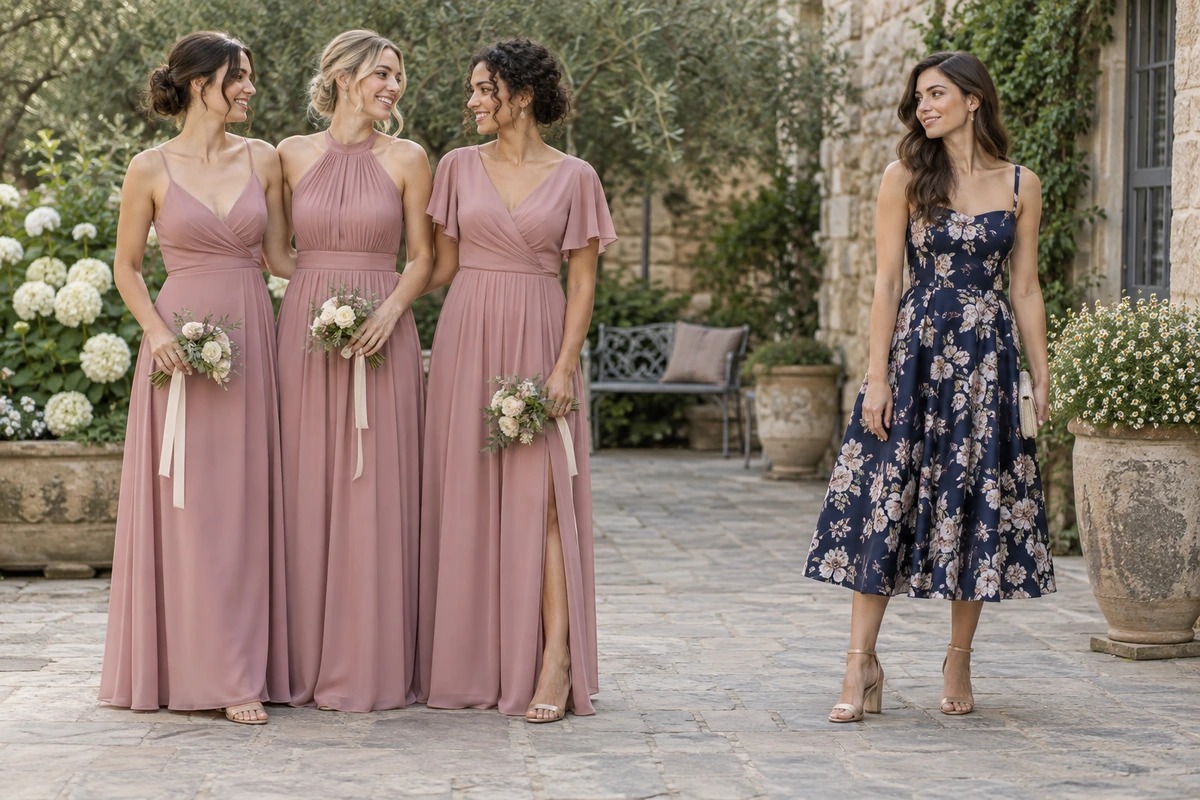
Begin with Your Role in the Wedding
A bridesmaid may appear in coordinated photographs, stand during a ceremony and help with parts of the day. Those activities can influence footwear, coverage and movement. The outfit may also need to relate visually to other members of the wedding party.
A guest is always involved and does not necessarily have to be a member of that organized group. This tends to enable greater freedom although a dress code, expectations of ceremonies and any pieces of advice given by the couple are not eliminated.
Neither role requires one universal silhouette. Bridesmaids may wear different shapes within an agreed color family, and guests may choose long or shorter dresses depending on the event. Start with the wedding’s actual arrangements rather than an image of what all weddings supposedly look like.
If your role changes during planning, revisit the clothing discussion. An outfit selected before you joined the wedding party may need approval or adjustment even if it remains suitable for an ordinary guest.
Establish Who Chooses What
| Decision | Bridesmaid | Wedding guest |
| Color | Often agreed with the couple or coordinator | Usually chosen independently within requests |
| Fabric and finish | May need to coordinate across the group | Selected for the occasion and personal preference |
| Silhouette | Can be assigned or individually selected | Usually an individual choice |
| Accessories | May follow a shared plan | Usually independently coordinated |
| Timing | May depend on group ordering and fittings | Depends on the invitation and personal preparation |
This table outlines typical set-ups but is not a set of rules that would apply to all weddings. Be clear on the actual plan prior to purchase. Others buy their own outfits whereas some couples give them clothing. There should be discussion and not an assumption regarding budget and payment.
For a bridesmaid, ask whether approval covers a specific product or a general direction. “A blue dress” leaves room for very different shades and surfaces. A photograph may not communicate color accurately, so an agreed fabric reference can be more useful when close coordination matters.
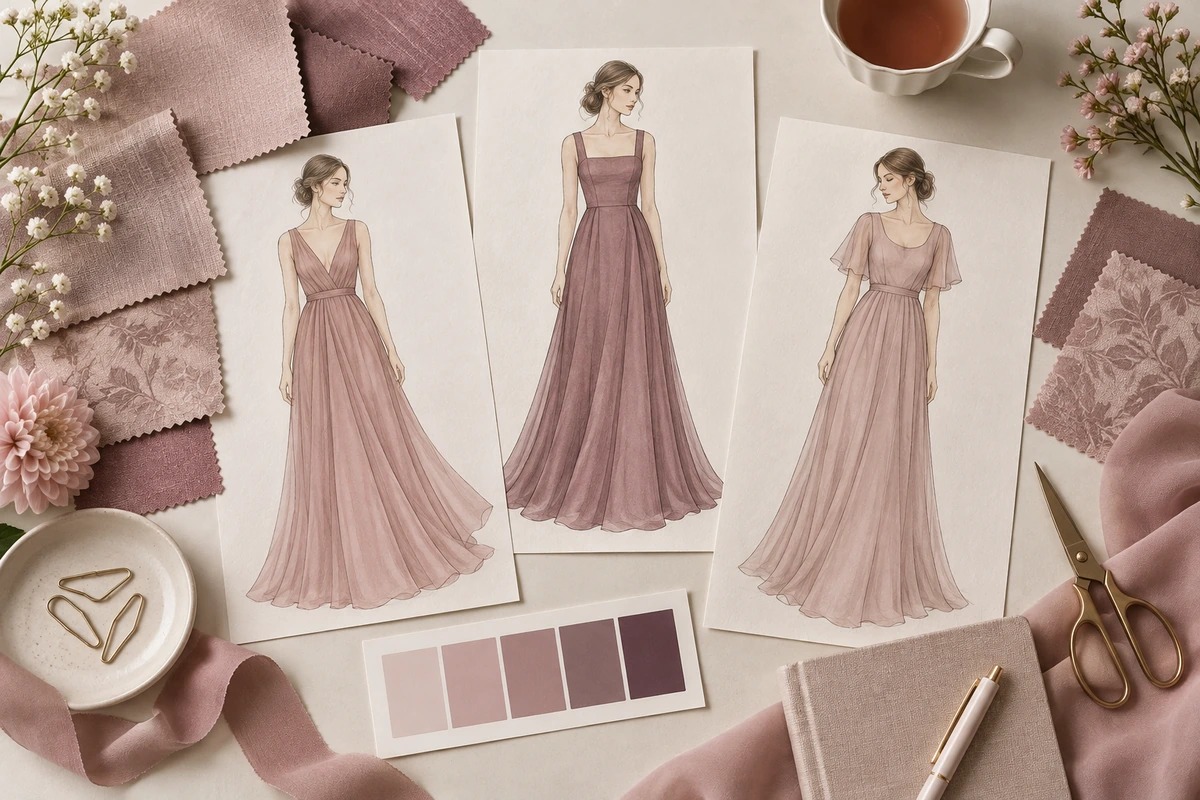
Coordinate as a Bridesmaid Without Guessing
In case everyone will dress the same, make sure of the exact product, color and order details. Enquire about size choice and deadline to make changes. Do not go for the smaller size under the hope of altering your body, buy based on the measurements and the advice of the seller.
If the plan allows different styles, establish the limits. The group might share a color, length, fabric family or level of decoration. Knowing which features are flexible helps you choose a neckline and fit that work for you without accidentally departing from the intended look.
Discuss comfort and support needs early. A particular strap or back design may not accommodate everyone’s preferred underlayers. A practical conversation during selection is easier than trying to solve a structural problem after the dresses arrive.
Also confirm the activities. You may need to walk outdoors, stand for photographs, carry flowers or move quickly between locations. A coordinated appearance is more successful when the garments allow the people wearing them to participate comfortably.
For a coordinated group order, leave time to resolve fit differences rather than expecting one pattern to work identically for every person. Confirm individual measurements using the supplier’s method and discuss practical concerns before the order is finalized. When exact color consistency is important, follow the supplier’s guidance on fabric approval and ordering rather than relying on screen images alone.
Keep a written record of agreed details, including the product reference, color, permitted variations and deadlines. This reduces accidental misunderstandings without requiring repeated approval of every small styling decision. The goal is a clear shared plan that allows everyone enough time to prepare comfortably.
Choose Independently as a Guest
Read the invitation and wedding website before shopping. Dress code, time, venue and ceremony details can narrow the choice substantially. If the event moves from a ceremony to a reception, plan for both rather than styling only for the party.
Color customs vary across cultures and individual weddings. In many Western weddings, guests avoid an outfit that could be mistaken for bridalwear unless the couple requests it. Elsewhere, different colors or forms of dress may carry particular meanings. Follow the couple’s guidance instead of treating one tradition as a worldwide rule.
A guest does not usually need to match the wedding palette. If the couple explicitly requests colors, however, that becomes part of the invitation. Choose within the request while considering fit and the overall degree of formality.
Check the garment in the setting it will encounter. A pale dress may appear lighter in photographs, a sheer section may become more visible in daylight, and a long hem may be difficult on wet ground. These observations help you make a considerate choice without turning the process into a competition for the least noticeable outfit.
Handle Color Overlap and Ambiguous Requests
Accidentally wearing a color similar to the bridesmaids is not the same as deliberately presenting yourself as part of the wedding party. If you happen to learn their color before buying, you can choose another direction when convenient. You do not need to investigate every detail of the wedding’s design to attend as a guest.
If the couple has made a specific request, take it seriously. When the wording is unclear, ask one concise question about the actual uncertainty. “Would this pale floral dress fit your color guidance?” is easier to answer than a broad request for approval of every accessory.
As a bridesmaid, avoid making an independent substitution after an agreed plan without checking. A different fabric can reflect light differently even when the color name matches. If the original option is unavailable or unsuitable, explain the problem and propose alternatives within the established direction.
Keep these conversations practical. The aim is to arrive prepared and comfortable while respecting the people organizing the occasion, not to interpret every clothing choice as a statement about importance.
Rewear a Bridesmaid Dress at Another Wedding
An old bridesmaid dress would make a good guest costume. Initial step: Compare it with the new invitation. Its former nature does not render it inappropriate, but only the length, color and ornamental nature remains to accommodate the following occasion.
Eliminate accessories which were unique to original wedding party, where possible. Restyle the dress according to its own shape. An additional pair of shoes, bag or outer garment will personalize the outfit without causing an extensive change.
Look for strong bridal associations in the complete outfit rather than judging a single detail in isolation. A pale gown with elaborate bridal styling may need a different occasion. A simple colored dress may be much easier to reuse, provided the new event’s formality is appropriate.
In case you wish to shorten or dramatically modify the dress, get an assessment of alteration first. It can be influenced by a decorative border or by multiple layers of the skirt and its impact on feasibility and cost. It is worthwhile to rewear when the garment you have created fits the purpose and not just because it would be economical to change instead of purchasing another dress.
Imagine that a former bridesmaid dress is a plain burgundy midi. The new invitation requests cocktail attire, and the couple has supplied no conflicting color guidance. The dress may be a practical candidate after a fit and condition check. A new bag or simpler jewelry can distinguish the outfit from its earlier coordinated appearance without changing the garment itself.
Now imagine a pale, floor-length design with an elaborate train and a strongly bridal appearance. Its previous bridesmaid role does not automatically make it suitable as guestwear. Consider the complete impression and the new couple’s instructions. Another event, or a professionally assessed alteration, may offer a better use.
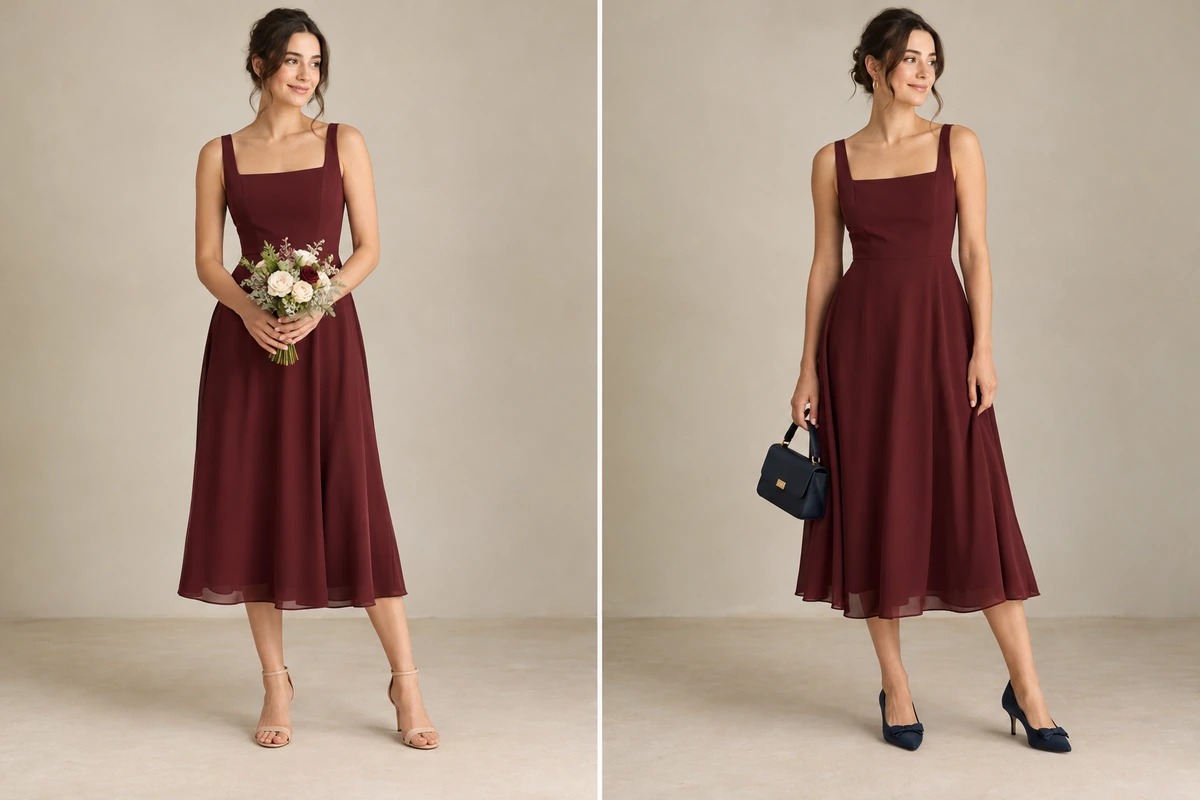
Use the Checklist for Your Role
If you are a bridesmaid
Confirm the approved style or boundaries, the budget arrangement, ordering deadline and fitting schedule. Verify color and fabric expectations, then check shoes, accessories and any ceremony coverage requirements. Try the complete outfit while carrying what you will actually hold, such as flowers, and report fit issues while there is time to resolve them.
If you are a wedding guest
Confirm the dress code, locations and timing. Read any cultural or color guidance, choose suitable shoes for the route and plan an outer layer. Make sure the dress remains comfortable while seated and that its hem works with your chosen footwear. If a specific instruction is unclear, ask the couple or their designated contact with enough notice.
For brands, the distinction also shapes a collection. Bridesmaid programs may prioritize coordinated color and multiple compatible silhouettes; guestwear may require a wider range of independent occasion choices. Siyinghong’s bridesmaid dress service provides a relevant starting point for discussing those coordinated design requirements.
Post time: Nov-09-2026