A bodycon dress is easily assessed after a few seconds: the waist is clean, the hem remains level and the material follows the body. The crucial point comes later in production. Does the fabric recover its shape after sitting and walking, or are the seat and side seams stretched?
Pattern and material tension work together to create the silhouette in a controlled way. An OEM specification should have finished measurements, stretch direction, recovery, opacity and behavior after wear.
Fit, Not a Smaller Size, Defines the Dress.
A tight sample is not necessarily a success. Excessive negative ease can look sharp on one type of body and the neckline will stretch, the hem will ride up and the seams will swing around on other bodies. Determine where close contact is not accidental.
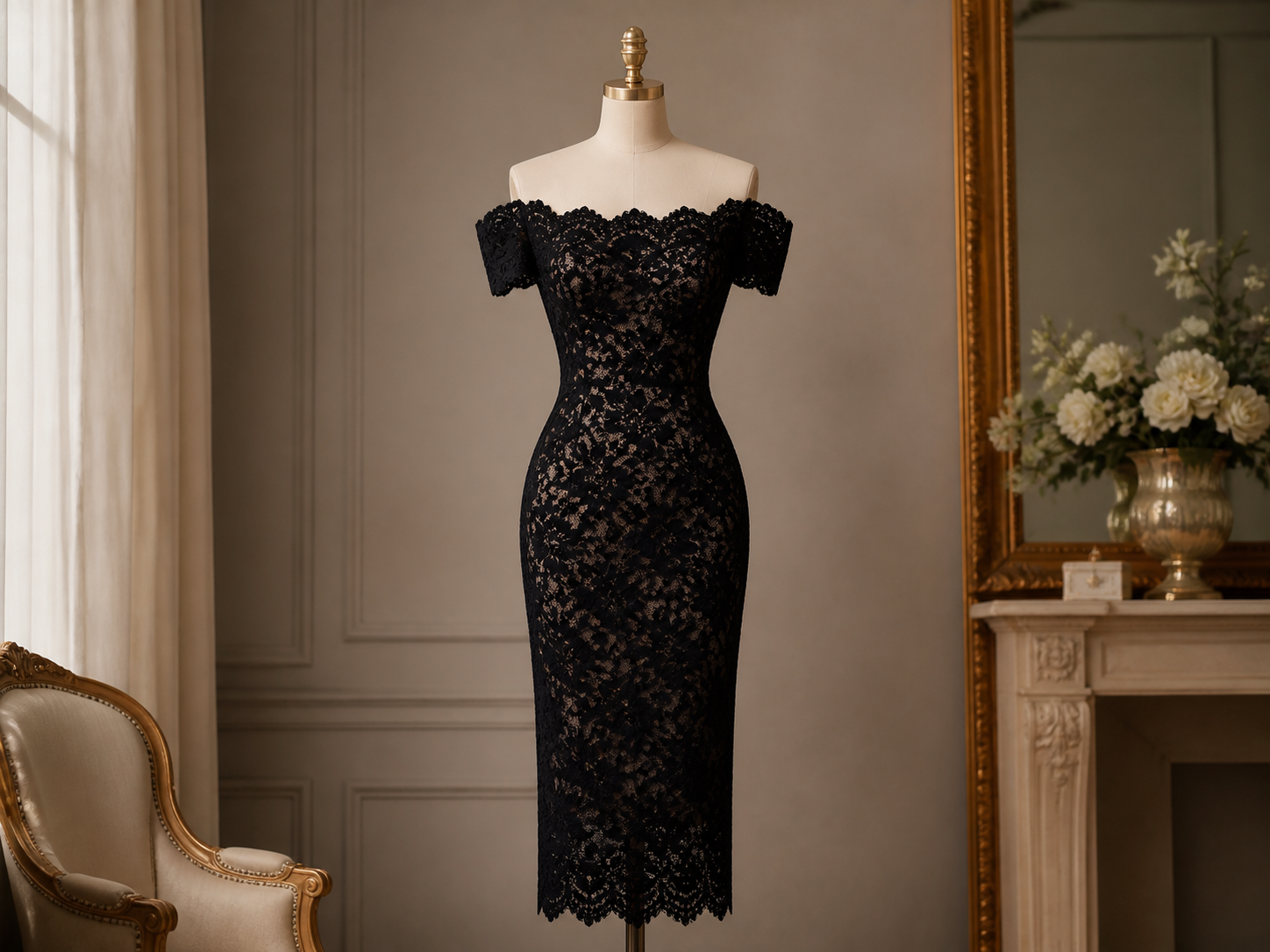
Mark the areas that are intended to hold.
The same pressure is not necessary on the bust, waist, hip and thigh. The control of a party mini can be stronger at the waist and hip and the long-sleeve one requires softer tension at armhole and elbow. Document these areas rather than use the words make it tighter.
Distinguish between contour and compression.
The dress follows the body; the fabric of dress actively supports or reduces the body, this is called the contour and compression. Unless the product is sold as a compression garment, the wearer must be able to breathe, sit and walk without the top edge cutting in or the skirt lifting up.
Approve the Fabric after It Has Been Worked.
The bodycon line by Siyinghong consists of stretch cotton mixtures, polyester-spandex, rib knits, mesh and double-layer styles. They do not recover, cover or sew in the same way. Approve production yardage in a desired color since the stretch and feel can be altered when dyed and finished.
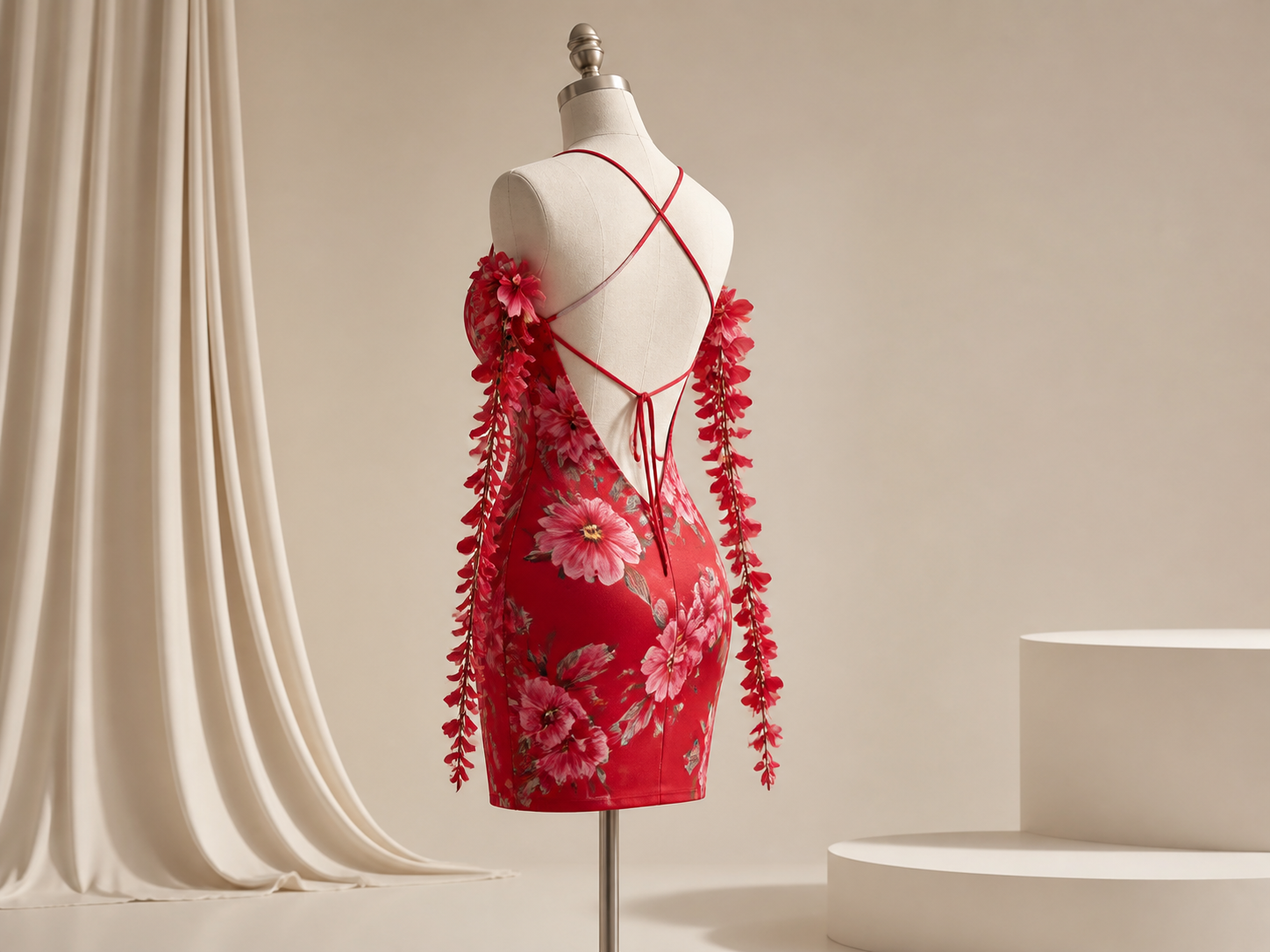
Test stretch in both directions
Measure stretch lengthwise and crosswise. The stronger direction influences pattern placement and whether the garment grows around the hip or along the body.
Allow sample to recover and then take second measurement.
Take a marked length of fabric to the working range and release it and test it immediately and after a rest period. Repeat the same check on a worn sample. A stretchable cloth has a slow recovery and may cause bagging at the seat though the initial fit seemed right.
Construct the Pattern in accordance with the real Behavior of Fabric.
Garment measurements cannot be ascertained by body measurements alone. The patterns on two different fabrics with the same fiber content might require different dimensions as their construction, weight and recovery are different. Approve pattern and fabric as a combined one.
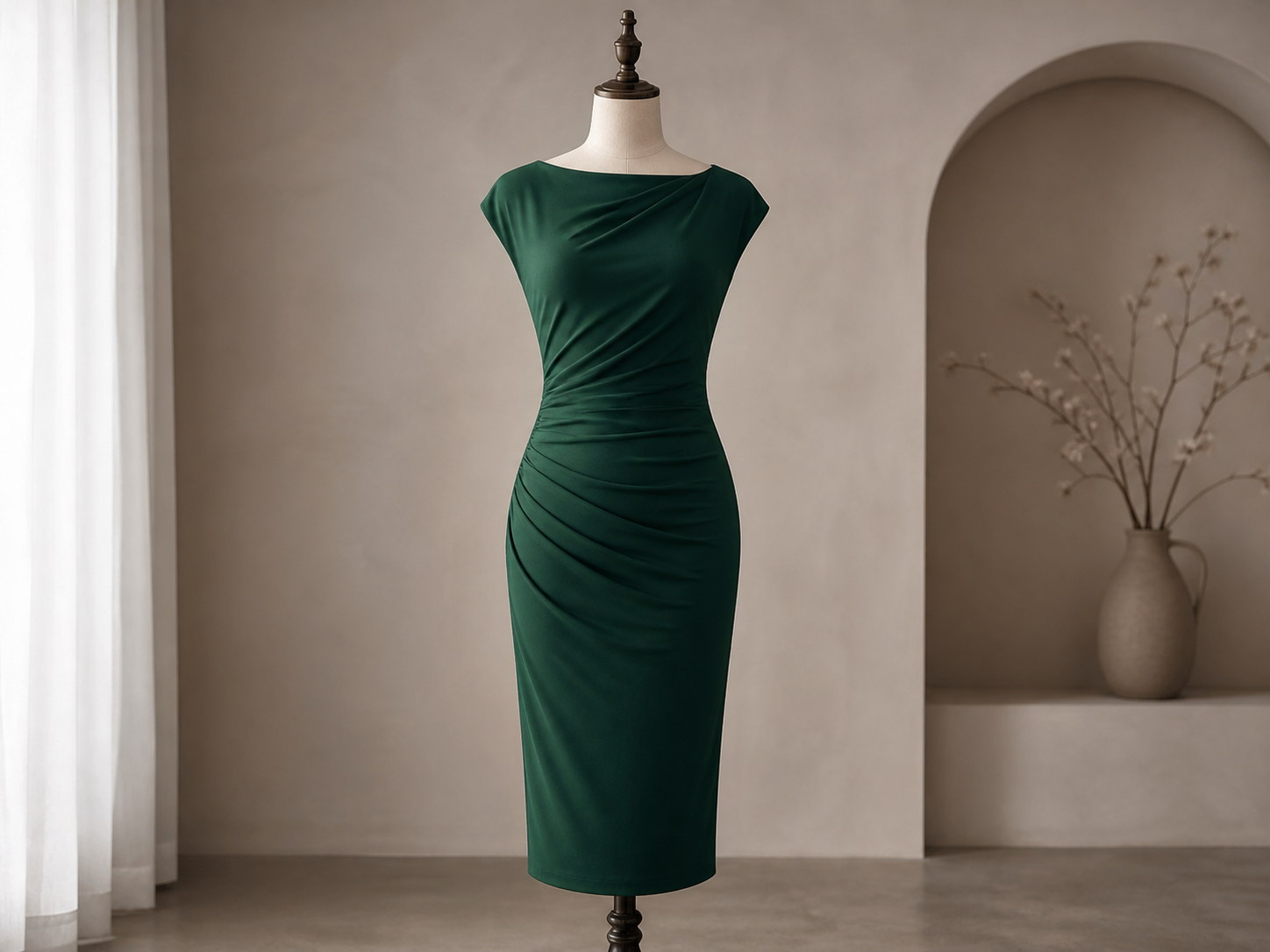
Controllable negative ease.
Set negative ease by zone and size and compare it to the movement of the wearer. It is possible to trim down the bust but tighten the hips, or keep the waist loose and the armhole overloaded, by reducing all horizontal measurements by a percentage.
Observe the grain through curved areas.
Check that the side seam remains straight and the surface lines balanced. The swinging forward seam is usually more likely to exhibit non-uniform tension, rather than inaccurate sewing. Correct the pattern before bulk cutting.
Treat Opacity and Lining as Fit Decisions.
A light coloured or highly stretched dress can be transparent at the point most tightly fitting. The lining may enhance coverage but remove stretch, add drag or provide a visible edge. Test it on the body under strong lighting.
Match the stretch of the layers.
The lining and outer are not required to be the same, but they must move together. When the lining is stiffer it might support the fit and leave the shell rippling. In case it is looser, it can accumulate at the waist or show below the hem.
Lay lining edge carefully.
In the case of partial lining, select an edge that will then not produce a horizontal ridge over the seat or the thigh. Examine the edge while the wearer is standing and moving.
Engineer Seams that Stretch without Waving.
The bodycon seam should stretch and recover without breaking the thread or creating a channel. Agree on machine type, stitch, differential-feed, seam allowance and stabilization during sampling. When a seam is stretched during sewing, there is no way that a seam can be hidden by pressing.
Test a short seam trial prior to the whole sample.
Sew trial strips in the real fabric, such as crossed seams and hems. Pull them to the expected wearing range and look at them to check for popped stitches, tunnelling and poor recovery. This is an example of a small test which may indicate a bad thread or needle selection even prior to a full sample being taken.
Stabilize only where stability is needed.
Zippers, necklines, shoulder lines can necessitate support, but continuous rigid tapes can be disruptive to the desired stretch. The specification must list the stabilization material, its length and its start and end points.
Grade the Tension, Not Only the Outline.
Different proportions of the body, length and circumference change at different rates. A single grade rule can shift the waist, shorten the skirt and augment upper-edge pressure. Check a smaller and larger development size, in the proposed fabric.
Record fit landmarks on the body.
Take photographs and measurements at the neckline, the armhole (underarm), at the natural waist, at the fullest hip and hem while the wearer stands and sits. These landmarks show whether the design position has been preserved instead of just making the circumference of the size-chart.
Investigate the effect of details on stretch field.
Ruching, cut-outs, zippers and mesh inserts divert tension. Approve their position and reinforcement in multiple sizes, especially where an opening terminates close to the bust, waist or hips.
Approval Routine based on Recovery.
Test the same final sample prior to wear, both during movement and following recovery in such a way that the outcome reflects accumulated strain.
Complete one repeatable wear cycle.
An action plan ought to entail activities such as below: Note the worn time as well as the rest time before the last measurement to be able to compare the later samples on the same ground.
- Photograph and measure the unworn sample at the bust, waist, hips and hem.
- Walk, turn, sit, raise the arms and climb several steps.
- Test opacity, neckline security, hem movement and seam rotation while worn.
- Take off the garment, place flat and check bagging, growth and recovery.
- Wash and repeat the review when the method of care can change the fabric.
Convert observations into bulk tolerances.
What is assessable in approval notes should include the following: finished dimensions, maximum seam twist, acceptable growth after wear, recovery time and where transparency is verified. The photograph is useful, but it should not replace the written standard.
Conclusion
A reliable bodycon dress is not the smallest pattern that can be pulled on. It strikes a balance between fabric recovery, negative ease, and layers, seam extension and grading. These points have been designed as a set to maintain the fitted appearance without hindering normal mobility.
To a wholesale purchaser, though, the sample which has been already worn and has had a chance to recover and be re-inspected is the one of the greatest value. That information provides Siyinghong and the purchaser with an effective foundation of bulk inspection, repeat orders and development of new colors.
FAQ
What is the amount of stretch required in a bodycon dress?
It is based on the silhouette, the weight of the fabric and the required pressure. Test the working range on the actual fabric by movement testing.
Will additional spandex enhance recovery?
No. Knit structure, fabric weight and finishing also affect recovery. Test the material rather than basing on fiber percentage.
Is a bodycon dress lined?
Use lining when the outer fabric needs it to be opaque or to support and ensure that it stretches and recovers with the outer fabric.
What has to be approved prior to bulk cutting?
Approve the fabric lot, pattern, grading, finished measurements, wear-test results and seam performance on the entire sample.
Post time: Sep-08-2026