The back of a dress that is worn is usually judged after the front. The neckline is clean, the waist is in place, and the open back gives the photograph that everyone would desire. As the wearer then proceeds to walk, to raise an arm or to sit down, and the dress now starts a new tale, the side bust changes, or the back edge rises, or the straps are straining beyond the comfort of the neck to hold the weight.
In case of an OEM program, open area does not constitute empty space. It is where the few leftover seams, straps, lining and closures have to play the roles that a traditional back bodice would otherwise perform. Usefulness is thus not in how low it can be brought, but in how the dress can be held in place once the back is taken off.
Use the View the Customer Will Actually Buy.
The same product is not produced with a deep scoop, narrow keyhole and an entirely open waist. Know the front, side and back view together before you start pattern work. Even a backless dress which photos open at the back could be covered by a side, a stable waist seam or a small bridge over the upper back.
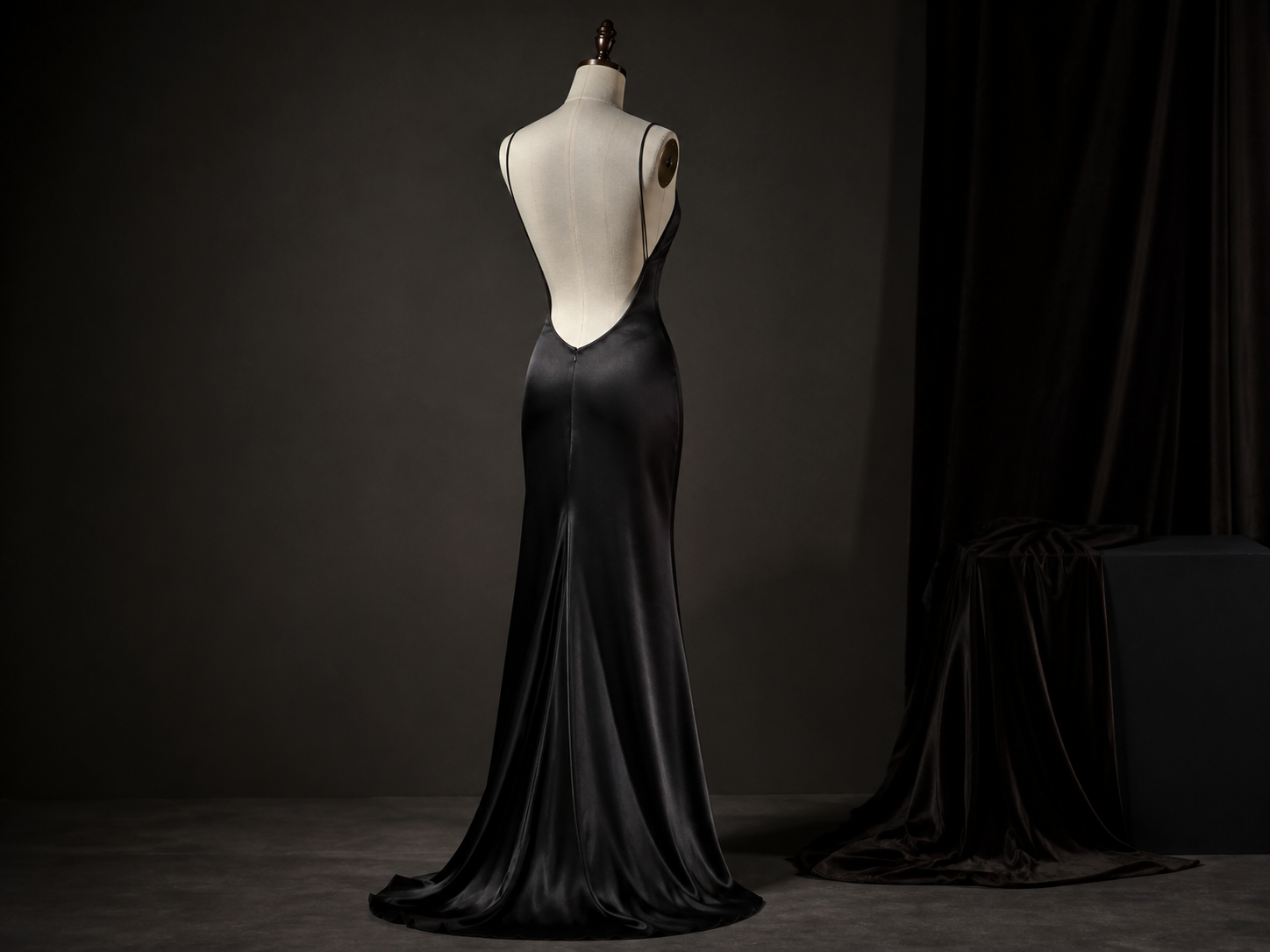
Establish the lowest point and widest point individually.
Note the depth in the center-back and the width of the opening at the bust, at the waist and high hip. The shape cannot be described by one measurement. A low, stable, narrow opening can be used, while a shallower but wider opening can take away the side coverage the wearer needs.
Determine the Load Path of the Support.
After mapping the opening, follow the load path through the rest. Within a fitted style, tension can be carried through the side seam to the waist. It can pass through shoulder straps and the front neckline on an evening dress that is fluid. When the skirt is heavy, the bodice, too, must have the strength to counteract a downward pull not visible at least on a half-finished sample.
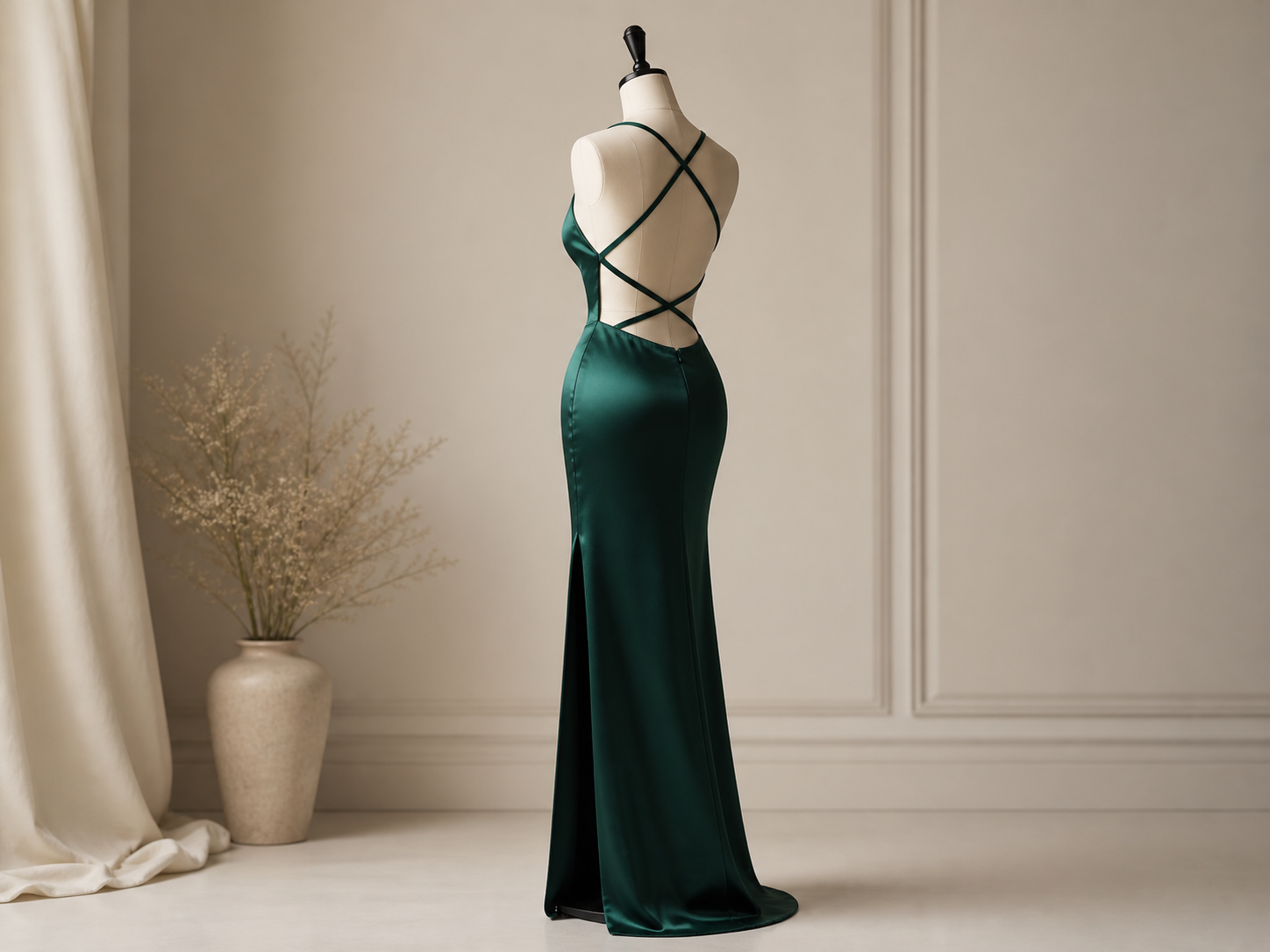
Do not have the neck carry the skirt.
A neckline can be supported by means of a halter tie or a fine strap, but should not be the sole support of a full skirt. Test this on the entire garment, with its lining, embellishment and train. When after a few minutes the wearer experiences the burden at the neck, then the load route is not complete.
Fit the Side Body then Deepen the Opening.
When a large part of the back is missing the side seam is also unusually important. Its angle regulates side-bust coverage and helps in preventing a twisting waist. Adding depth to the opening of an otherwise perfect fit without returning to the side pattern may result in a balancing item that is exposing the bra line or is pulling up the front.
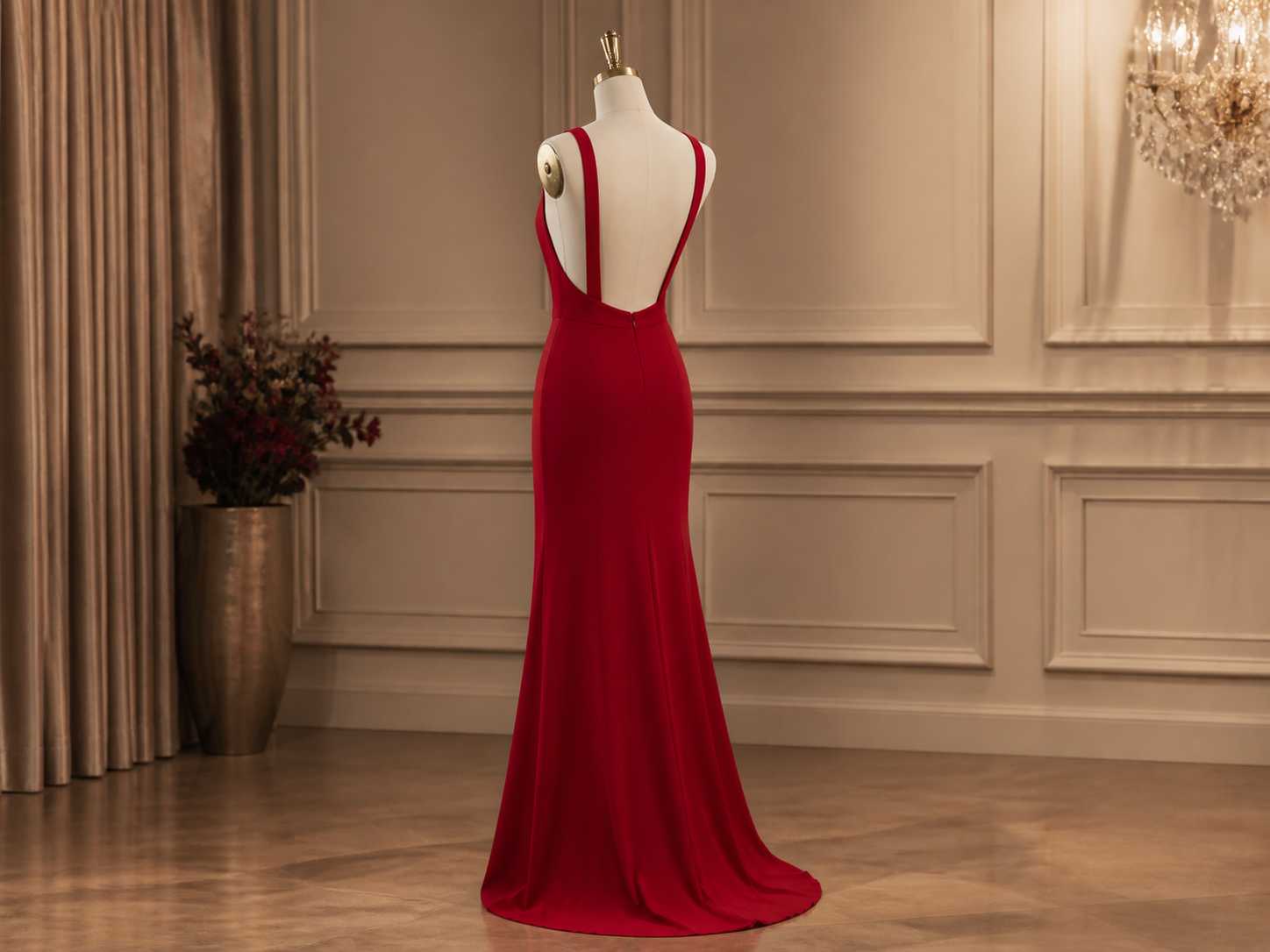
Make a use of a three-view fitting record.
Take photos of approved sample on front, true side and back when the wearer is standing straight. Add a seated side view for close-fitting styles. It should be recorded whether the back, edge is flat, whether the side seam is straight and whether the bust is within the desired coverage or not.
Inspect the Open Edge as a Working Component.
Open-back edge is a visual and a structural finish. It can be facing, bound, elastic, tape or concealed, all of which modify the behavior of the edge. The finish has to be chosen along with the fabric, as a method that stabilizes woven crepe can cause puckering on satin or leave a ridge under jersey.
Accept these points on the entire sample.
The factory requires visible verification as opposed to telling it to lay the back flat. Mark on the garment which has been approved the following:
- Opening depth and width at the named body levels.
- The side-bust coverage in the standing and seated positions.
- Strap length, range of adjustment and attachment.
- The open-edge finish, reinforcement and authorized stretch.
- The location of the closure and its accessibility by the wearer.
Grade the Opening, not Only the Circumference
Normal grading may make the dress bigger but the hole in the wrong position. The back depth, the coverage of the sides, the distance between straps and the waist anchor should all be relative to the body and also dependent on the size. The proportional opening might be referred to as slightly enlarged but this should not be automatically reduced as it tends to lower or be brought nearer to the side bust.
Check the smallest and largest development sizes.
Review the extremes of development and compare the same points. When the opening migrates, place a record or a special grade rule at that edge instead of balancing specific samples with the eye. This is particularly necessary when straps are attached just above the armhole.
Wear-Test the Dress Right off the Mirror.
A backless dress can appear secure because the wearer is standing still. Ordinary motion is included in the useful test. Request the wearer to move, sit, turn, make a forward motion and lift both arms. Then be wise to the neckline falling in, the waist turning or the opening rolling out.
Check again in a half an hour.
Recovery and strap stretch of fabric can be judged more easily after wear. Re-measure the opening and compare side seam with the initial position. Temporary wrinkle should not be confused with permanent growth, approval record should differentiate between the two.
Finish and Pack Protect the Shape.
A desired curve may be flattened or a curved edge turned into a stretch by pressing. Straps that are narrow can also be subjected to continuing load during hanging. Indicate the direction of pressing, type of hanger, position and folding area of a loop. In case of the inclusion of cups or internal supports in packing, they should not turn inside-out or be crushed.
Conclusion
There is a repeatable backless dress constructed by ensuring that the rest of the parts perform specific roles. The approved sample must demonstrate the shape of opening, the covering on the sides and strap load and motion of the edge finish and closure not just in a back view photograph. This intended openness may then be reproduced, without Siyinghong needing to rely on personal sewing judgment and abandon wearer comfort and safety.
FAQ
Is it possible to create a dress with no internal support?
Yes, so long as a fabric is cut and will allow enough stability to fit as desired. Closely fitting or heavier fashions might still require a tape, cups, elastic or a waist anchor.
Will the size of the back opening increase every time?
Not automatically. The grade of width, depth and side coverage are to be graded as individual landmarks so that the opening will remain in the desired position.
What causes a gap between two back edges after a movement?
It is often caused by surplus stretch of the edges, incorrect strap angle or lack of tension in the side-body or an overly soft finish to the fabric.
What needs to be approved prior to bulk cutting?
Approve the entire dress on the body, including opening measurements, side coverage, straps, closure, internal support, movement performance and packing.
Post time: Sep-01-2026